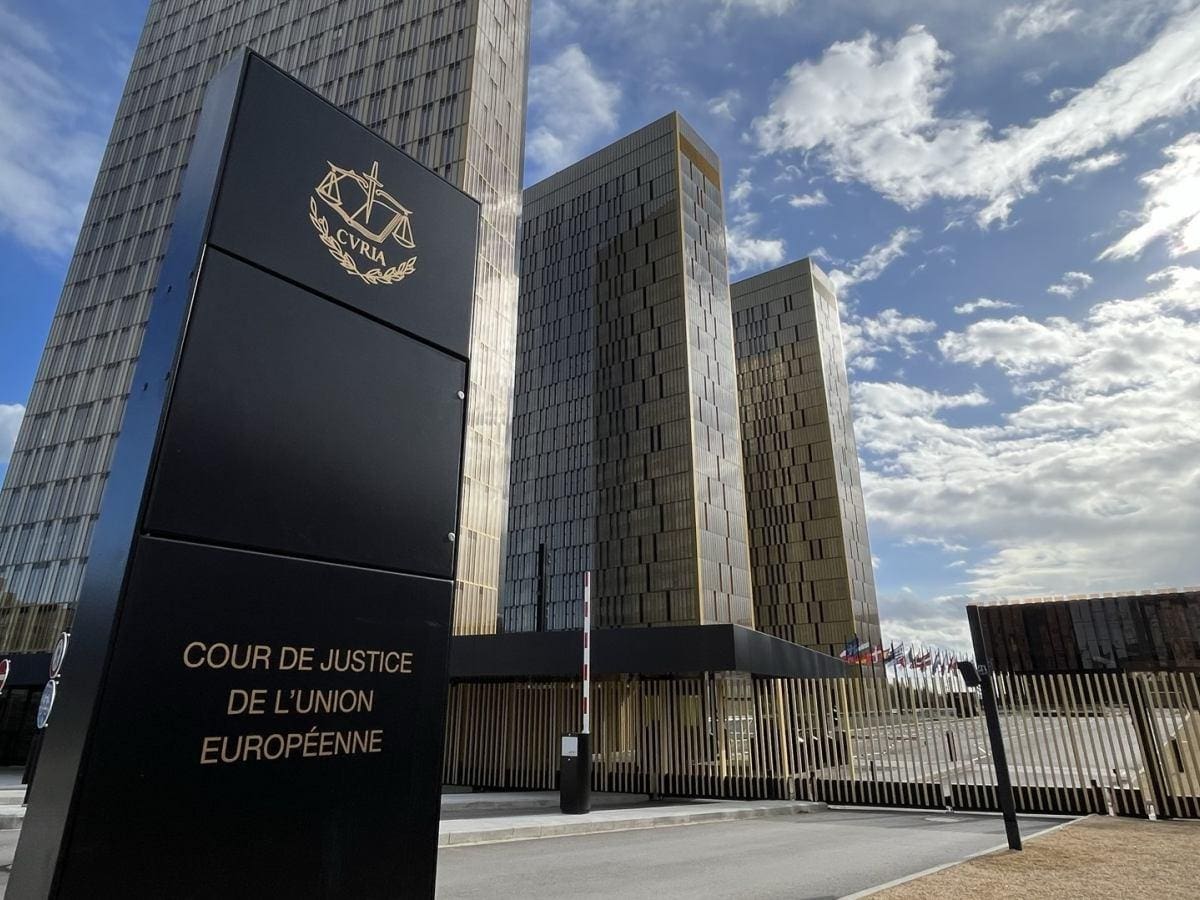
A single platform copyright licence is enough to cover both the act of making user uploads available and the copies stored on a service’s servers, the EU Court of Justice ruled on Thursday, 12 November 2026. The judgment in case C-579/24, arising from a dispute involving the Austrian collecting societies Austro-Mechana and AKM, removes a looming risk of double licensing for video and music-sharing services.
The case turned on Article 17 of the 2019 Directive on Copyright in the Digital Single Market. That provision makes online content-sharing service providers, such as YouTube or SoundCloud, directly responsible for communicating protected works to the public when their users upload them. To escape liability, a service must either obtain a platform copyright licence from rightholders or show it made best efforts to block unlicensed content.
What Article 17 does not spell out is how the reproduction right fits into a platform copyright licence. Every upload creates copies on servers, and further technical copies follow through transcoding, caching and delivery. Collecting societies that manage mechanical reproduction rights argued that these copies required a separate authorisation, on top of the licence covering communication to the public.
Advocate General Nicholas Emiliou set out the path the Court has now broadly followed in his opinion of 26 March 2026. He accepted that uploads do involve reproduction on platform servers, but argued that the authorisation a platform needs under Article 17(1) should extend to the copies technically required to make content available. In his view, there was no room for a separate second licence for those copies.
The judges agreed that one platform copyright licence can cover both the users’ uploads and the storage copies on the provider’s servers. Users who are not acting on a commercial basis, or whose activity does not generate significant revenues, also benefit from the platform’s authorisation, as Article 17(2) of the directive foresees. People posting a cover song or a home video should therefore not face extra licensing demands.
For the platforms, the practical gain is legal certainty. Without a unified platform copyright licence, a fragmented market, with one society licensing the making available of a work and another claiming fees for every server copy, would have raised costs and invited litigation across 27 national regimes. Smaller European services, which lack the negotiating weight of Google or Meta, had the most to lose from such fragmentation.
Rightholders do not walk away empty-handed. The ruling does not lower the overall value of the rights being licensed, and collecting societies remain free to negotiate fees that reflect the full scope of use, including storage and technical processing. What changes is the structure of the deal, as talks move toward blanket authorisations that bundle every technically necessary act into one platform copyright licence.
Licensing lawyers expect contract wording to be revisited quickly. Agreements should now expressly cover server storage, transcoding, caching and internal delivery, so that no gap remains for later claims. Rights management teams inside platforms will also need to check that their internal records match the single-authorisation model the Court has endorsed.
The judgment arrives as the wider copyright framework comes back under scrutiny. The directive’s own review clause allowed the Commission to assess it from June 2026, and generative artificial intelligence has opened new disputes over training data and text and data mining exceptions. The reasoning on technically required copies could also inform future cases on cloud storage, synchronisation services and other forms of temporary reproduction.
For now, the message from the Court of Justice is pragmatic. Copyright law should follow how platforms actually function rather than slicing a single upload into separately priced legal events. A clear platform copyright licence model gives services, creators and collecting societies a common reference point as Europe’s digital copyright rules enter their next review cycle.