
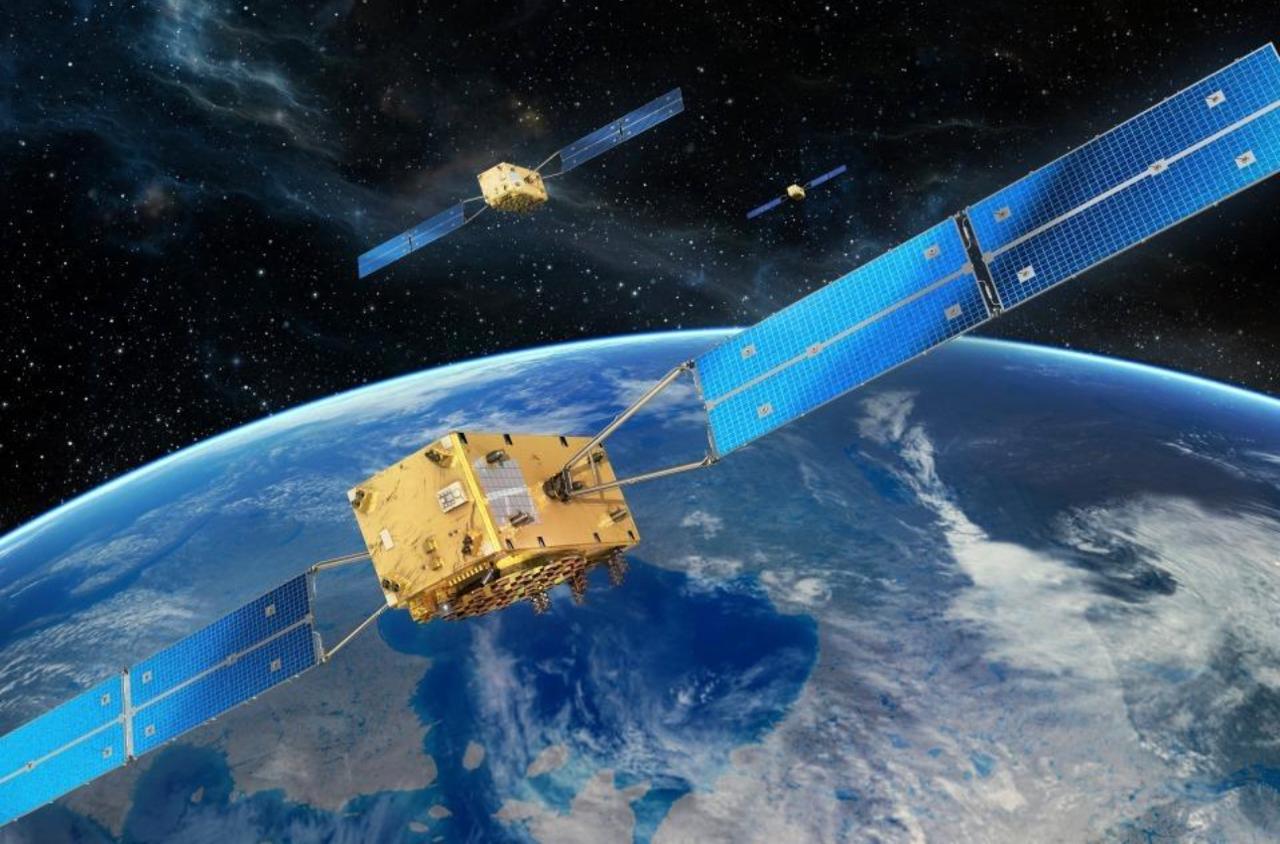
Seven capitals want the Commission’s space flagship renamed and narrowed. On sovereignty they are right. The harder question, who decides how Europe’s shared satellites and space services are used in a crisis, remains unanswered, and leaders meet in Brussels on 15 October.
A year ago, the Commission and the High Representative gave the Union a timetable for space. Their Defence Readiness Roadmap 2030 listed the European Space Shield among four flagship projects, asked the European Council to endorse it by the end of 2025, and promised a launch in the second quarter of 2026. Both dates have passed. Neither was met. On 1 September, Kaja Kallas told reporters in Wicklow that she and Commissioner Andrius Kubilius would present a joint communication on space and defence by the end of the year.
Last week, seven governments explained why. Austria, Belgium, France, Germany, the Netherlands, Spain, and Sweden circulated a concept paper, reported on 2 October, asking for the European Space Shield to be rebuilt around the protection of EU space systems, with military capability left to national capitals. They note that leaders never endorsed the proposal. They object to the word “shield”, which in their reading implies capability development by the Union. They also record that three workshops convened by the Commission and the European External Action Service over six months failed to settle the purpose or scope of the project.
The Commission had reasons for urgency. Russian satellites have shadowed European spacecraft for years, and satellite-positioning interference around the Baltic has disrupted civil aviation repeatedly since 2022. Its authors presented the flagship as Europe’s answer to an orbit that has turned contested. The diagnosis was sound. The prescription, a single branded project steered from Brussels, collided with a fact the Roadmap underplayed: the capabilities that count most in space belong to a handful of governments, and they intend to keep them.
The Member States’ Case for National Control of Military Space
That case deserves a fair hearing, and on its central point it is correct. The Treaties leave little room for doubt. Article 4(2) of the Treaty on European Union keeps national security the sole responsibility of each member state. Article 189 of the Treaty on the Functioning of the European Union authorises a European space policy and a space programme, yet expressly excludes any harmonisation of national laws. Neither provision allows Brussels to own, task, or command military satellites, and the Roadmap never claimed otherwise.
The signatories also hold the hardware. Boris Pistorius has committed Germany to roughly €35 billion in military space spending by 2030, and France is raising its own outlays. Intelligence, surveillance, and secure communications from orbit are among the most closely guarded capabilities any state possesses. Defence ministries are unlikely to route them through a Commission directorate-general, and a European Space Shield brand that hints otherwise breeds suspicion and slows everything around it. On sovereignty, the capitals win the argument.
Brussels has, in fact, been moving their way. In February, Kubilius promised that the initiative would support and complement national defence efforts rather than replace them. In Paris on 10 September, he described the forthcoming Commission communication as a proposal for a European Space Security Architecture, designed together with member states. That is close to the formula the seven governments now demand. On the label and on the division of labour, the two sides stand nearer to each other than the paper’s tone suggests.
The European Space Shield and the Unanswered Question of Crisis Priority
The real gap lies elsewhere. Read closely, the concept paper contains a line more consequential than its quarrel with the name. Among its security concerns, it asks how European space services would choose between civilian and military users in a crisis. That is the question on which the European Space Shield, under any title, stands or falls, and the seven governments pose it without offering an answer.
Consider what the Union already runs. Galileo carries a Public Regulated Service, an encrypted signal reserved for authorised government users, armed forces among them. IRIS², the secure connectivity constellation, moved into full-scale deployment in August, when the Commission added a dedicated layer of 66 satellites for defence, security, and emergency services and forecast a rise of more than 60 per cent in secure governmental capacity within the Union. Copernicus data supports security work as well. These are Union assets, paid for from the Union budget, and they serve police, emergency services, airlines, and armies at once. Their military co-use, which the paper itself flags, is now written into their design.
Now imagine a jamming campaign across the Baltic, or a coordinated cyber intrusion against ground stations, during a period of acute tension with Moscow. Protected signals and bandwidth become scarce. One capital wants priority for its forces; another needs the same capacity for civil protection after flooding; a third requests secure positioning for an air policing mission under NATO command. Someone must decide within minutes, and the decision has to be lawful, accountable, and politically workable across all twenty-seven. Today, no agreed procedure exists for making it.
Renaming the initiative does nothing to fill that vacuum. Returning capability development to the capitals leaves it untouched as well, because the assets in contention are not national. They are common European assets, and common assets in wartime need a rulebook drafted in peacetime.
NATO cannot close the gap on Europe’s behalf. The Alliance recognised space as an operational domain in 2019, but it relies largely on capabilities that allies provide, and EU constellations sit outside its command structure. Any prioritisation procedure therefore has to be European while remaining compatible with Allied planning, which is precisely the complementarity the seven governments say they want.
€131 Billion for Space and Defence, and No Rules of Priority
The budget raises the stakes. In its proposal for the 2028 to 2034 financial framework, the Commission set aside €131 billion for the defence, security, and space window of the European Competitiveness Fund, five times the comparable EU-level funding today. The seven capitals complain, with justice, that space money is scattered across Horizon Europe, the European Investment Bank, and the European Defence Fund. Tidying those instruments is sensible housekeeping. Multiplying spending on dual-use constellations before settling who sets priorities for them under pressure is poor stewardship.
The European Space Shield has followed a familiar Brussels sequence. The Commission announces a flagship with a confident title and a deadline. Member states object to the title. The deadline lapses, a working format convenes, and the substantive problem migrates to a later summit. Each step can be defended on its own terms. Together, they leave Europe with assets it cannot reliably defend and procedures it has not drafted.
What the October European Council Should Decide on Space Security
Heads of government meet in Brussels on 15 and 16 October to discuss the first Annual Defence Readiness Report, which defence ministers welcomed on 28 September. The European Defence Agency has marked the report for governmental use only, so the public will not see its verdict on the European Space Shield. Leaders, who committed in June to return to defence readiness this month, can still give the Council a clear instruction.
Nor would the work start from nothing. Under Council Decision (CFSP) 2021/698, the Council, acting unanimously on a proposal from the High Representative, can instruct the operators of EU space systems, IRIS² included, to avert a threat arising from their use or to respond when the systems themselves come under threat. That mechanism exists to protect the Union in an emergency. It was not written to ration protected capacity among competing national and civilian claimants, a scenario the Decision does not currently address. Extending it would require unanimity in the Council and, in all likelihood, amendments to the programme regulations, but nothing in the task appears to demand reopening the Treaties.
Three elements would suffice. First, accept the seven capitals’ premise in writing: military space capability stays national, and the Union’s role is to protect, coordinate, and finance common systems. Second, instruct the High Representative and the Commission, working with national space commands, to place in the joint communication promised for the end of the year a crisis-prioritisation framework for Galileo’s protected service, IRIS², and Copernicus, or at the least a mandate to complete one by mid-2027. It should define who may request priority, who has authority to decide, what criteria govern the decision, how NATO requirements are reflected, and how disputes reach the Council. Third, tie the release of new defence and space funds for these constellations to agreement on that framework.
The label is the easy part. Kubilius and the seven capitals now share a phrase, a European space security architecture, and either side could adopt it tomorrow. What matters is that the next time a European satellite is jammed, every capital knows in advance who answers the call.
Sovereignty and solidarity can coexist in orbit, provided someone writes down where one ends and the other begins. The seven governments have drawn the first line. Leaders should now insist on the second.
The Weekly Editorial
This is the editorial position of The European Post, published weekly on matters of European and international strategic significance. It represents the view of the Editorial Board.