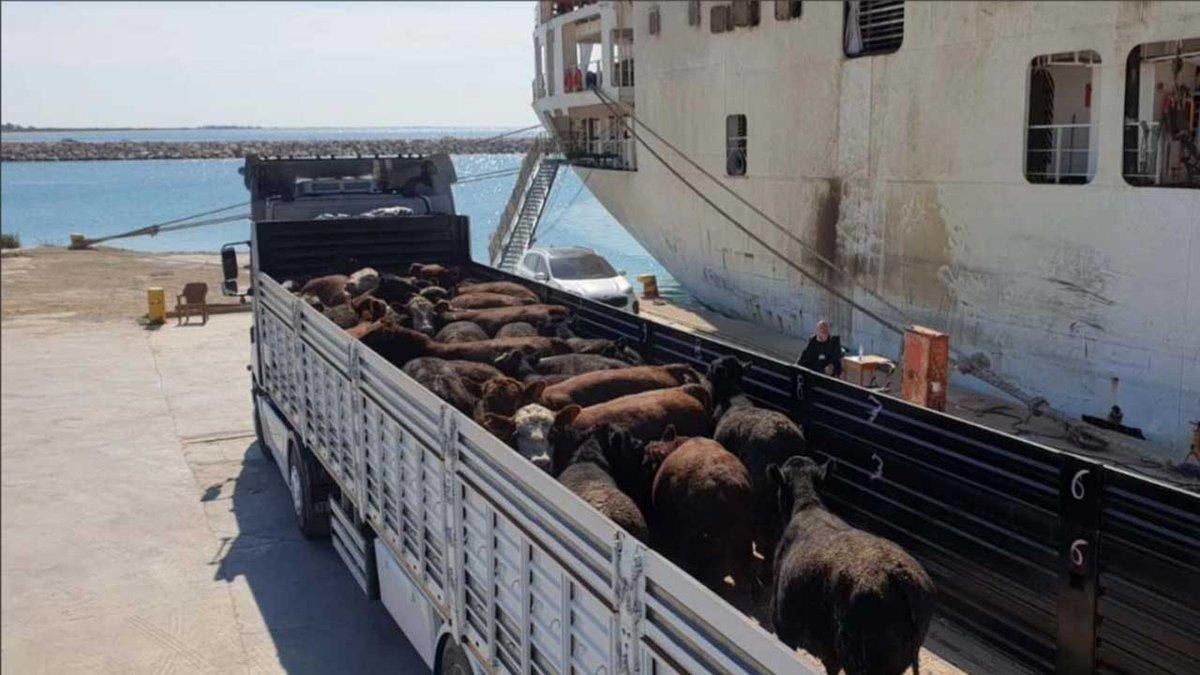
Rosslare: Europe’s animal transport regulation has now passed to a sixth rotating presidency without a Council position, and Ireland inherited the file when it took the chair on 1 July 2026. Ministers, MEPs and livestock exporters are still arguing over veterinary checks at loading, journey times and what happens on long sea crossings.
The Commission proposed the regulation in December 2023 to replace Regulation (EC) No 1/2005, a text written before live-export volumes reached their current scale. The proposal shortens maximum journey times for animals sent to slaughter, raises space allowances, tightens rules on transporting unweaned calves and pregnant animals, and requires digital tracking of consignments. Its progress through Parliament and Council has been slow in both institutions.
Council technical work continued through the summer. The Working Party on Animals and Veterinary Questions met on 1 and 2 September 2026 in the Council’s LEX building, with stable consolidated articles circulated on 29 July and clean consolidated annexes on 31 July as the basis for discussion. Two more sessions follow on 30 September and 1 October. The Irish presidency is redrafting for clarity rather than reopening substance, which tells its own story about how far apart delegations remain.
Parliament is no faster. The joint agriculture and transport committees attracted thousands of amendments, and the two committees disagree about whether the file is primarily a welfare instrument or a transport one. Until MEPs settle a negotiating mandate, no trilogue can open.
Farm organisations want the outcome to work commercially as well as ethically. Edward Carr, president of the Irish Co-operative Organisation Society, put that to the Irish agriculture minister when Martin Heydon chaired his first Agriculture and Fisheries Council of the presidency in July.
I hope that over the next six months Minister Heydon can encourage sensible and workable solutions around Animal Transport and Animal Welfare legislation.
Ireland has an unusually direct stake. Irish exporters ship calves and cattle to continental markets, and Heydon told the Dáil in August that Brittany Ferries would stop carrying livestock from September, removing one of the routes the trade relies on. He signalled openness to a state-supported transport scheme to keep the channel open, a proposal that sits awkwardly beside the welfare tightening his own presidency is negotiating.
The contested points are narrow but expensive:
- Whether an official veterinarian must be present when animals are loaded for long journeys.
- How shorter maximum journey times combine with larger space allowances, which raises cost per animal twice over.
- How the rules treat roll-on ferry crossings and livestock vessels leaving the single market.
- Which authority answers for welfare once a consignment crosses into a third country.
The wider animal welfare package shows movement is possible. Parliament and Council adopted the regulation on the welfare and traceability of dogs and cats in June 2026, the first EU-wide standard for the pet trade, and negotiators finished it in roughly two years. Transport has taken longer because the money involved is larger and the member state interests are sharper, splitting exporting economies such as Ireland, Spain and Romania from northern capitals pressing for hard limits.
A general approach before the Irish presidency ends in December would still leave trilogues for the Cypriot presidency in 2027, and the regulation would apply after a transition period lasting years. The Council’s own meeting record lists the next working party dates and nothing beyond them, which is the clearest signal available of where this file stands.