August 10, 2026
LATEST
Europe’s Air Quality Improves but WHO Limits LoomTwelve New EU Medicines Win a Green Light from EMAFIFA Agent Rules Must Answer to Europe’s CourtsTachograph Rules Now Reach Vans Crossing Europe’s BordersNature Restoration Plans Come Due as a Hard Deadline NearsBrussels Opens a State Aid Probe Into Spain’s Renewables PayoutBrussels Extends Its Tariff Suspension on US Goods IndefinitelyFarmers Win Stronger Contract Rights Across the EU Supply ChainEurope Finally Locks In Its 348-Satellite Answer to StarlinkPlatform Work Rules Face a National Scramble Before DecemberDuty-Free Parcels Reach the End of the Line for EU ShoppersAfter Nine Years, Europe and Australia Seal a Trade PactBeijing Answers Europe’s Russia Sanctions in KindOne Year On, the EU-Japan Alliance Faces Its First TestEurope’s Chip Ambitions Still Run Through Taiwan’s FabsWhy South Korea Bet Its Research Future on Europe’s ProgrammeEurope and Japan Deepen Their Economic Alliance as Rivals CircleFive Joint Defence Projects Launch Europe’s Military ShieldElectrification Plan Aims to Make Europe First Electro ContinentHorizon Europe Budget Fight Heats Up as Ministers Push BackEurope’s Air Quality Improves but WHO Limits LoomTwelve New EU Medicines Win a Green Light from EMAFIFA Agent Rules Must Answer to Europe’s CourtsTachograph Rules Now Reach Vans Crossing Europe’s BordersNature Restoration Plans Come Due as a Hard Deadline NearsBrussels Opens a State Aid Probe Into Spain’s Renewables PayoutBrussels Extends Its Tariff Suspension on US Goods IndefinitelyFarmers Win Stronger Contract Rights Across the EU Supply ChainEurope Finally Locks In Its 348-Satellite Answer to StarlinkPlatform Work Rules Face a National Scramble Before DecemberDuty-Free Parcels Reach the End of the Line for EU ShoppersAfter Nine Years, Europe and Australia Seal a Trade PactBeijing Answers Europe’s Russia Sanctions in KindOne Year On, the EU-Japan Alliance Faces Its First TestEurope’s Chip Ambitions Still Run Through Taiwan’s FabsWhy South Korea Bet Its Research Future on Europe’s ProgrammeEurope and Japan Deepen Their Economic Alliance as Rivals CircleFive Joint Defence Projects Launch Europe’s Military ShieldElectrification Plan Aims to Make Europe First Electro ContinentHorizon Europe Budget Fight Heats Up as Ministers Push Back
August 10, 2026
LATEST
Europe’s Air Quality Improves but WHO Limits LoomTwelve New EU Medicines Win a Green Light from EMAFIFA Agent Rules Must Answer to Europe’s CourtsTachograph Rules Now Reach Vans Crossing Europe’s BordersNature Restoration Plans Come Due as a Hard Deadline NearsBrussels Opens a State Aid Probe Into Spain’s Renewables PayoutBrussels Extends Its Tariff Suspension on US Goods IndefinitelyFarmers Win Stronger Contract Rights Across the EU Supply ChainEurope Finally Locks In Its 348-Satellite Answer to StarlinkPlatform Work Rules Face a National Scramble Before DecemberDuty-Free Parcels Reach the End of the Line for EU ShoppersAfter Nine Years, Europe and Australia Seal a Trade PactBeijing Answers Europe’s Russia Sanctions in KindOne Year On, the EU-Japan Alliance Faces Its First TestEurope’s Chip Ambitions Still Run Through Taiwan’s FabsWhy South Korea Bet Its Research Future on Europe’s ProgrammeEurope and Japan Deepen Their Economic Alliance as Rivals CircleFive Joint Defence Projects Launch Europe’s Military ShieldElectrification Plan Aims to Make Europe First Electro ContinentHorizon Europe Budget Fight Heats Up as Ministers Push BackEurope’s Air Quality Improves but WHO Limits LoomTwelve New EU Medicines Win a Green Light from EMAFIFA Agent Rules Must Answer to Europe’s CourtsTachograph Rules Now Reach Vans Crossing Europe’s BordersNature Restoration Plans Come Due as a Hard Deadline NearsBrussels Opens a State Aid Probe Into Spain’s Renewables PayoutBrussels Extends Its Tariff Suspension on US Goods IndefinitelyFarmers Win Stronger Contract Rights Across the EU Supply ChainEurope Finally Locks In Its 348-Satellite Answer to StarlinkPlatform Work Rules Face a National Scramble Before DecemberDuty-Free Parcels Reach the End of the Line for EU ShoppersAfter Nine Years, Europe and Australia Seal a Trade PactBeijing Answers Europe’s Russia Sanctions in KindOne Year On, the EU-Japan Alliance Faces Its First TestEurope’s Chip Ambitions Still Run Through Taiwan’s FabsWhy South Korea Bet Its Research Future on Europe’s ProgrammeEurope and Japan Deepen Their Economic Alliance as Rivals CircleFive Joint Defence Projects Launch Europe’s Military ShieldElectrification Plan Aims to Make Europe First Electro ContinentHorizon Europe Budget Fight Heats Up as Ministers Push Back

Brussels Sharpens China Trade Tools as Investment Talks Cool

Brussels: The choreography of the EU–China economic relationship has rarely been so dissonant as it is this month. In the same fortnight that the Commission imposed fresh anti-dumping duties on Chinese adipic acid — a niche chemical input but a familiar harbinger of broader trade defence actions to come — Beijing publicly invited Brussels to reconsider both the dormant 2020 Comprehensive Agreement on Investment and the prospect of opening free-trade negotiations. The two signals point in opposite directions. The first is the EU treating China as a strategic competitor whose subsidised exports require active legal containment. The second is China treating the EU as a hedge against an unpredictable Washington, a relationship to be widened where possible.

The Union’s outgoing trade director put the prevailing institutional mood plainly: the 2020 CAI was an agreement “from another time and for another China”. The phrasing is diplomatic but the verdict is hard. The CAI was frozen in 2021 after Beijing sanctioned MEPs in response to EU measures over Xinjiang, and even before that breach the agreement had been criticised for offering symbolic market access in exchange for political distance from American positions. To resurrect it now would be to ratify a strategic environment that no longer exists — one in which the EU still imagined a stable trilateral architecture among Brussels, Beijing, and Washington that did not require choosing.

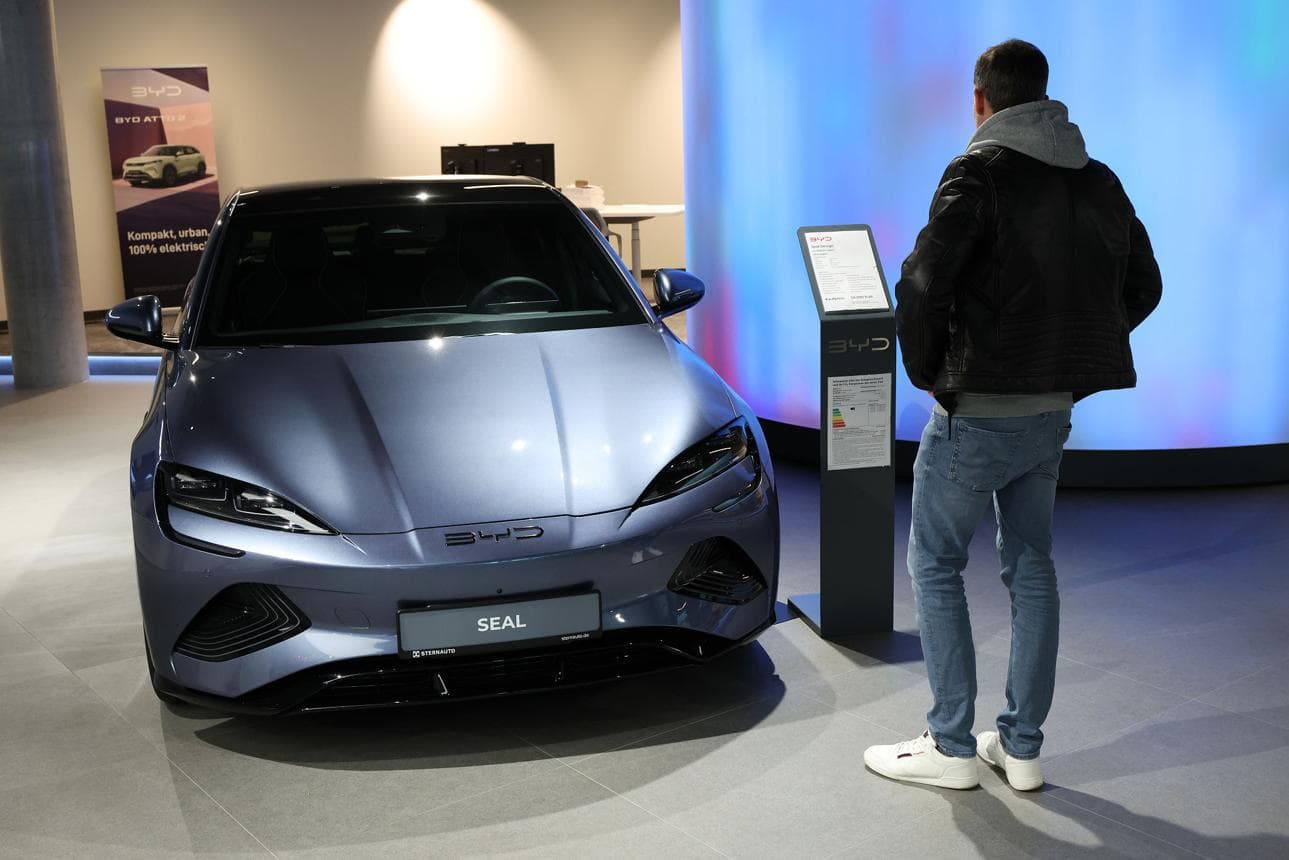
Choosing is precisely what the bloc is now being forced to do, and the trade defence file is where the choice is becoming visible. The €359.9 billion goods deficit recorded in 2025 has become an unignorable political fact in capitals that previously preferred to discuss the relationship in terms of mutual interest. Across electric vehicles, wind turbines, batteries, and the small chemicals and components that feed European industrial supply chains, Commission investigators have been busier in the first half of 2026 than in any comparable period since the steel cases of the mid-2010s.

Yet the politics of the Council remain more fractured than the trade-defence numbers suggest. Germany under Friedrich Merz has signalled an openness to the idea of FTA talks, partly out of genuine commercial interest, partly as a hedge against the costs of American tariff turbulence on the German export model. France and several southern member states are more sceptical, viewing any premature opening as a reward for behaviour — overcapacity, opaque state subsidies, coerced technology transfer — that has not changed. The southern view, broadly, is that the Commission’s defensive instruments must work harder and bite faster before any offensive offer is placed on the table.

China’s tactical answer has been to keep multiple doors visible. The simultaneous floating of a revived CAI, a free-trade exploration, and the periodic threat of retaliatory measures against European agricultural and luxury exports is a familiar three-track approach: offer, deflect, punish. For Brussels, the appropriate response is not to read each track in isolation but to recognise that the three together form a single negotiating posture designed to fragment the EU’s own consensus.

That recognition argues for a particular institutional discipline. Trade defence cases should continue to be decided on technical merit, not as bargaining chips. FTA talk should be conditioned on enforceable subsidy disciplines and labour standards, not held up as a self-standing prize. And the EU’s economic security toolbox — the Foreign Subsidies Regulation, the Anti-Coercion Instrument, the screening of inbound investment — should be used with the same operational seriousness China brings to its export-control playbook.

The adipic acid duties will not move global markets. But they are part of a pattern that, over the next eighteen months, will determine whether Brussels can speak to Beijing from a posture of confident leverage or one of belated reaction.