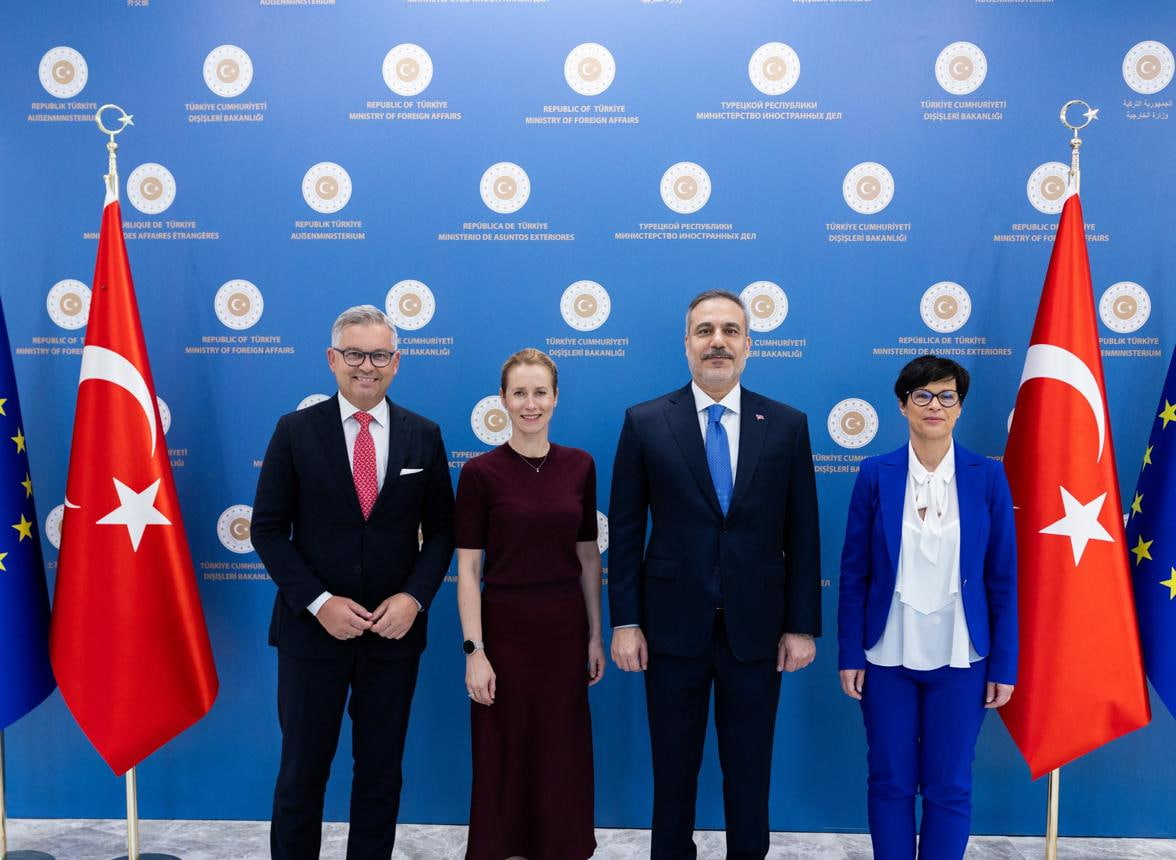
Ankara: Customs union modernisation was the quiet centrepiece of the meeting held in Ankara on 30 June 2026 between Turkish Foreign Minister Hakan Fidan, High Representative Kaja Kallas and Commissioners Marta Kos and Magnus Brunner. The joint press release covered trade, connectivity, migration, security and foreign policy. On customs, both sides committed to improving implementation of the existing arrangement and to paving the way for customs union modernisation.
That wording is careful for a reason. The customs union between the EU and Türkiye dates from the 1990s and covers industrial goods, not services or most farm products. Modernisation would widen its scope, yet the release records no mandate, no negotiating timetable and no decision, which means customs union modernisation remains an intention.
The political frame is mixed. The two sides reaffirmed Türkiye’s candidate status, and the EU stressed rule of law, fundamental rights and democratic standards. Those reminders show that Brussels links deeper economic ties to governance, a linkage Ankara tends to resist.
Several practical files sit beside the customs agenda. The delegations discussed the state of play of the visa liberalisation dialogue, and Turkish officials raised visa processing for their citizens. The EU said Türkiye’s possible participation in the Single Euro Payments Area would be beneficial, and it welcomed the gradual resumption of European Investment Bank operations in the country.
Migration cooperation remains a shared interest. Both sides pledged to work together on border management and on migrant smuggling, and they agreed to coordinate on regional peace and connectivity in the South Caucasus. They also affirmed Ukraine’s sovereignty, while the EU raised the need to prevent sanctions circumvention by all states.
Business gains from customs union modernisation would be concrete. Clearer rules on technical standards, faster border procedures and a better dispute mechanism would help manufacturers on both sides, notably in cars, machinery and textiles. Without a mandate, however, companies cannot plan around such improvements. Turkish exporters would also gain from clearer rules on trade defence measures, and European firms would gain from more predictable treatment of their goods at Turkish borders.
The next marker is the calendar. The parties said they would meet again and hold high-level dialogues, preferably before the end of the year, on the economy, trade, migration and security, health, science and innovation, and agriculture. No dates are set. If the economic dialogue convenes soon, customs union modernisation could gain a formal mandate; if visa and governance disputes dominate, the file will stay frozen.