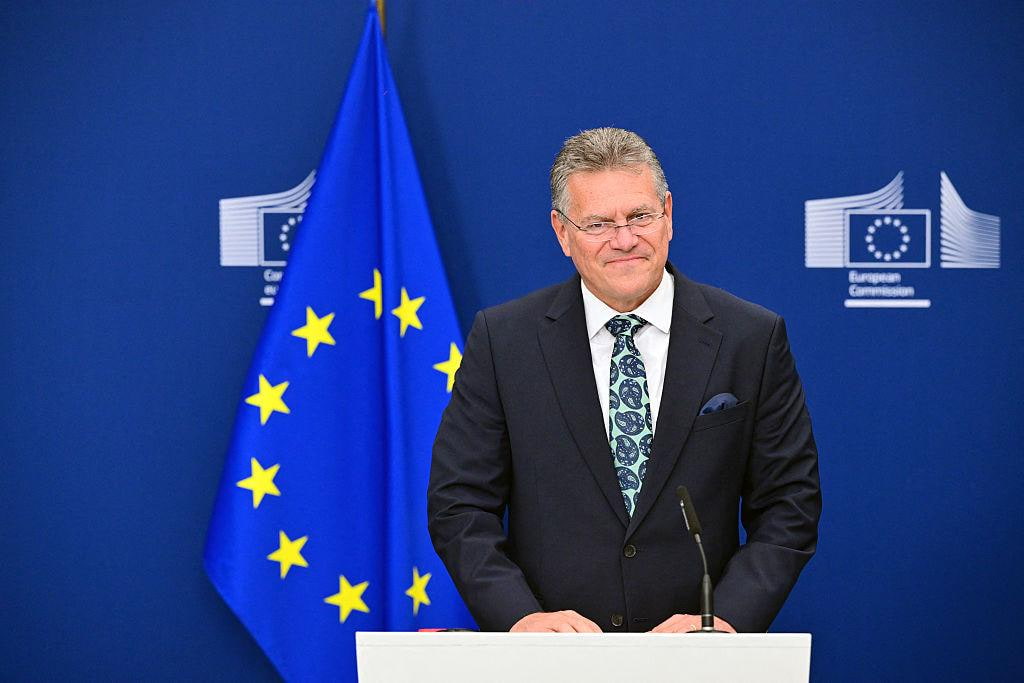
Manila: The EU-Philippines trade deal moved from aspiration to political fact on 22 September 2026, when Trade and Economic Security Commissioner Maroš Šefčovič announced that the two sides had reached an initial deal. The Commission called it a substantial agreement, and Šefčovič said the main terms now carry political approval. What remains is the slow work of turning agreed parameters into legal text.
The headline number is tariff liberalisation. The EU-Philippines trade deal would remove more than 94 percent of tariffs on both sides, covering European machinery, appliances and transport equipment as well as agrifood products such as meat, dairy and spirits. Philippine exporters would gain from the same logic in the other direction, which is why the EU-Philippines trade deal is pitched as mutual rather than one-sided.
The starting base is modest. Bilateral trade stands at €17.6 billion in goods and €10.3 billion in services, a figure the Commission itself says leaves room for growth under the EU-Philippines trade deal. For a European Union that wants diversified markets, the Philippines offers a young consumer base and an English-speaking services economy at the heart of Southeast Asia.
The timing is strategic as much as commercial. Brussels has been looking for new Asian markets and investment destinations to offset the pressure of United States tariffs under President Donald Trump. It has already concluded agreements with Vietnam and Indonesia, and it is negotiating with Malaysia and Thailand, where talks are the most advanced. The Philippine deal therefore adds another piece to a regional mosaic rather than standing alone.
That mosaic matters for rules as well as market access. Each new agreement in the region lets the EU embed its preferred standards on regulation, sustainability and dispute settlement, and it gradually builds a network that European firms can use across several economies. Whether the EU-Philippines trade deal follows the template of its Vietnamese and Indonesian predecessors will be a useful test of how consistent that approach has become.
The political calendar is the main risk. The Commission says a full deal should follow in the coming months, but legal scrubbing, translation and ratification can take far longer than a negotiating round. Member states and the European Parliament will each want to examine the chapters on agriculture and sustainability before they give their consent.
Sensitive sectors will draw the sharpest scrutiny as the EU-Philippines trade deal moves toward ratification. European livestock and dairy producers see opportunity in the tariff cuts, while farm groups in other capitals often worry about competition from partner countries. How the final text balances those interests will shape the vote in Strasbourg and the mood in the Council during 2026 and beyond.
For Manila, the stakes are equally clear. Preferential access to a market of this size can anchor investment, and a binding treaty offers a predictability that unilateral tariff decisions in third countries cannot. The EU-Philippines trade deal will be judged by whether firms on both sides actually use the preferences once the legal text is finished and ratified.