Taipei: The Europe-Taiwan Semiconductor Industry Dialogue that ran in Munich last November is hardening into a year-round working track, and the consequences for the European Commission’s Q2 2027 timeline on Chips Act 2 are already showing up in the way capitals are sequencing their industrial agendas. Brussels and Taipei treated the inaugural dialogue as a confidence-building exercise, with more than forty senior representatives from companies, research centres and diplomatic missions in a single room, but the follow-up working groups have shifted the conversation from courtesy lines to specific procurement and talent files. That is the change the European semiconductor lobby has been pressing for since the original Chips Act delivered less industrial fabric than its 43-billion-euro envelope had suggested.
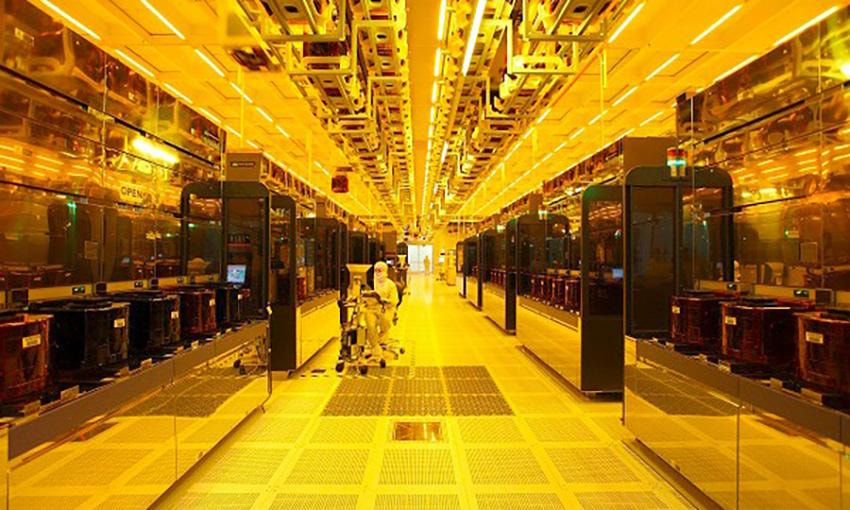
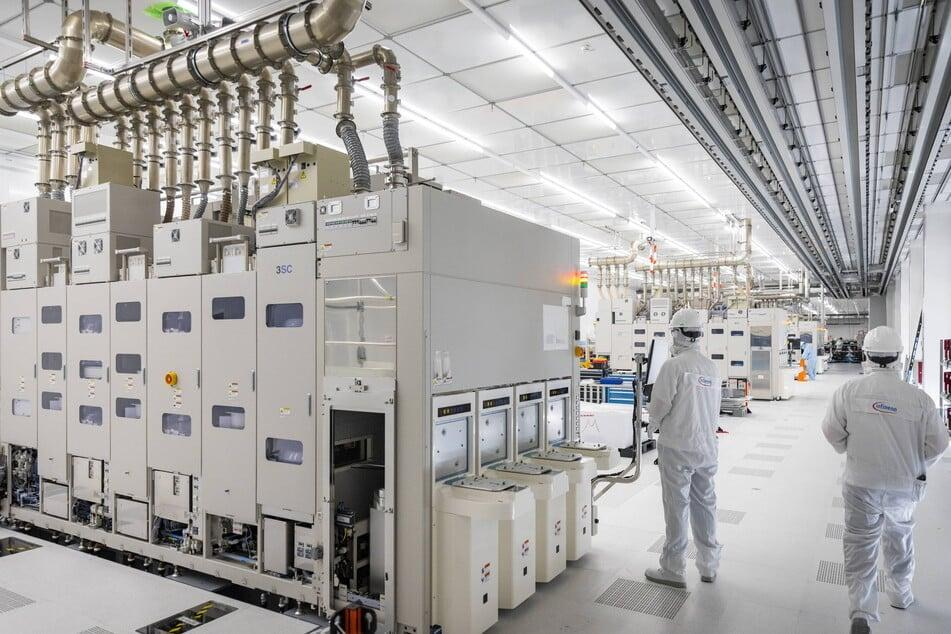
The numerical case for the dialogue is straightforward. Europe today holds roughly ten percent of global semiconductor value, and the Commission’s stated objective is to lift that share to twenty percent by 2030. Reaching that target without operating-grade access to Taiwanese design, packaging and advanced-node expertise has always been an arithmetic problem rather than a political one. The Dresden European Semiconductor Manufacturing Company plant, majority-owned and operated by TSMC alongside Infineon, Bosch and NXP, remains the largest single instance of that operating-grade access, and it has shaped every subsequent conversation about how to scale further across the bloc.
What the joint roadmap agreed by Parliament, Council and Commission on 23 April changes is the political grammar around that dependence. Chips Act 2 has been reframed as a competitiveness instrument first and a resilience instrument second, which gives the Taiwan track a clearer mandate. Commission negotiators want firm commitments on supplier localisation for advanced packaging, on visa fast-tracks for Taiwanese engineers serving the Dresden plant and prospective Italian and Spanish nodes, and on co-funded talent pipelines that anchor the European footprint of Taiwanese fabs to their training corridors back in Hsinchu.
Member-state behaviour is also tightening. The Czech Republic, Poland and Slovakia are emerging as Taiwan’s most operationally engaged European partners, with government-backed research centres and supplier-localisation programmes that double as industrial policy. The Czech indium and gallium recovery effort, the Polish photonics initiatives clustered around Wroclaw, and Slovakia’s design-house corridor near Bratislava all rely on Taiwanese counterparty capacity that the dialogue is meant to formalise. For Taipei, the price of formalisation is recognition, not in the diplomatic sense but as the kind of regulatory equivalence that makes joint research and dual-use technology transfer legally tractable.
The harder question is what happens to the dialogue if cross-Strait tensions escalate while Chips Act 2 is still in trilogue. The institutional answer the Commission has settled on is to push as many bilateral arrangements as possible into binding form before that risk crystallises. The April roadmap accelerated drafting on a stand-alone Industrial Cooperation Track inside Chips Act 2 that would give Taiwanese fabs and tool-makers procedural certainty even if higher-level political contact becomes harder to sustain. That is unusual legislative engineering for an autonomous EU instrument, and it has drawn pushback from member states that prefer to keep Taiwan policy in the foreign-affairs basket rather than the industrial one.
For European industry the calculation is simpler. Demand for high-performance AI chips is climbing faster than European capacity can absorb, and every quarter without operational cooperation with Taiwan pushes more European AI infrastructure decisions toward American hyperscalers. The dialogue does not solve that pressure, but it gives Brussels the only credible track for slowing it. The expected outcome of the next round, scheduled for the autumn, is a joint memorandum on conformity assessment and talent mobility that would let the most advanced workstreams begin operating before the legislative file completes its trilogue passage. That sequencing is what makes the Taipei track structurally different from the bloc’s other industrial dialogues.