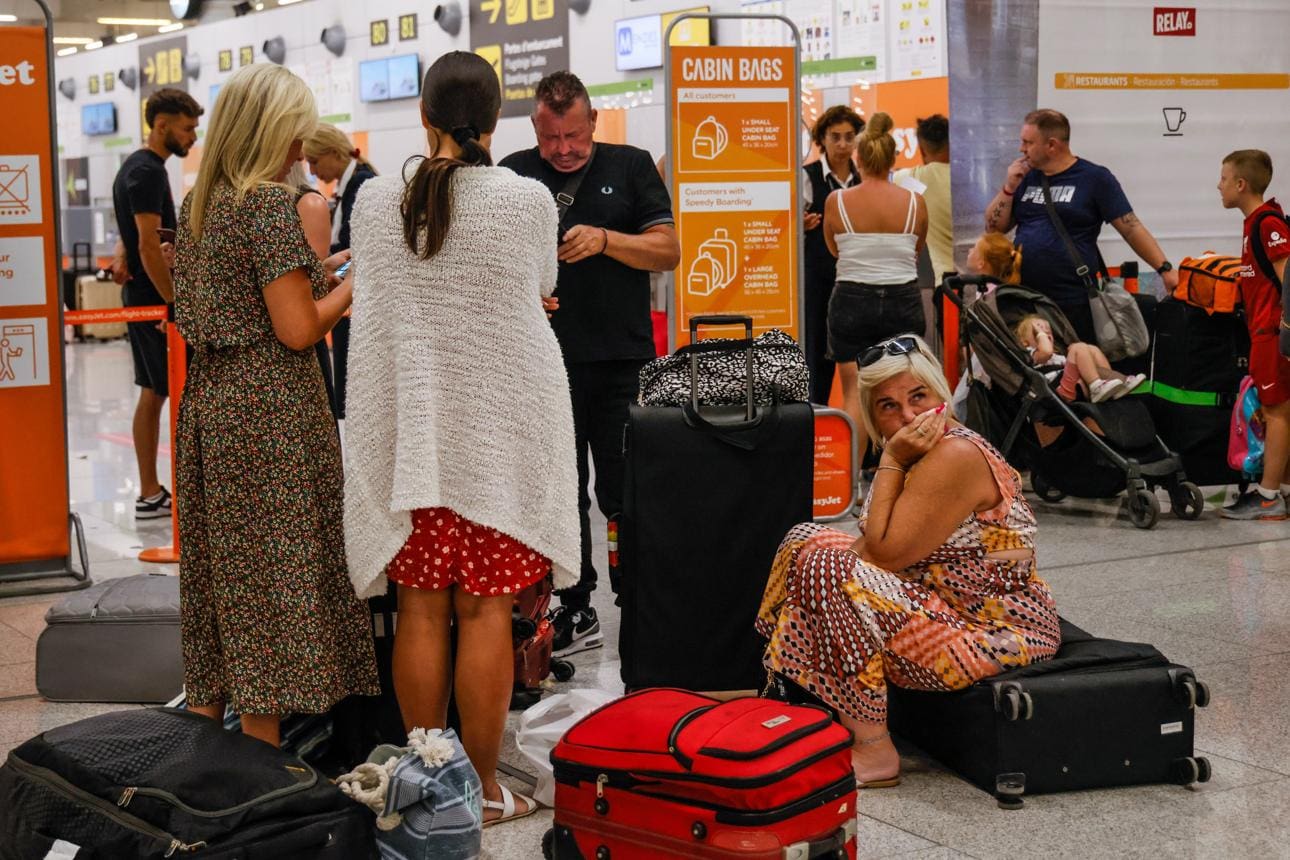
Palma: Ground staff at the Balearic island’s main airport spend each summer measuring bags at the gate and charging for the ones that fail. That routine has a shelf life now. The revised air passenger rights regulation, cleared by the Council on 13 July 2026, obliges carriers to carry a personal item and a cabin bag of up to 100 centimetres and seven kilograms in the base fare, with no separate charge.
The regulation replaces rules written in 2004, and the fight over it ran for two decades. Airlines wanted the compensation threshold raised from three hours of delay to somewhere between four and six, arguing that the shorter window forces cancellations that hurt passengers more than a delay would. Parliament refused. The final text keeps the three-hour trigger and keeps the payment bands unchanged at 250 euros for flights under 1,500 kilometres, 400 euros for medium-haul and 600 euros for long-haul.
Negotiators nearly lost the file in June. Talks collapsed over baggage and compensation, restarted, and produced an agreement on 15 June that the Commission welcomed the same day. Parliament ratified on 7 July. The Council followed six days later. Application begins twelve months after publication in the Official Journal, which places the practical start somewhere in the second half of 2027.
The baggage clause reaches beyond the gate. Carriers must display, as the first option in an online search, the price that already includes hand luggage. Low-cost airlines built a pricing model on the opposite principle, advertising a headline fare and recovering margin through extras chosen later in the booking flow. Reversing the display order strips that model of its main advantage, because a consumer comparing two airlines will now compare two comparable numbers.
Enforcement remains the weak joint. National enforcement bodies handle complaints, and their performance varies sharply between member states. A passenger denied compensation in one country waits weeks for a ruling; in another, months. The revision tightens procedural deadlines and standardises complaint forms, but it leaves the bodies themselves under national control and dependent on national budgets. A stronger right that nobody adjudicates quickly still ends in a small claims court.
Consumer groups also lost ground on extraordinary circumstances, the defence that lets carriers refuse payment when weather or air traffic control failures cause the disruption. The new text lists the circumstances more precisely than the old one did, which reduces argument, but it does not narrow the defence itself. Airlines will keep invoking it, and courts will keep testing whether they may.
For airports like Palma, which handled record traffic through the 2026 season, the immediate work is operational. Cabin bag allowances that vary by carrier become a single floor. Gate sizers calibrated to each airline’s dimensions need recalibrating. Twelve months sounds generous until the first summer inside the new rules arrives.