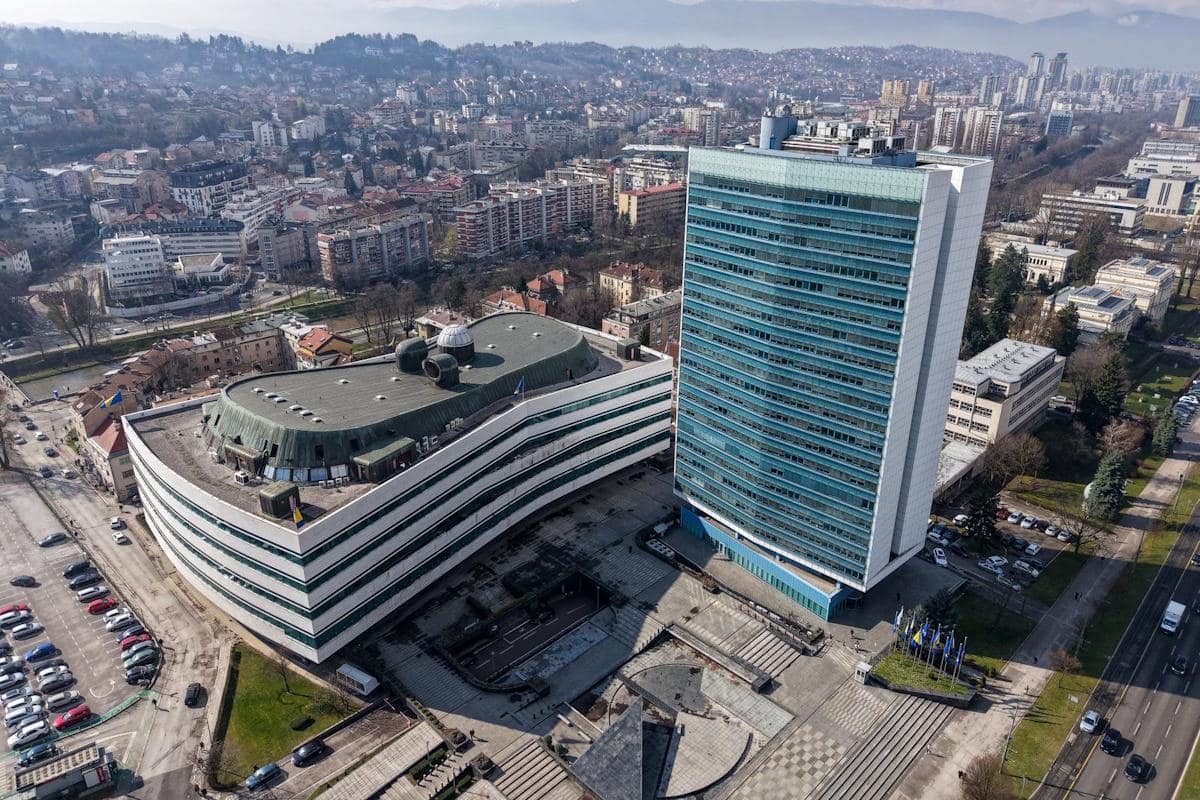
Sarajevo: Bosnia and Herzegovina accession efforts have stalled, according to the European Commission’s 2026 country report published on 4 November. The assessment finds “no progress” in several core areas of the rule of law and warns that media freedom is in “deep stagnation.”
The report accompanies the 2026 Communication on EU enlargement policy and covers the period from 1 September 2025 to 1 September 2026. It traces a long road. Bosnia and Herzegovina applied for membership in February 2016, received candidate status in December 2022 and saw the European Council open accession negotiations in March 2024. The negotiating framework, however, still awaits adoption.
Judicial reform remains the clearest obstacle to Bosnia and Herzegovina accession. New laws on the High Judicial and Prosecutorial Council and on the state-level courts are still pending. The Commission records no progress on anti-corruption work and fundamental rights in several areas, and it describes the public broadcaster BHRT as at serious risk of closure.
Politics overshadowed the reporting year. High Representative Christian Schmidt announced his resignation in May 2026, and Louis Crishock became Acting High Representative in June. The report also covers the removal of Milorad Dodik and early presidential elections in Republika Srpska, before general elections took place on 4 October 2026.
The economy offers little relief. Growth slowed from 2.1% in 2025 to 1.7% in the first quarter of 2026. The Financial Action Task Force has placed the country on its grey list, which raises costs for banks and investors and complicates links with the EU’s financial system.
Money from Brussels now depends on delivery. Sarajevo adopted its Reform Agenda in September 2025 under the Growth Plan’s Reform and Growth Facility. The grace period for the first tranche of reforms ends at the end of 2026, so unmet steps could cost the country funds that its neighbours are already drawing.
The report also flags backsliding on migration policy after authorities reinstated seasonal visa exemptions that diverge from EU rules. That step matters because visa alignment forms part of the trust that member states demand before opening negotiating clusters.
Brussels has tried to keep the door open. Commissioner for Enlargement Marta Kos has repeatedly urged leaders in Sarajevo, Banja Luka and Mostar to agree on the judicial laws, which the EU treats as a gateway to further Bosnia and Herzegovina accession steps. Member states will discuss the package at the General Affairs Council in December, where they will decide whether the country deserves fresh encouragement or tougher conditions on its Bosnia and Herzegovina accession path.
The contrast with Montenegro and Albania, which the Commission praised in the same package, is stark. A new government formed after the October vote could still change course. Without swift judicial laws and a stable broadcaster, though, Bosnia and Herzegovina accession talks will remain a framework on paper while the region moves ahead.