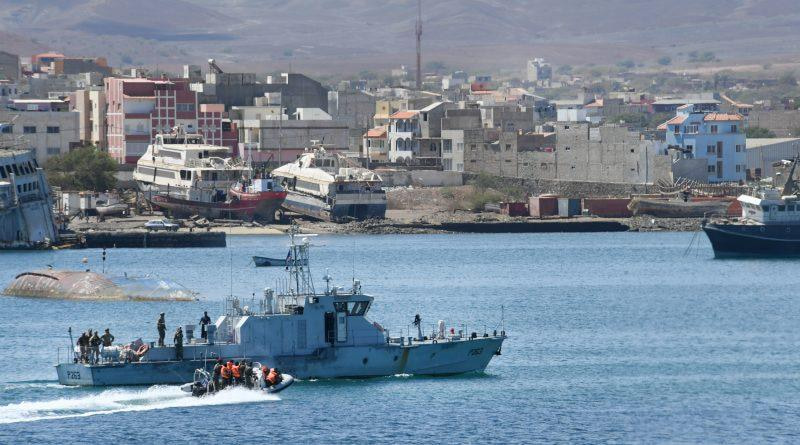
Mindelo: The Cabo Verde Coast Guard will receive €60 million in new EU assistance after the Council adopted a measure on 28 September 2026 to strengthen the country’s armed forces at sea. The support aims to safeguard the sovereignty of Cabo Verde over its waters and to improve maritime security across the wider region.
The decision is the second assistance measure that the Council has approved for the archipelago under the European Peace Facility, the EU instrument that finances defence capacity in partner countries. It lifts total EU backing for the Cabo Verde Coast Guard under the facility to €75 million, which means that the first package, adopted in 2025, was worth €15 million.
The money targets five areas of Coast Guard capability: maintenance and logistics, education and training, maritime operations, communication systems, and intelligence, surveillance and reconnaissance. Together these areas cover the whole chain from keeping vessels at sea to knowing what happens on the water.
The package falls under the EU–Cabo Verde Special Partnership, a framework through which the Union and the island state cooperate on stability and security. The Council describes the aim as helping the Cabo Verde Coast Guard defend the country’s sovereignty at sea while contributing to maritime security beyond its own waters.
Geography explains the interest. Cabo Verde sits in the Atlantic off the coast of West Africa, and a small coast guard has to watch a very large stretch of ocean. Shipping lanes cross that ocean, and weak surveillance can leave room for illicit trafficking and illegal fishing, so the Cabo Verde Coast Guard needs reliable boats, communications and intelligence to do its job.
The European Peace Facility, established in March 2021, finances actions under the common foreign and security policy. Most public attention has gone to its support for Ukraine, but the facility also pays for training and equipment in Africa and the Balkans, and the Cabo Verde measure belongs to that quieter strand.
For the EU, the logic is mutual interest. A better equipped partner at sea reduces risks along routes that reach Europe’s own coasts and gives Brussels a visible security partner on the Atlantic. For Cabo Verde, a small democracy with limited budgets, external funding lets the Cabo Verde Coast Guard buy capabilities that national spending alone would not cover.
Delivery will decide the value. Procurement, training schedules and maintenance contracts determine whether equipment ends up at sea or in a harbour, and the announcement gives no delivery timetable. Observers will look for working equipment and trained crews, and if the second package delivers, the Cabo Verde Coast Guard could become a model for how the EU supports maritime security among its Atlantic partners.