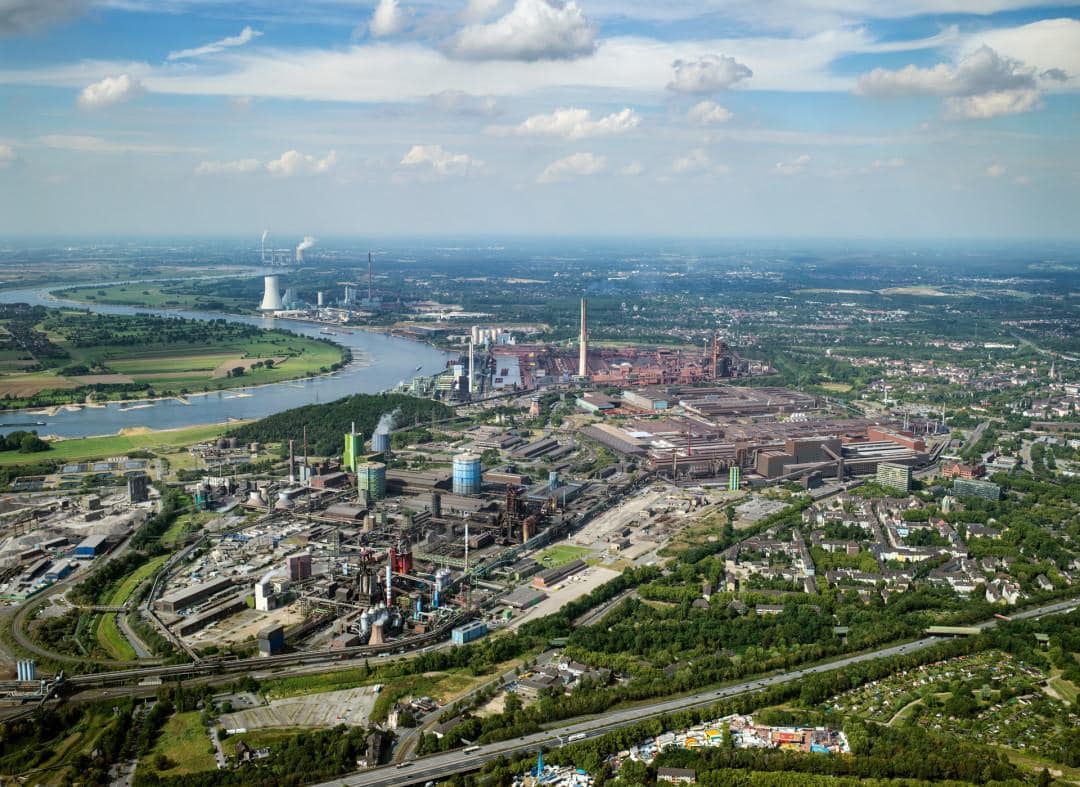
Duisburg: Germany can now pay heavy industry to cut emissions through carbon contracts for difference, after the European Commission approved a €5 billion state aid scheme on 7 May 2026. The scheme helps companies in steel, cement, glass, chemicals and other energy-intensive sectors replace fossil fuels or raw materials with lower-carbon alternatives in their production processes.
Eligible projects under the carbon contracts for difference include electrification, hydrogen, carbon capture and storage, carbon capture and use, biomethane, and heat recovery and storage. Companies compete in bidding rounds, and officials rank the bids by cost efficiency, meaning the support requested for each tonne of carbon dioxide avoided. Cheaper bids win, which should push firms to propose realistic projects.
The contracts last 15 years and work in both directions. Beneficiaries receive annual payments linked to market developments, such as prices of EU Emissions Trading System allowances or of energy inputs compared with conventional technologies. If the supported process later becomes cheaper to run than the conventional alternative, the company must repay the difference. Carbon contracts for difference therefore cover only the extra cost of cleaner production.
Strict targets come with the money. Beneficiaries must cut emissions by at least 50% within four years and by 85% by the end of the 15-year period. The Commission measures those cuts against reference systems based on the most efficient conventional technology in each sector, which prevents firms from claiming credit for improvements they would have made anyway.
Eligible sectors are those covered by the Emissions Trading System, including steel and other metals, plaster, ceramics, paper and pulp, cement, lime and chemicals. The new carbon contracts for difference aim to close the cost gap between green and conventional production.
The scheme follows an earlier one approved in February 2024. It also replaces a design approved in March 2025, which German authorities decided not to implement in that form and redesigned instead. The history shows how hard it is to build support that is generous enough to change investment decisions and tight enough to satisfy EU state aid rules.
The Commission’s announcement gives no start date for the first bidding round and no list of expected projects. Industry will want those details soon, because plants need years of lead time to build hydrogen supply or capture systems. If the auctions attract credible bids, carbon contracts for difference could become a model for other member states that want to keep heavy industry at home while cutting its emissions.