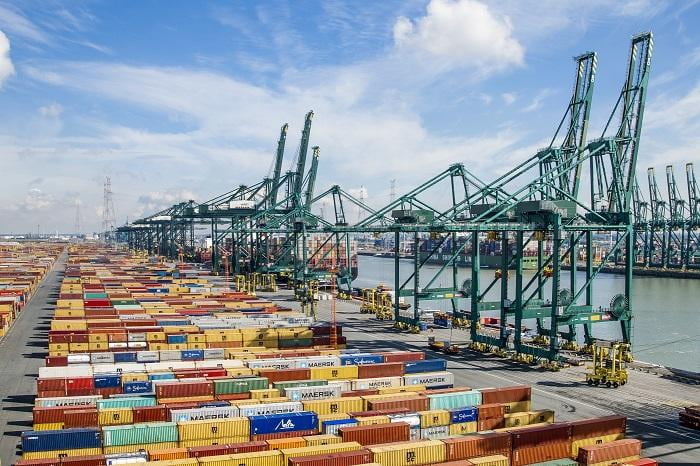
Antwerp: Seven member states received letters of formal notice on 1 October 2026 because their customs systems for centralised clearance for import are still not running as the Union Customs Code requires. The Commission named Belgium, Greece, France, Hungary, the Netherlands, Poland and Portugal in its October infringement package. Each government has two months to reply before the Commission decides whether to move to a reasoned opinion.
Centralised clearance for import lets a trader lodge a customs declaration and settle duties in the member state where the company is established, even when the goods physically arrive at a port or airport in another country. For a logistics group in a port city using centralised clearance for import, the system promises one set of accounts, one customs office and one audit trail instead of a separate process in every country where cargo lands. Governments had to build the supporting electronic systems in two phases.
The Commission set the first deadline for 1 July 2024 and the second for 2 June 2025. The seven countries on the list failed to complete the required deployment, according to the Commission’s October 2026 decisions. The timing shows how long the gap has lasted: the deadline for the second phase passed more than a year before the Commission took this step, and the first passed more than two years earlier.
The delay in centralised clearance for import hurts traders more than it hurts governments. A firm that imports through Antwerp, Piraeus or Gdańsk and wants to clear goods in its home country cannot use centralised clearance for import where one of the two administrations lacks the system, so it falls back on slower national procedures. Smaller importers, which cannot afford customs representatives in several countries, feel the cost most sharply.
Beyond centralised clearance for import, the package also contains tougher customs cases that show how the Commission uses each stage of the procedure. Greece received a reasoned opinion over its national import system, which should have been in place by 31 December 2023, and the Commission warned that financial sanctions are possible if the problem persists. Portugal received a letter of formal notice over the automated export system, which faces the same deadline.
Slovakia went further. The Commission referred the country to the Court of Justice over the electronic system for temporary storage in air transport. It sent a letter of formal notice on 7 May 2025 and a reasoned opinion on 11 December 2025, and the referral followed in October 2026. The step shows that a customs deadline missed for long enough ends up in court rather than in a negotiation.
These cases arrive as the Union prepares a wider reform of the customs framework, which depends on reliable national data systems. A bloc that wants a shared customs data hub cannot build one on top of national platforms that do not yet meet today’s rules. The seven letters on centralised clearance for import therefore send a signal beyond a single deadline.
The next move belongs to the seven governments. If they show credible timetables and finish the work, the Commission can close the files. If they do not, centralised clearance for import will move to the reasoned opinion stage, and port communities from Antwerp to Lisbon will keep waiting for the single customs account that EU law promised them.