August 10, 2026
LATEST
Europe’s Air Quality Improves but WHO Limits LoomTwelve New EU Medicines Win a Green Light from EMAFIFA Agent Rules Must Answer to Europe’s CourtsTachograph Rules Now Reach Vans Crossing Europe’s BordersNature Restoration Plans Come Due as a Hard Deadline NearsBrussels Opens a State Aid Probe Into Spain’s Renewables PayoutBrussels Extends Its Tariff Suspension on US Goods IndefinitelyFarmers Win Stronger Contract Rights Across the EU Supply ChainEurope Finally Locks In Its 348-Satellite Answer to StarlinkPlatform Work Rules Face a National Scramble Before DecemberDuty-Free Parcels Reach the End of the Line for EU ShoppersAfter Nine Years, Europe and Australia Seal a Trade PactBeijing Answers Europe’s Russia Sanctions in KindOne Year On, the EU-Japan Alliance Faces Its First TestEurope’s Chip Ambitions Still Run Through Taiwan’s FabsWhy South Korea Bet Its Research Future on Europe’s ProgrammeEurope and Japan Deepen Their Economic Alliance as Rivals CircleFive Joint Defence Projects Launch Europe’s Military ShieldElectrification Plan Aims to Make Europe First Electro ContinentHorizon Europe Budget Fight Heats Up as Ministers Push BackEurope’s Air Quality Improves but WHO Limits LoomTwelve New EU Medicines Win a Green Light from EMAFIFA Agent Rules Must Answer to Europe’s CourtsTachograph Rules Now Reach Vans Crossing Europe’s BordersNature Restoration Plans Come Due as a Hard Deadline NearsBrussels Opens a State Aid Probe Into Spain’s Renewables PayoutBrussels Extends Its Tariff Suspension on US Goods IndefinitelyFarmers Win Stronger Contract Rights Across the EU Supply ChainEurope Finally Locks In Its 348-Satellite Answer to StarlinkPlatform Work Rules Face a National Scramble Before DecemberDuty-Free Parcels Reach the End of the Line for EU ShoppersAfter Nine Years, Europe and Australia Seal a Trade PactBeijing Answers Europe’s Russia Sanctions in KindOne Year On, the EU-Japan Alliance Faces Its First TestEurope’s Chip Ambitions Still Run Through Taiwan’s FabsWhy South Korea Bet Its Research Future on Europe’s ProgrammeEurope and Japan Deepen Their Economic Alliance as Rivals CircleFive Joint Defence Projects Launch Europe’s Military ShieldElectrification Plan Aims to Make Europe First Electro ContinentHorizon Europe Budget Fight Heats Up as Ministers Push Back
August 10, 2026
LATEST
Europe’s Air Quality Improves but WHO Limits LoomTwelve New EU Medicines Win a Green Light from EMAFIFA Agent Rules Must Answer to Europe’s CourtsTachograph Rules Now Reach Vans Crossing Europe’s BordersNature Restoration Plans Come Due as a Hard Deadline NearsBrussels Opens a State Aid Probe Into Spain’s Renewables PayoutBrussels Extends Its Tariff Suspension on US Goods IndefinitelyFarmers Win Stronger Contract Rights Across the EU Supply ChainEurope Finally Locks In Its 348-Satellite Answer to StarlinkPlatform Work Rules Face a National Scramble Before DecemberDuty-Free Parcels Reach the End of the Line for EU ShoppersAfter Nine Years, Europe and Australia Seal a Trade PactBeijing Answers Europe’s Russia Sanctions in KindOne Year On, the EU-Japan Alliance Faces Its First TestEurope’s Chip Ambitions Still Run Through Taiwan’s FabsWhy South Korea Bet Its Research Future on Europe’s ProgrammeEurope and Japan Deepen Their Economic Alliance as Rivals CircleFive Joint Defence Projects Launch Europe’s Military ShieldElectrification Plan Aims to Make Europe First Electro ContinentHorizon Europe Budget Fight Heats Up as Ministers Push BackEurope’s Air Quality Improves but WHO Limits LoomTwelve New EU Medicines Win a Green Light from EMAFIFA Agent Rules Must Answer to Europe’s CourtsTachograph Rules Now Reach Vans Crossing Europe’s BordersNature Restoration Plans Come Due as a Hard Deadline NearsBrussels Opens a State Aid Probe Into Spain’s Renewables PayoutBrussels Extends Its Tariff Suspension on US Goods IndefinitelyFarmers Win Stronger Contract Rights Across the EU Supply ChainEurope Finally Locks In Its 348-Satellite Answer to StarlinkPlatform Work Rules Face a National Scramble Before DecemberDuty-Free Parcels Reach the End of the Line for EU ShoppersAfter Nine Years, Europe and Australia Seal a Trade PactBeijing Answers Europe’s Russia Sanctions in KindOne Year On, the EU-Japan Alliance Faces Its First TestEurope’s Chip Ambitions Still Run Through Taiwan’s FabsWhy South Korea Bet Its Research Future on Europe’s ProgrammeEurope and Japan Deepen Their Economic Alliance as Rivals CircleFive Joint Defence Projects Launch Europe’s Military ShieldElectrification Plan Aims to Make Europe First Electro ContinentHorizon Europe Budget Fight Heats Up as Ministers Push Back

Civic Groups Get Fresh Millions To Defend Rights Across Europe

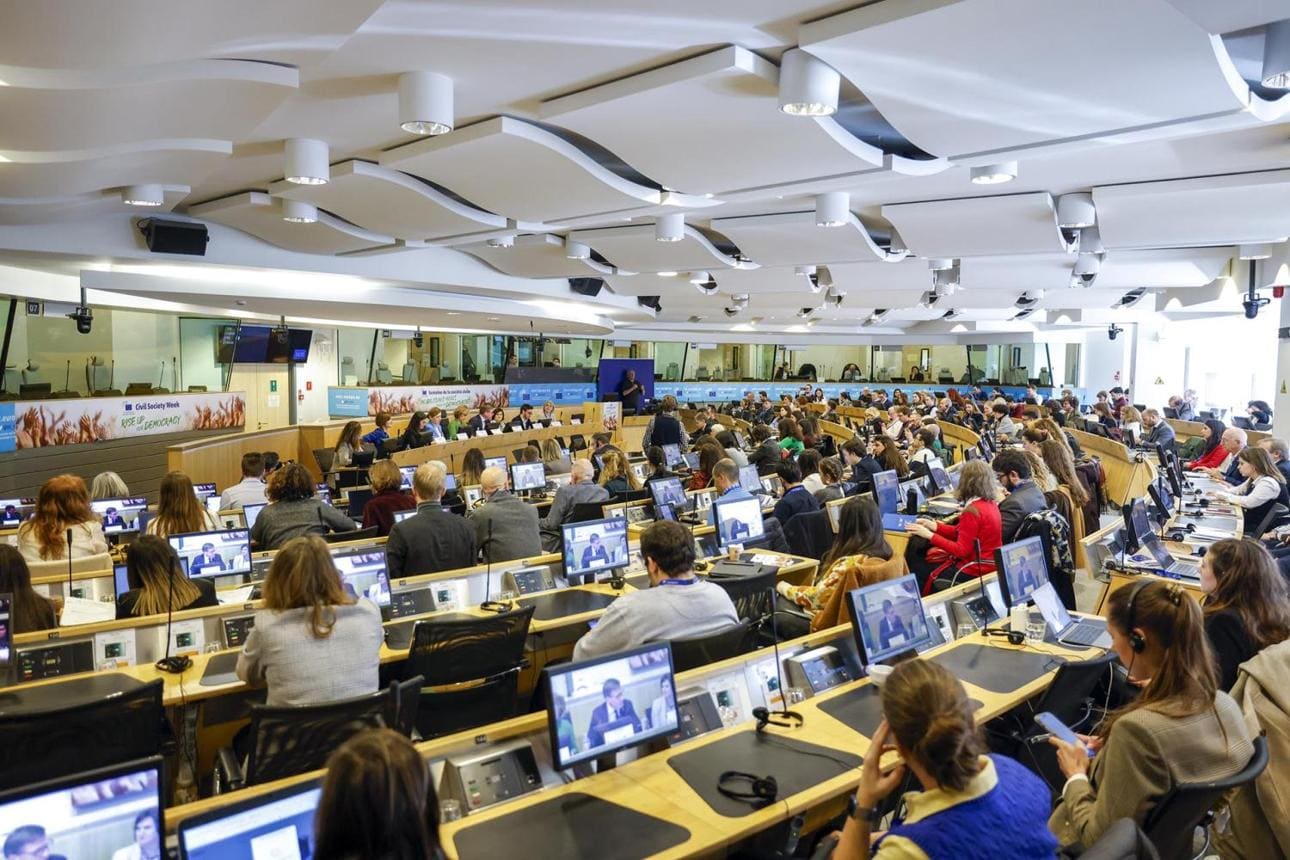
Tallinn: For the watchdogs, legal-aid clinics and grassroots associations that make up Europe’s civil society, the most important sentence of late May was an administrative one. The Citizens, Equality, Rights and Values programme, the EU’s main funding line for democratic participation and fundamental rights, opened a fresh batch of 2026 calls, including two that landed on 20 May with a shared theme that has grown more pointed each year: protecting the space in which civic groups operate at all.

The new calls cover promoting an enabling civic environment and raising awareness of the EU Charter of Fundamental Rights, both running to a September deadline, and they sit alongside an earlier Town Twinning call that opened at the start of the month. Together they form part of a 2026 work programme worth roughly 305 million euros spread across a dozen calls, money that flows to organisations working at local, regional, national and cross-border level on equality, citizens’ engagement and the defence of rights.

The framing of the civic-space call is itself a quiet diagnosis. Across several member states, non-governmental organisations report restrictive registration rules, funding pressure, smear campaigns and legal harassment, the slow tightening that scholars label democratic backsliding. By earmarking money specifically to help such groups survive and operate, the Commission is acknowledging that the threat to rights in parts of the Union now comes less from the absence of laws than from the erosion of the independent organisations that hold governments to those laws.

That acknowledgement carries an awkward subtext. The programme is an EU instrument, but its grants often reach organisations that are most embattled precisely where national authorities are least sympathetic, which has periodically put European institutions in the position of bankrolling critics of governments they must also negotiate with. The programme’s defenders see that as the point: a rights union that funds only state-approved bodies would be hollow. Its critics, some in national capitals, view European money for domestic civil society as interference. The calls proceed regardless, and the appetite for them is consistently larger than the budget can satisfy.

There is a longer shadow over the figures, too. The programme runs within the current multiannual budget that expires at the end of 2027, and the negotiation over what replaces it has already begun. Civil-society networks worry that the next budget could fold dedicated rights funding into larger, less visible pots controlled more tightly by member states, diluting the independence that makes the programme valuable. For now the mechanics are reassuringly concrete. Eligible groups can apply through the EU funding portal, awards support both core activity and specific projects, and successful applicants gain something scarcer than money in a hostile climate: the institutional cover of European backing.

Whether 305 million euros is adequate to the task is a fair question. Set against the scale of the democratic strain it is meant to counter, the sum is modest, and a grant cycle cannot substitute for the rule of law where it is failing. But for an organisation deciding whether it can keep its doors open for another year, the difference between a funded and an unfunded application is rarely abstract.