Trieste: Cohesion policy reform must build on what works rather than start again, according to local and regional leaders who met in Trieste on 29 October 2026. About 30 representatives joined a seminar of the European Committee of the Regions’ commission for territorial cohesion, hosted by the Autonomous Region of Friuli Venezia Giulia.
Emil Boc, vice-chair of the commission and mayor of Cluj-Napoca, opened the meeting with Massimiliano Fedriga, president of the host region. Boc said the message is not that cohesion policy should remain unchanged, but that its modernisation must build on what works. The remark answers a Commission plan that folds cohesion money into national plans.
That plan sits in the 2028-2034 budget proposal, which the Commission presented on 16 July 2025. It merges cohesion and agriculture funds into one National and Regional Partnership Plan for each member state. Executive Vice-President Raffaele Fitto told the European Week of Regions and Cities in October that 27 such plans would replace 14 funds and more than 500 programmes.
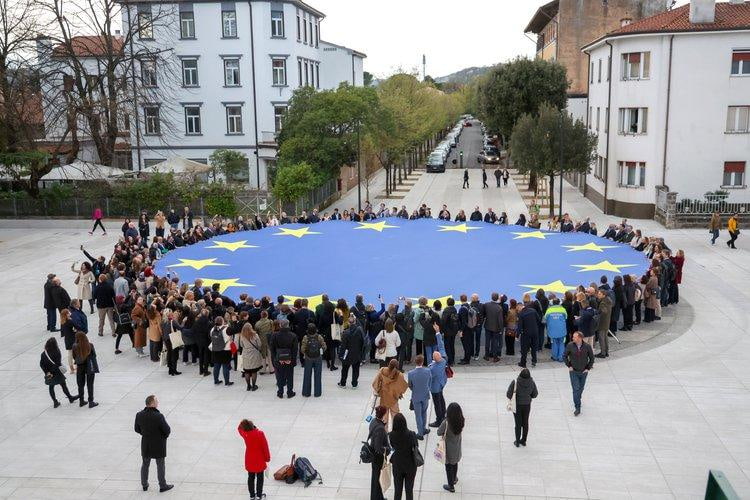
Participants in Trieste discussed how cohesion money can support innovation and industrial transition. They also reviewed integrated territorial strategies, some of them cross-border, with Barbara Zilli, the finance minister of Friuli Venezia Giulia, and visited Piazza Transalpina, the square that straddles Gorizia and Nova Gorica. The border square gives regional leaders a concrete example of results that already work, and it shows why they want any cohesion policy reform to protect cross-border strategies.
Fitto used the same week to defend the design. He said the mid-term review had reallocated 35 billion euros, with more than 15 billion going to competitiveness and almost 12 billion to defence and security. He promised that partnership with regions would run chapter by chapter, and that a Right to Stay strategy, built on more than 700 contributions, would arrive at the start of next year.
Regional groups remain unconvinced that the cohesion policy reform gives them enough say. The Assembly of European Regions criticised in a September 2025 briefing that the involvement of regions is left to the discretion of member states. The Commission says each member state would receive the same amounts as today, with a mandatory minimum for less developed regions, but the sources reviewed for this article do not give that minimum.
The summaries of the Trieste seminar do not say which changes regions want written into the text. They say only that the lessons will feed the committee’s work on the future of cohesion policy. Cohesion policy reform still needs unanimity in the Council and consent from the European Parliament, so regional voices must win over capitals as well as Brussels.
The test for cohesion policy reform is simple: whether the partnership plans give regions a binding seat at the table, or leave them as consultees of their own governments.