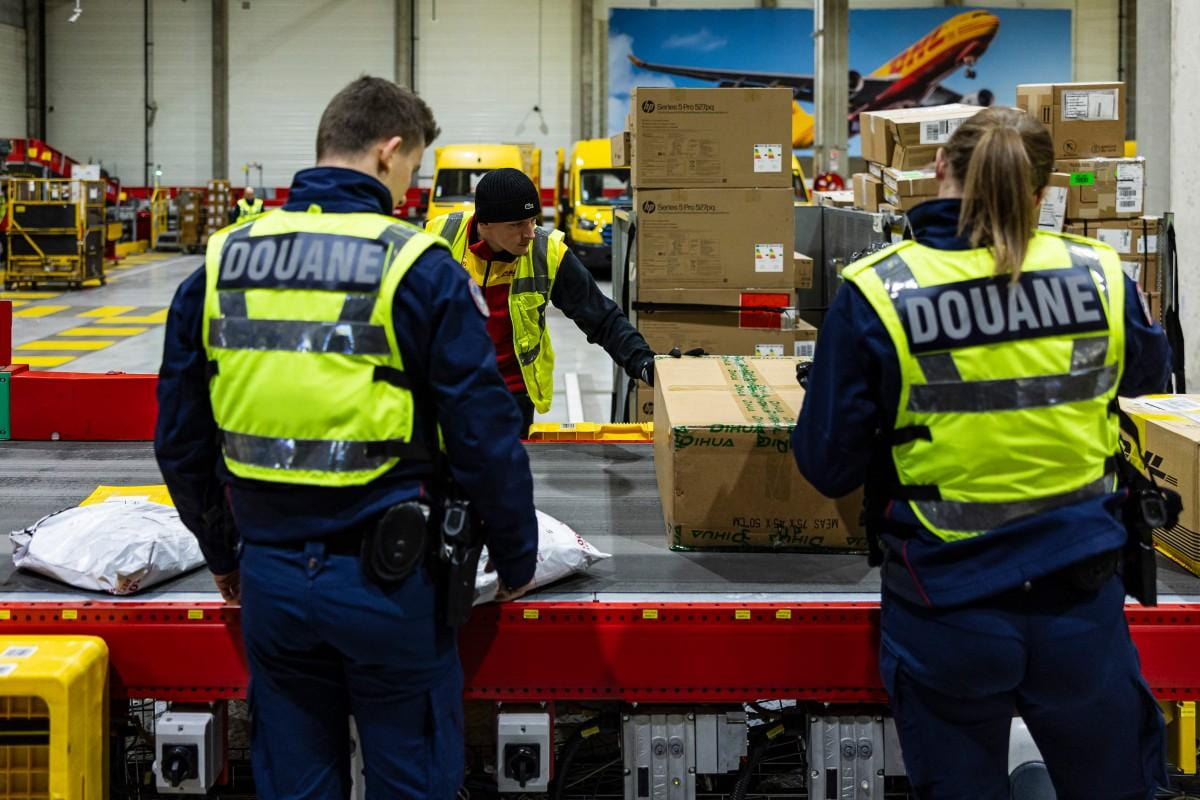
Liège: The sorting belts that feed Europe’s largest cargo airport now carry consignments that customs officers treat differently than they did a year ago. Since 1 July 2026 the European Union charges a flat three-euro duty on small parcels valued below 150 euros, ending an exemption that shaped a decade of cross-border retail. Finance ministers agreed the measure in December 2025 as a stopgap, and it will hold until the wider customs reform they settled a month earlier takes effect.
The arithmetic explains the urgency. Consignments under the old 150-euro threshold account for roughly 93 percent of all e-commerce flows into the bloc, and the volume climbed far faster than any customs administration could staff for. Member states watched declared values cluster suspiciously close to the exemption ceiling, and national authorities lacked the inspection capacity to test each claim. A flat charge sidesteps that problem. It applies per tariff heading within a consignment rather than per package, so a box holding a phone case, a cable and a pair of trainers attracts three separate charges.
Retailers absorbed the first weeks without visible disruption, partly because the largest platforms had already rebuilt their pricing models in anticipation. The harder question concerns what arrives next. Negotiators still have not fixed the level of the separate handling fee that the Commission wants operational from November 2026, and the November instrument differs from the July duty in a way that matters commercially. The duty is revenue for the Union budget. The handling fee is meant to cover the administrative cost of processing each declaration, and the Commission will set the amount itself and revisit it every two years.
That design gives the executive unusual latitude. A fee reassessed biennially by the institution that also measures the underlying cost creates an incentive structure national parliaments rarely accept in domestic taxation. Trade associations have made that argument in consultations, and they have a point worth taking seriously. The counterargument runs that customs processing costs genuinely vary with volume and automation, and a rate frozen in primary legislation would drift out of alignment within a single Parliament term.
Logistics operators face a more immediate operational puzzle. Postal networks, express carriers and marketplace fulfilment arms each collect duties through different mechanisms, and the July charge already exposed gaps in how they reconcile declarations against payments. Adding a second charge with its own legal basis and its own remittance schedule multiplies the reconciliation work. Several carriers have asked for the two instruments to share a single collection channel, which sounds administratively obvious and turns out to be legally awkward because one flows to the Union budget and the other reimburses national administrations.
The Commission’s own framing treats both measures as bridges to the permanent regime, in which a central EU Customs Authority and a shared data hub would replace 27 parallel systems. That architecture will not be operational for years. In the interval, importers must comply with a temporary duty whose successor remains undefined and a handling fee whose price nobody can quote.
What follows depends on whether the November instrument lands on schedule. If it slips, the three-euro duty carries the entire policy burden through the peak shipping season, and the revenue it raises will fall well short of the processing costs it was never designed to cover. If it arrives, thousands of small importers will discover that the cost of a low-value shipment now includes two separate charges, neither of which existed eighteen months ago.