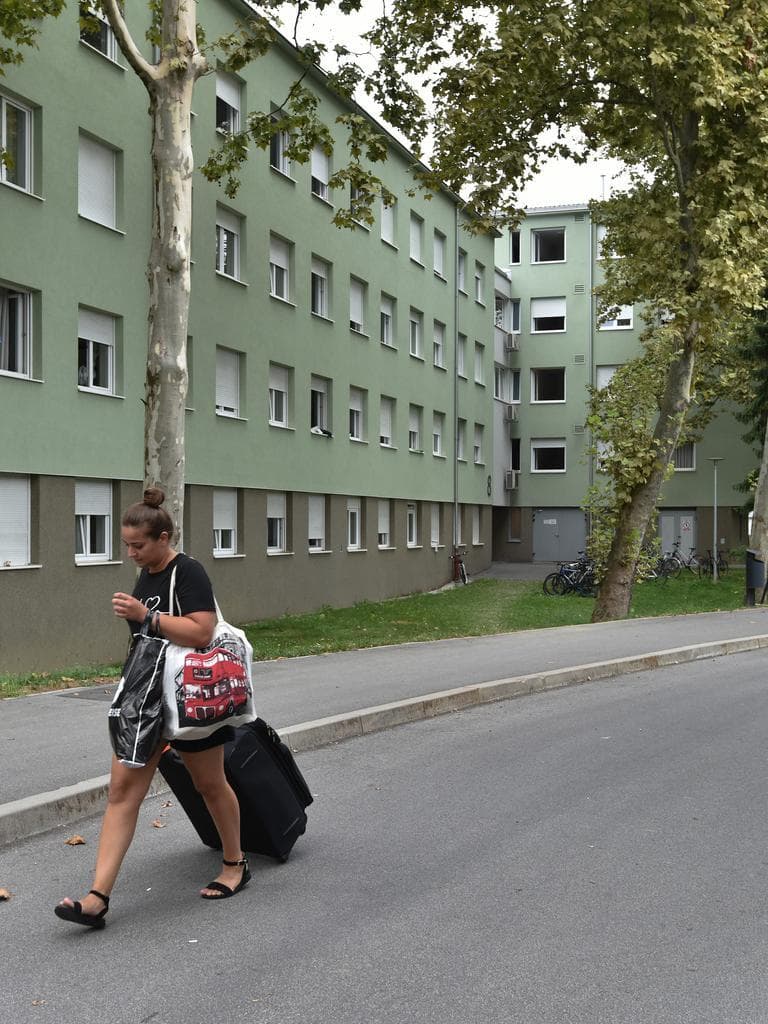
Zagreb: Young Croatians leave the parental home at 31.5 years on average, the latest age recorded anywhere in the European Union. Young Finns leave at 21.4. Eurostat published the comparison on 15 September, and the ten-year gap between those two numbers says more about European labour and housing markets than the EU average ever could.
That average barely moves. It stood at 26.3 years in 2025, a shade above the 26.2 recorded in 2024, and it has hovered near 26 since 2002. Two decades of convergence policy, cohesion spending and youth programmes have left the headline indicator almost flat.
Beneath it, the spread is wide and stable. Greece and Slovakia both recorded 30.9 years, Spain and Italy both 30.2. At the other end, Denmark reported 21.8 and Estonia and Lithuania both 22.7. The ranking has scarcely changed in a decade, which points to structural causes rather than to the business cycle.
Eurostat pairs the finding with youth employment, and the correlation does much of the explanatory work. The EU employment rate for people aged 20 to 29 stood at 65.5% in 2025. Countries where young people move out early, among them the Netherlands, Denmark, Germany and Sweden, sit above that line. Countries where they stay, including Greece, Croatia, Spain and Italy, sit below it.
Correlation is not the whole mechanism. Student support systems matter. In Denmark and Finland, state grants and subsidised student housing let a 19 or 20 year old fund an independent household before landing a permanent job. In Spain or Croatia, family support flows through shared accommodation instead of through a transfer, so the same resources produce a different statistic.
Rental supply then locks the pattern in. Countries with small private rental sectors and high owner-occupation give a young worker nothing to move into at a plausible price. Where nobody rents, nobody leaves early, whatever the labour market does.
The indicator deserves careful handling. Eurostat builds it from the Labour Force Survey, checking whether respondents aged 15 to 34 share a household with a parent, calculating an exit probability for each single year of age, and reporting the age at which half the cohort no longer lives with a parent. It is a modelled median rather than a direct observation, and it says nothing about why anyone stayed.
That distinction matters for policy design. A 31.5 year figure could describe an economy with no entry-level jobs, or one with strong family preferences and cheap intergenerational co-residence, or both at once. The statistic does not separate constraint from choice, and ministers who quote it usually assume the first reading.
The number still functions as a useful proxy. Delayed household formation tracks delayed family formation, which feeds directly into the fertility and dependency projections that drive pension debates in every capital south and east of the Alps. Read that way, a single demographic line connects to the fiscal arguments now shaping the next long-term budget.
What the release does not offer is any sign of movement. A decimal point of change in one year, on an indicator flat since 2002, tells European institutions that the instruments they have deployed do not reach the mechanism they intend to fix. The Eurostat article sets out the country detail.