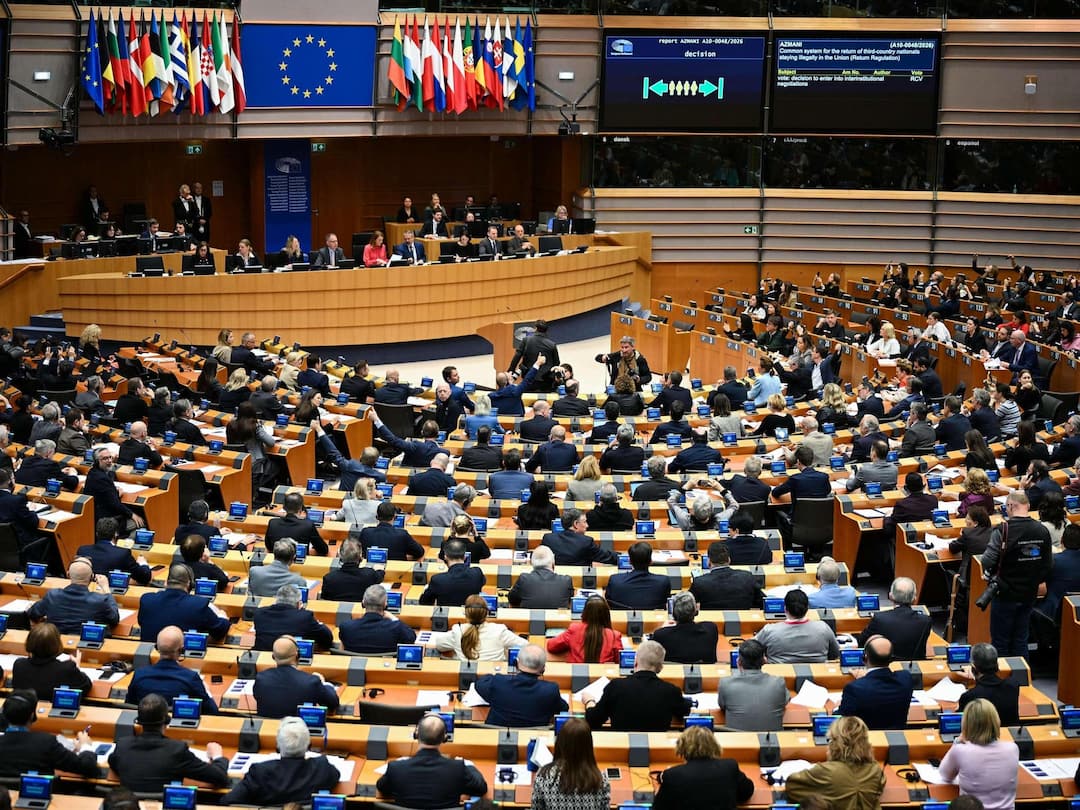
Brussels: The EU return regulation is the legal core of Europe’s new approach to deportation, and its most controversial feature, return hubs outside the Union, will define how it works in practice. Parliament and the Council reached a political deal on 1 June 2026 on a Common European System for Returns that replaces the 2008 Return Directive. The text still needs formal adoption by both institutions and publication in the Official Journal.
This analysis looks at what the agreement changes, where the legal pressure points lie, and what member states must do to make the EU return regulation work.
What the political deal introduces
The agreement creates three main instruments. Return decisions will be mutually recognised, so an order issued in one member state can be enforced in another. A new European Return Order gives that recognition a common form. In defined cases, such as a security risk or absconding, return becomes mandatory and can be enforced by force.
The deal also allows return hubs in non-EU countries, subject to agreements that respect the principle of non-refoulement. That safeguard is the legal hinge of the whole text, because it ties the hubs to the prohibition on sending anyone to a place where they face serious harm.
Why the EU return regulation matters now
The Commission points to a return rate of 28 percent in 2025, the highest in ten years. Even so, nearly three quarters of those ordered to leave remain in the Union, which is why governments have pressed for stronger tools. Mutual recognition addresses one gap: today a person who moves between member states can escape enforcement because each country must start its own procedure.
The political appeal is easy to see. Voters in many states want visible results, and the EU return regulation offers a single framework instead of 27 separate practices.
Return hubs and the legal test
Return hubs are where the text will face its hardest scrutiny. A hub only works if a third country accepts people who have no ties to it, and such countries will expect funding, investment or trade concessions in exchange. Every agreement will therefore be negotiated case by case, and each will be open to challenge before national courts and the Court of Justice of the EU.
Rights organisations warn that detention conditions and access to remedies are hard to supervise outside EU territory. Supporters answer that the safeguards in the text, together with the Charter of Fundamental Rights, create enough protection. The truth will emerge only when the first agreements are signed and tested in litigation.
What member states must do
Implementation will depend on administrative capacity. Authorities need compatible databases, trained staff and enough detention and escort capacity to carry out mandatory returns within the new deadlines. States that already struggle with processing backlogs may find that the EU return regulation exposes capacity problems rather than solving them.
Cooperation with countries of origin is the other bottleneck. Returns succeed only when the destination country issues travel documents and accepts its nationals, and no legislation can compel that. The EU will keep relying on visa leverage, development aid and readmission arrangements.
What happens next
After formal adoption and publication, the EU return regulation will apply following a transition period, and the Commission will have to produce guidance for national authorities. The first hub agreements and the first court challenges will show whether the text delivers higher return rates while keeping its commitment to non-refoulement. Observers should watch those two developments closely, because together they will decide whether the EU return regulation becomes a workable system or a source of prolonged litigation.