August 9, 2026
LATEST
Pension Savings Rules Get a Reset as the EU Scraps the 1% CapMedicine Shortages Move to the Heart of Europe’s Pharma ResetJapan Becomes Europe’s Closest Security Partner in AsiaCan Europe’s New Zealand Deal Anchor It in the Pacific?Chip Research Binds Europe and South Korea CloserMinimum Prices Replace Tariffs in Europe’s China Car DealBrussels and Beijing Keep Talking While the Trade Gap WidensKorean Weapons and EU Loans Now Bankroll Europe’s RearmamentNew EU Gas Market Rules Take Effect With Consumer SafeguardsDeforestation Regulation Holds Its December Deadline Despite CutsDigital Omnibus Delays Europe’s High-Risk AI Deadline to 2027Europe’s Schools Confront a Widening Basic Skills GapRule of Law Report Finds Progress but Trust Still LagsIRIS2 Gains 66 Satellites as Brussels Signs the Rollout DealNature Restoration Plans Come Due as Member States Race a DeadlineECB Rates Hold at 2.25 Percent as Frankfurt Waits on the DataEU Budget Talks Turn to Cohesion as Ireland Takes OverWildfire Response Stretches Europe’s Emergency Fleet ThinCan Europe’s Quantum Plan Match Its Big Ambitions?Armenia Edges West as Moscow’s Grip Slips AwayPension Savings Rules Get a Reset as the EU Scraps the 1% CapMedicine Shortages Move to the Heart of Europe’s Pharma ResetJapan Becomes Europe’s Closest Security Partner in AsiaCan Europe’s New Zealand Deal Anchor It in the Pacific?Chip Research Binds Europe and South Korea CloserMinimum Prices Replace Tariffs in Europe’s China Car DealBrussels and Beijing Keep Talking While the Trade Gap WidensKorean Weapons and EU Loans Now Bankroll Europe’s RearmamentNew EU Gas Market Rules Take Effect With Consumer SafeguardsDeforestation Regulation Holds Its December Deadline Despite CutsDigital Omnibus Delays Europe’s High-Risk AI Deadline to 2027Europe’s Schools Confront a Widening Basic Skills GapRule of Law Report Finds Progress but Trust Still LagsIRIS2 Gains 66 Satellites as Brussels Signs the Rollout DealNature Restoration Plans Come Due as Member States Race a DeadlineECB Rates Hold at 2.25 Percent as Frankfurt Waits on the DataEU Budget Talks Turn to Cohesion as Ireland Takes OverWildfire Response Stretches Europe’s Emergency Fleet ThinCan Europe’s Quantum Plan Match Its Big Ambitions?Armenia Edges West as Moscow’s Grip Slips Away
August 9, 2026
LATEST
Pension Savings Rules Get a Reset as the EU Scraps the 1% CapMedicine Shortages Move to the Heart of Europe’s Pharma ResetJapan Becomes Europe’s Closest Security Partner in AsiaCan Europe’s New Zealand Deal Anchor It in the Pacific?Chip Research Binds Europe and South Korea CloserMinimum Prices Replace Tariffs in Europe’s China Car DealBrussels and Beijing Keep Talking While the Trade Gap WidensKorean Weapons and EU Loans Now Bankroll Europe’s RearmamentNew EU Gas Market Rules Take Effect With Consumer SafeguardsDeforestation Regulation Holds Its December Deadline Despite CutsDigital Omnibus Delays Europe’s High-Risk AI Deadline to 2027Europe’s Schools Confront a Widening Basic Skills GapRule of Law Report Finds Progress but Trust Still LagsIRIS2 Gains 66 Satellites as Brussels Signs the Rollout DealNature Restoration Plans Come Due as Member States Race a DeadlineECB Rates Hold at 2.25 Percent as Frankfurt Waits on the DataEU Budget Talks Turn to Cohesion as Ireland Takes OverWildfire Response Stretches Europe’s Emergency Fleet ThinCan Europe’s Quantum Plan Match Its Big Ambitions?Armenia Edges West as Moscow’s Grip Slips AwayPension Savings Rules Get a Reset as the EU Scraps the 1% CapMedicine Shortages Move to the Heart of Europe’s Pharma ResetJapan Becomes Europe’s Closest Security Partner in AsiaCan Europe’s New Zealand Deal Anchor It in the Pacific?Chip Research Binds Europe and South Korea CloserMinimum Prices Replace Tariffs in Europe’s China Car DealBrussels and Beijing Keep Talking While the Trade Gap WidensKorean Weapons and EU Loans Now Bankroll Europe’s RearmamentNew EU Gas Market Rules Take Effect With Consumer SafeguardsDeforestation Regulation Holds Its December Deadline Despite CutsDigital Omnibus Delays Europe’s High-Risk AI Deadline to 2027Europe’s Schools Confront a Widening Basic Skills GapRule of Law Report Finds Progress but Trust Still LagsIRIS2 Gains 66 Satellites as Brussels Signs the Rollout DealNature Restoration Plans Come Due as Member States Race a DeadlineECB Rates Hold at 2.25 Percent as Frankfurt Waits on the DataEU Budget Talks Turn to Cohesion as Ireland Takes OverWildfire Response Stretches Europe’s Emergency Fleet ThinCan Europe’s Quantum Plan Match Its Big Ambitions?Armenia Edges West as Moscow’s Grip Slips Away

Galati Drone Strike Forces Europe To Build Its Air Shield

Bucharest: When a Russian-made drone slammed into a residential block in Galati on 29 May, injuring two civilians, it converted an abstract policy debate into a question of physical safety. It was the first drone incursion to draw blood on Romanian soil, and it landed barely thirty kilometres from a 650-kilometre frontier that Romania shares with war-torn Ukraine. The crash did not change the European Union’s defence trajectory so much as accelerate it, exposing how far the bloc still is from being able to see and stop the cheap, low-flying machines now defining the eastern threat.

The strategic frame already existed. The twenty-seven governments have coalesced around a Defence Readiness Roadmap aimed at military and industrial preparedness by 2030, with two flagship efforts singled out for urgency: a European Drone Defence Initiative and an Eastern Flank Watch. Both are responses to a pattern rather than a single event. Russian drones have repeatedly penetrated NATO and EU airspace over the past year, often without clear intent, testing reaction times and probing for gaps. Officials describe initial operational capability arriving by late 2026, with fuller functionality targeted for the end of 2028.

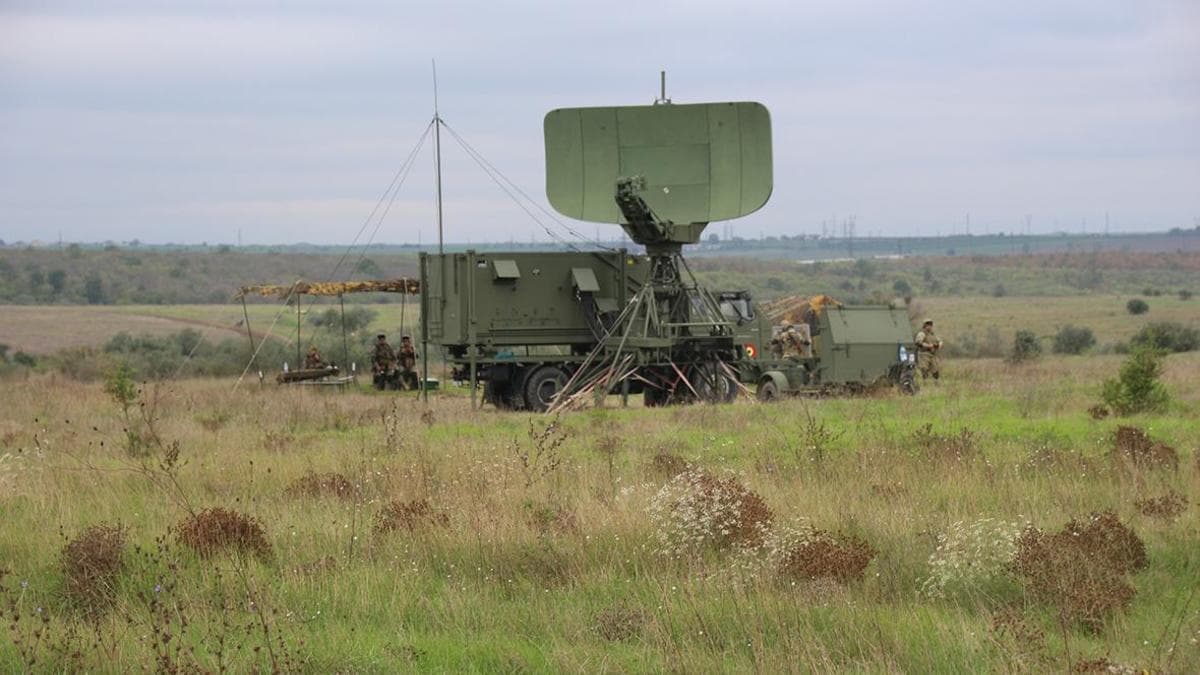
The hardest part is not ambition but arithmetic. The economics of drone warfare are brutally asymmetric: an attacking system costing a few thousand euros can force the launch of an interceptor missile costing a hundred times more. A defensive posture built on premium munitions is unsustainable against saturation tactics, which is why the technical conversation has shifted toward layered detection, electronic jamming, and lower-cost kinetic options. Romania’s case illustrates the detection problem precisely. Spotting a slow object skimming terrain along hundreds of kilometres of border demands dense sensor coverage that no single member state can field alone, and that no existing budget line fully funds.

That is where the European dimension becomes decisive, and also where it grows contentious. Pooling radar, command links, and interception assets across the eastern flank promises coverage that national systems cannot match. Yet defence procurement remains jealously guarded by capitals, fragmented across incompatible national programmes and competing industrial champions. Sceptics warn that a flagship initiative announced in Brussels can dissolve into twenty-seven parallel purchases, each optimised for domestic industry rather than collective coverage. The roadmap’s credibility will rest on whether shared funding can override that instinct.

The Galati strike also sharpened a debate about purpose. Romanian officials, speaking in Paris in early June, said allies including France and the United States were preparing air-defence reinforcements, framing the response as both deterrence and reassurance for an exposed population. Critics of rapid escalation counter that flooding the border with interceptors risks normalising a permanent war footing without resolving the underlying conflict. Supporters reply that the alternative, leaving civilians under drones that occasionally kill, is no longer politically tenable.

For now the direction of travel is clear even if the destination is not. The Union has the strategy documents, the timelines, and a fresh injection of political will from a wave of incursions that have made the threat tangible. What it lacks is proof that twenty-seven governments can convert roadmap language into integrated capability before the next drone finds a rooftop. The coming eighteen months, framed by the late-2026 capability milestone, will test whether Europe’s air shield is a genuine system or a collection of national patches stitched loosely together over a long and vulnerable frontier.