August 9, 2026
LATEST
Minimum Prices Replace Tariffs in Europe’s China Car DealBrussels and Beijing Keep Talking While the Trade Gap WidensKorean Weapons and EU Loans Now Bankroll Europe’s RearmamentNew EU Gas Market Rules Take Effect With Consumer SafeguardsDeforestation Regulation Holds Its December Deadline Despite CutsDigital Omnibus Delays Europe’s High-Risk AI Deadline to 2027Europe’s Schools Confront a Widening Basic Skills GapRule of Law Report Finds Progress but Trust Still LagsIRIS2 Gains 66 Satellites as Brussels Signs the Rollout DealNature Restoration Plans Come Due as Member States Race a DeadlineECB Rates Hold at 2.25 Percent as Frankfurt Waits on the DataEU Budget Talks Turn to Cohesion as Ireland Takes OverWildfire Response Stretches Europe’s Emergency Fleet ThinCan Europe’s Quantum Plan Match Its Big Ambitions?Armenia Edges West as Moscow’s Grip Slips AwayEurope Inherits the World’s Aid Bill It Cannot Fully PayAir Passenger Rights Get Their First Overhaul in Two DecadesErasmus Opens a 5 Billion Euro Round for Skills and MobilityCeuta Crisis Pushes the EU Toward Faster Migrant ReturnsBulky Parcels Face a Packaging Crackdown From August 12Minimum Prices Replace Tariffs in Europe’s China Car DealBrussels and Beijing Keep Talking While the Trade Gap WidensKorean Weapons and EU Loans Now Bankroll Europe’s RearmamentNew EU Gas Market Rules Take Effect With Consumer SafeguardsDeforestation Regulation Holds Its December Deadline Despite CutsDigital Omnibus Delays Europe’s High-Risk AI Deadline to 2027Europe’s Schools Confront a Widening Basic Skills GapRule of Law Report Finds Progress but Trust Still LagsIRIS2 Gains 66 Satellites as Brussels Signs the Rollout DealNature Restoration Plans Come Due as Member States Race a DeadlineECB Rates Hold at 2.25 Percent as Frankfurt Waits on the DataEU Budget Talks Turn to Cohesion as Ireland Takes OverWildfire Response Stretches Europe’s Emergency Fleet ThinCan Europe’s Quantum Plan Match Its Big Ambitions?Armenia Edges West as Moscow’s Grip Slips AwayEurope Inherits the World’s Aid Bill It Cannot Fully PayAir Passenger Rights Get Their First Overhaul in Two DecadesErasmus Opens a 5 Billion Euro Round for Skills and MobilityCeuta Crisis Pushes the EU Toward Faster Migrant ReturnsBulky Parcels Face a Packaging Crackdown From August 12
August 9, 2026
LATEST
Minimum Prices Replace Tariffs in Europe’s China Car DealBrussels and Beijing Keep Talking While the Trade Gap WidensKorean Weapons and EU Loans Now Bankroll Europe’s RearmamentNew EU Gas Market Rules Take Effect With Consumer SafeguardsDeforestation Regulation Holds Its December Deadline Despite CutsDigital Omnibus Delays Europe’s High-Risk AI Deadline to 2027Europe’s Schools Confront a Widening Basic Skills GapRule of Law Report Finds Progress but Trust Still LagsIRIS2 Gains 66 Satellites as Brussels Signs the Rollout DealNature Restoration Plans Come Due as Member States Race a DeadlineECB Rates Hold at 2.25 Percent as Frankfurt Waits on the DataEU Budget Talks Turn to Cohesion as Ireland Takes OverWildfire Response Stretches Europe’s Emergency Fleet ThinCan Europe’s Quantum Plan Match Its Big Ambitions?Armenia Edges West as Moscow’s Grip Slips AwayEurope Inherits the World’s Aid Bill It Cannot Fully PayAir Passenger Rights Get Their First Overhaul in Two DecadesErasmus Opens a 5 Billion Euro Round for Skills and MobilityCeuta Crisis Pushes the EU Toward Faster Migrant ReturnsBulky Parcels Face a Packaging Crackdown From August 12Minimum Prices Replace Tariffs in Europe’s China Car DealBrussels and Beijing Keep Talking While the Trade Gap WidensKorean Weapons and EU Loans Now Bankroll Europe’s RearmamentNew EU Gas Market Rules Take Effect With Consumer SafeguardsDeforestation Regulation Holds Its December Deadline Despite CutsDigital Omnibus Delays Europe’s High-Risk AI Deadline to 2027Europe’s Schools Confront a Widening Basic Skills GapRule of Law Report Finds Progress but Trust Still LagsIRIS2 Gains 66 Satellites as Brussels Signs the Rollout DealNature Restoration Plans Come Due as Member States Race a DeadlineECB Rates Hold at 2.25 Percent as Frankfurt Waits on the DataEU Budget Talks Turn to Cohesion as Ireland Takes OverWildfire Response Stretches Europe’s Emergency Fleet ThinCan Europe’s Quantum Plan Match Its Big Ambitions?Armenia Edges West as Moscow’s Grip Slips AwayEurope Inherits the World’s Aid Bill It Cannot Fully PayAir Passenger Rights Get Their First Overhaul in Two DecadesErasmus Opens a 5 Billion Euro Round for Skills and MobilityCeuta Crisis Pushes the EU Toward Faster Migrant ReturnsBulky Parcels Face a Packaging Crackdown From August 12

Pyongyang’s Arms Pipeline to Russia Keeps Europe on Alert

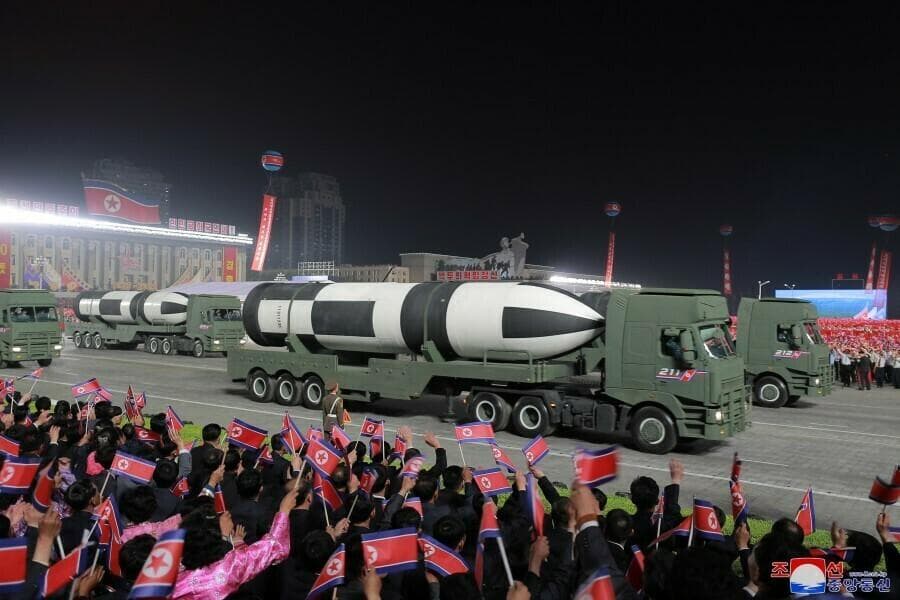
Brussels: The European Union has no embassy in Pyongyang, negligible trade with it, and one of the most comprehensive sanctions regimes it has ever assembled aimed squarely at it. On paper, North Korea should be a marginal file for European diplomacy. In practice, it has become an unexpectedly direct concern, because the road from Pyongyang’s arsenals now runs through the battlefields of Ukraine.

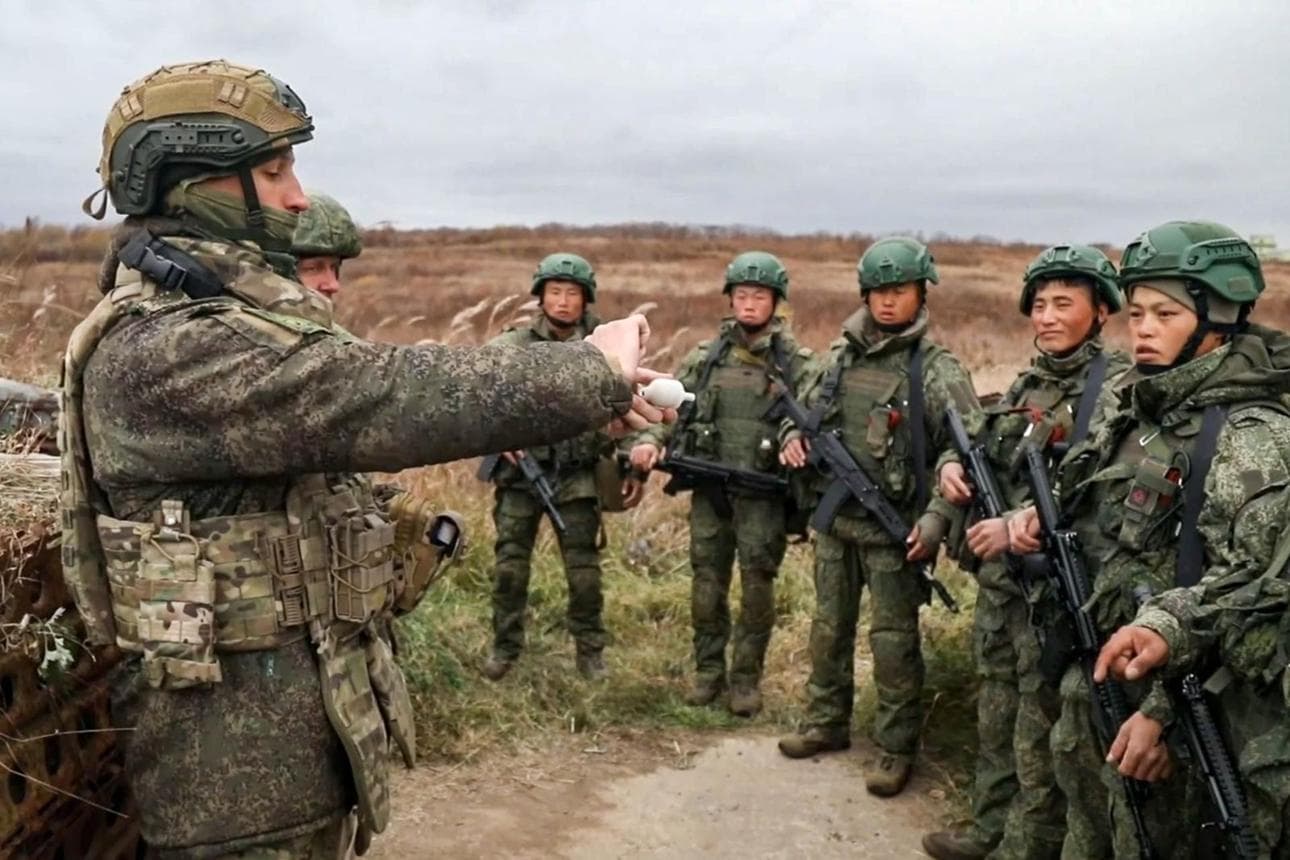
The EU’s measures against the Democratic People’s Republic of Korea are among the most restrictive in force anywhere, layering the bloc’s own autonomous sanctions on top of United Nations restrictions targeting the country’s nuclear and ballistic missile programmes. Over the past two years, Brussels has repeatedly widened that net to capture a new category of target: individuals and entities involved not in proliferation as such, but in funnelling weapons, ammunition and even soldiers to Russia’s war of aggression. Acting in coordination with Washington and Seoul, the EU has sanctioned senior North Korean military officials connected to the deployment of troops to Russian territory, and added further names tied to sanctions evasion schemes that generate hard currency for the missile programme.

This marks a quiet but significant shift in how Europe thinks about the Korean peninsula. For decades the DPRK file was managed as a non-proliferation problem, distant and largely symbolic, handled through the rituals of the UN Security Council. The munitions pipeline to Russia has collapsed that distance. Shells manufactured in North Korean factories are now landing on European soil, and the combat experience North Korean units gain in Ukraine flows back to a regime that sits beside two of the EU’s most important Asian partners, South Korea and Japan. A conflict Europeans once filed under Asian security has become an input into their own.

The harder question is what sanctions can realistically achieve here. North Korea is already the most heavily sanctioned state on the planet, and the marginal deterrent value of adding a few more names to a list is genuinely uncertain. Pyongyang has spent a generation building an economy designed to function under siege, and its deepening alignment with Moscow offers precisely the lifeline, in food, energy and technology, that sanctions were meant to deny. Brussels knows this. The purpose of its measures is less to bankrupt the regime than to raise the cost and the visibility of the Russia relationship, to keep the transactions traceable, and to hold the line on a principle: that supplying a war of aggression carries consequences, however imperfect.

What the EU lacks is leverage of its own. It is not a party to the inter-Korean relationship, has no seat at any nuclear negotiation, and cannot offer Pyongyang anything it wants. Its influence is exercised at the margins, through coordination with allies who do have leverage and through the patient documentation of what the North Korea-Russia axis is actually doing. That is a modest role for a bloc of Europe’s weight. But in a security environment where the front lines of Asian and European conflict have begun to merge, even watching closely and naming names is more than it sounds.