August 9, 2026
LATEST
New EU Gas Market Rules Take Effect With Consumer SafeguardsDeforestation Regulation Holds Its December Deadline Despite CutsDigital Omnibus Delays Europe’s High-Risk AI Deadline to 2027Europe’s Schools Confront a Widening Basic Skills GapRule of Law Report Finds Progress but Trust Still LagsIRIS2 Gains 66 Satellites as Brussels Signs the Rollout DealNature Restoration Plans Come Due as Member States Race a DeadlineECB Rates Hold at 2.25 Percent as Frankfurt Waits on the DataEU Budget Talks Turn to Cohesion as Ireland Takes OverWildfire Response Stretches Europe’s Emergency Fleet ThinCan Europe’s Quantum Plan Match Its Big Ambitions?Armenia Edges West as Moscow’s Grip Slips AwayEurope Inherits the World’s Aid Bill It Cannot Fully PayAir Passenger Rights Get Their First Overhaul in Two DecadesErasmus Opens a 5 Billion Euro Round for Skills and MobilityCeuta Crisis Pushes the EU Toward Faster Migrant ReturnsBulky Parcels Face a Packaging Crackdown From August 12Can Europe Build Its Drone Wall Before 2030 Arrives?Indonesia’s Trade Deal With Europe Nears Its Final SignatureEurope Leans on Beijing to Keep Climate Talks Alive Before AntalyaNew EU Gas Market Rules Take Effect With Consumer SafeguardsDeforestation Regulation Holds Its December Deadline Despite CutsDigital Omnibus Delays Europe’s High-Risk AI Deadline to 2027Europe’s Schools Confront a Widening Basic Skills GapRule of Law Report Finds Progress but Trust Still LagsIRIS2 Gains 66 Satellites as Brussels Signs the Rollout DealNature Restoration Plans Come Due as Member States Race a DeadlineECB Rates Hold at 2.25 Percent as Frankfurt Waits on the DataEU Budget Talks Turn to Cohesion as Ireland Takes OverWildfire Response Stretches Europe’s Emergency Fleet ThinCan Europe’s Quantum Plan Match Its Big Ambitions?Armenia Edges West as Moscow’s Grip Slips AwayEurope Inherits the World’s Aid Bill It Cannot Fully PayAir Passenger Rights Get Their First Overhaul in Two DecadesErasmus Opens a 5 Billion Euro Round for Skills and MobilityCeuta Crisis Pushes the EU Toward Faster Migrant ReturnsBulky Parcels Face a Packaging Crackdown From August 12Can Europe Build Its Drone Wall Before 2030 Arrives?Indonesia’s Trade Deal With Europe Nears Its Final SignatureEurope Leans on Beijing to Keep Climate Talks Alive Before Antalya
August 9, 2026
LATEST
New EU Gas Market Rules Take Effect With Consumer SafeguardsDeforestation Regulation Holds Its December Deadline Despite CutsDigital Omnibus Delays Europe’s High-Risk AI Deadline to 2027Europe’s Schools Confront a Widening Basic Skills GapRule of Law Report Finds Progress but Trust Still LagsIRIS2 Gains 66 Satellites as Brussels Signs the Rollout DealNature Restoration Plans Come Due as Member States Race a DeadlineECB Rates Hold at 2.25 Percent as Frankfurt Waits on the DataEU Budget Talks Turn to Cohesion as Ireland Takes OverWildfire Response Stretches Europe’s Emergency Fleet ThinCan Europe’s Quantum Plan Match Its Big Ambitions?Armenia Edges West as Moscow’s Grip Slips AwayEurope Inherits the World’s Aid Bill It Cannot Fully PayAir Passenger Rights Get Their First Overhaul in Two DecadesErasmus Opens a 5 Billion Euro Round for Skills and MobilityCeuta Crisis Pushes the EU Toward Faster Migrant ReturnsBulky Parcels Face a Packaging Crackdown From August 12Can Europe Build Its Drone Wall Before 2030 Arrives?Indonesia’s Trade Deal With Europe Nears Its Final SignatureEurope Leans on Beijing to Keep Climate Talks Alive Before AntalyaNew EU Gas Market Rules Take Effect With Consumer SafeguardsDeforestation Regulation Holds Its December Deadline Despite CutsDigital Omnibus Delays Europe’s High-Risk AI Deadline to 2027Europe’s Schools Confront a Widening Basic Skills GapRule of Law Report Finds Progress but Trust Still LagsIRIS2 Gains 66 Satellites as Brussels Signs the Rollout DealNature Restoration Plans Come Due as Member States Race a DeadlineECB Rates Hold at 2.25 Percent as Frankfurt Waits on the DataEU Budget Talks Turn to Cohesion as Ireland Takes OverWildfire Response Stretches Europe’s Emergency Fleet ThinCan Europe’s Quantum Plan Match Its Big Ambitions?Armenia Edges West as Moscow’s Grip Slips AwayEurope Inherits the World’s Aid Bill It Cannot Fully PayAir Passenger Rights Get Their First Overhaul in Two DecadesErasmus Opens a 5 Billion Euro Round for Skills and MobilityCeuta Crisis Pushes the EU Toward Faster Migrant ReturnsBulky Parcels Face a Packaging Crackdown From August 12Can Europe Build Its Drone Wall Before 2030 Arrives?Indonesia’s Trade Deal With Europe Nears Its Final SignatureEurope Leans on Beijing to Keep Climate Talks Alive Before Antalya

Bank Supervisors Probe How War and Trade Shocks Hit Big Lenders

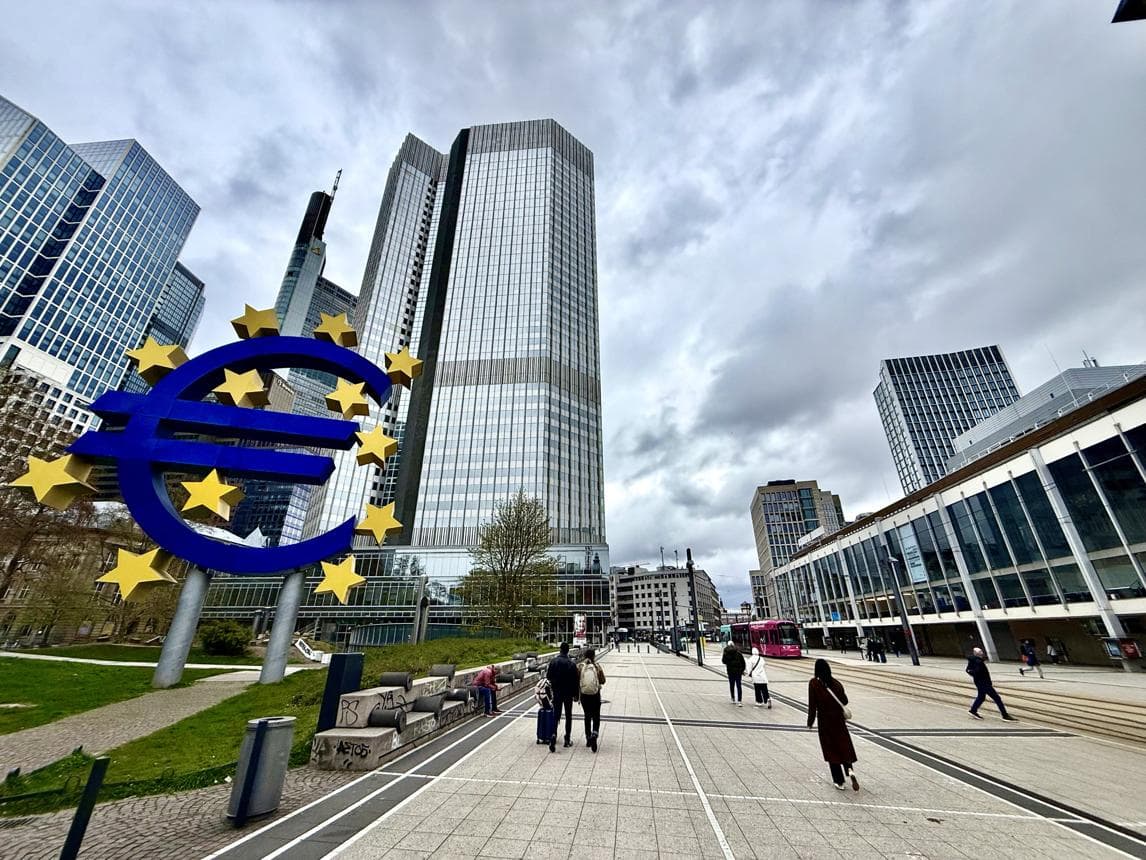
Frankfurt: Europe’s banking supervisors are training their attention this year on a threat that traditional financial models struggle to capture: geopolitics. Rather than running the familiar bloc-wide stress test that pits balance sheets against a hypothetical recession, the European Central Bank is putting its 110 directly supervised lenders through a thematic exercise that asks them to imagine how war, sanctions and a fracturing trade system could hit their business.

The approach is deliberately unusual. A conventional stress test starts with a macroeconomic scenario, applies it uniformly and measures how much capital each bank would burn through. This year’s exercise instead works backwards. Supervisors are asking institutions to identify the geopolitical shocks that would most endanger their own particular model, then to estimate how severe such a shock would have to be before it threatened their viability. The technique, sometimes called reverse stress testing, is designed to expose hidden concentrations that a standardised scenario might miss.

The logic reflects a changed world. A bank heavily exposed to a single trading partner, to commodities routed through a contested strait, or to clients clustered in industries vulnerable to export controls, may look perfectly healthy under a generic downturn while sitting on a fault line that only a specific rupture would reveal. By forcing lenders to name their own vulnerabilities, the supervisor hopes to gather a richer map of where the system’s pressure points actually lie.

The results will not translate directly into capital demands. The central bank has signalled that this is a learning exercise, intended to sharpen both its own understanding and the banks’ internal risk management rather than to set pass-or-fail thresholds. The main aggregate conclusions are expected to be communicated over the summer, and they will feed into the broader supervisory dialogue that shapes how much capital each institution is ultimately told to hold.

The full bloc-wide stress test, coordinated with the banking authority and the systemic risk board, returns in 2027, and officials have spoken of cutting its data burden substantially. The 2026 geopolitical review is narrower in scope but arguably more probing, trading breadth for a focus on tail risk that has moved from theoretical to plausible.

For the wider economy, the exercise is a signal as much as a measurement. Regulators are telling lenders that resilience can no longer be defined solely in terms of credit losses and interest-rate swings. Supply chains, energy routes and the reliability of cross-border payments have become prudential concerns, and a bank that has not thought through how a geopolitical rupture would cascade through its book is now, in the supervisor’s eyes, under-managed.

European banks emerged from the most recent full stress test with comfortable capital buffers, absorbing heavy hypothetical losses without breaching minimum requirements. The geopolitical exercise asks a harder question, not how much a downturn would cost, but what specific break in the world order would be enough to bring a bank down, and how close to that break it is already standing.