August 9, 2026
LATEST
Brussels and Beijing Keep Talking While the Trade Gap WidensKorean Weapons and EU Loans Now Bankroll Europe’s RearmamentNew EU Gas Market Rules Take Effect With Consumer SafeguardsDeforestation Regulation Holds Its December Deadline Despite CutsDigital Omnibus Delays Europe’s High-Risk AI Deadline to 2027Europe’s Schools Confront a Widening Basic Skills GapRule of Law Report Finds Progress but Trust Still LagsIRIS2 Gains 66 Satellites as Brussels Signs the Rollout DealNature Restoration Plans Come Due as Member States Race a DeadlineECB Rates Hold at 2.25 Percent as Frankfurt Waits on the DataEU Budget Talks Turn to Cohesion as Ireland Takes OverWildfire Response Stretches Europe’s Emergency Fleet ThinCan Europe’s Quantum Plan Match Its Big Ambitions?Armenia Edges West as Moscow’s Grip Slips AwayEurope Inherits the World’s Aid Bill It Cannot Fully PayAir Passenger Rights Get Their First Overhaul in Two DecadesErasmus Opens a 5 Billion Euro Round for Skills and MobilityCeuta Crisis Pushes the EU Toward Faster Migrant ReturnsBulky Parcels Face a Packaging Crackdown From August 12Can Europe Build Its Drone Wall Before 2030 Arrives?Brussels and Beijing Keep Talking While the Trade Gap WidensKorean Weapons and EU Loans Now Bankroll Europe’s RearmamentNew EU Gas Market Rules Take Effect With Consumer SafeguardsDeforestation Regulation Holds Its December Deadline Despite CutsDigital Omnibus Delays Europe’s High-Risk AI Deadline to 2027Europe’s Schools Confront a Widening Basic Skills GapRule of Law Report Finds Progress but Trust Still LagsIRIS2 Gains 66 Satellites as Brussels Signs the Rollout DealNature Restoration Plans Come Due as Member States Race a DeadlineECB Rates Hold at 2.25 Percent as Frankfurt Waits on the DataEU Budget Talks Turn to Cohesion as Ireland Takes OverWildfire Response Stretches Europe’s Emergency Fleet ThinCan Europe’s Quantum Plan Match Its Big Ambitions?Armenia Edges West as Moscow’s Grip Slips AwayEurope Inherits the World’s Aid Bill It Cannot Fully PayAir Passenger Rights Get Their First Overhaul in Two DecadesErasmus Opens a 5 Billion Euro Round for Skills and MobilityCeuta Crisis Pushes the EU Toward Faster Migrant ReturnsBulky Parcels Face a Packaging Crackdown From August 12Can Europe Build Its Drone Wall Before 2030 Arrives?
August 9, 2026
LATEST
Brussels and Beijing Keep Talking While the Trade Gap WidensKorean Weapons and EU Loans Now Bankroll Europe’s RearmamentNew EU Gas Market Rules Take Effect With Consumer SafeguardsDeforestation Regulation Holds Its December Deadline Despite CutsDigital Omnibus Delays Europe’s High-Risk AI Deadline to 2027Europe’s Schools Confront a Widening Basic Skills GapRule of Law Report Finds Progress but Trust Still LagsIRIS2 Gains 66 Satellites as Brussels Signs the Rollout DealNature Restoration Plans Come Due as Member States Race a DeadlineECB Rates Hold at 2.25 Percent as Frankfurt Waits on the DataEU Budget Talks Turn to Cohesion as Ireland Takes OverWildfire Response Stretches Europe’s Emergency Fleet ThinCan Europe’s Quantum Plan Match Its Big Ambitions?Armenia Edges West as Moscow’s Grip Slips AwayEurope Inherits the World’s Aid Bill It Cannot Fully PayAir Passenger Rights Get Their First Overhaul in Two DecadesErasmus Opens a 5 Billion Euro Round for Skills and MobilityCeuta Crisis Pushes the EU Toward Faster Migrant ReturnsBulky Parcels Face a Packaging Crackdown From August 12Can Europe Build Its Drone Wall Before 2030 Arrives?Brussels and Beijing Keep Talking While the Trade Gap WidensKorean Weapons and EU Loans Now Bankroll Europe’s RearmamentNew EU Gas Market Rules Take Effect With Consumer SafeguardsDeforestation Regulation Holds Its December Deadline Despite CutsDigital Omnibus Delays Europe’s High-Risk AI Deadline to 2027Europe’s Schools Confront a Widening Basic Skills GapRule of Law Report Finds Progress but Trust Still LagsIRIS2 Gains 66 Satellites as Brussels Signs the Rollout DealNature Restoration Plans Come Due as Member States Race a DeadlineECB Rates Hold at 2.25 Percent as Frankfurt Waits on the DataEU Budget Talks Turn to Cohesion as Ireland Takes OverWildfire Response Stretches Europe’s Emergency Fleet ThinCan Europe’s Quantum Plan Match Its Big Ambitions?Armenia Edges West as Moscow’s Grip Slips AwayEurope Inherits the World’s Aid Bill It Cannot Fully PayAir Passenger Rights Get Their First Overhaul in Two DecadesErasmus Opens a 5 Billion Euro Round for Skills and MobilityCeuta Crisis Pushes the EU Toward Faster Migrant ReturnsBulky Parcels Face a Packaging Crackdown From August 12Can Europe Build Its Drone Wall Before 2030 Arrives?

Why Seoul Is Becoming Europe’s Newest Security Partner

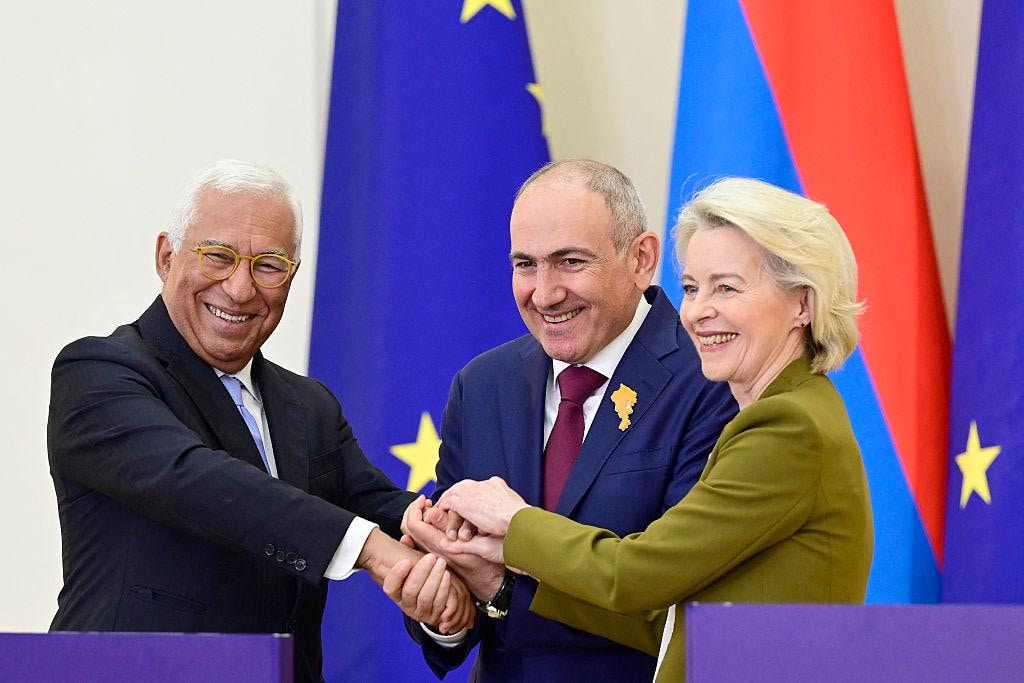
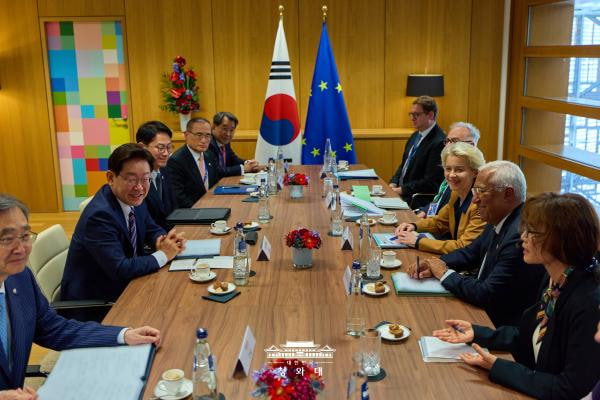
Seoul: When President Lee Jae-myung sat down with Ursula von der Leyen and Antonio Costa at the eleventh European Union and Republic of Korea summit in Brussels, the agenda ran well beyond the trade file that has long anchored the relationship. The leaders committed to expanding the EU and Korea Security and Defence Partnership, an arrangement that would have seemed improbable only a few years ago and now sits at the centre of a widening strategic embrace.

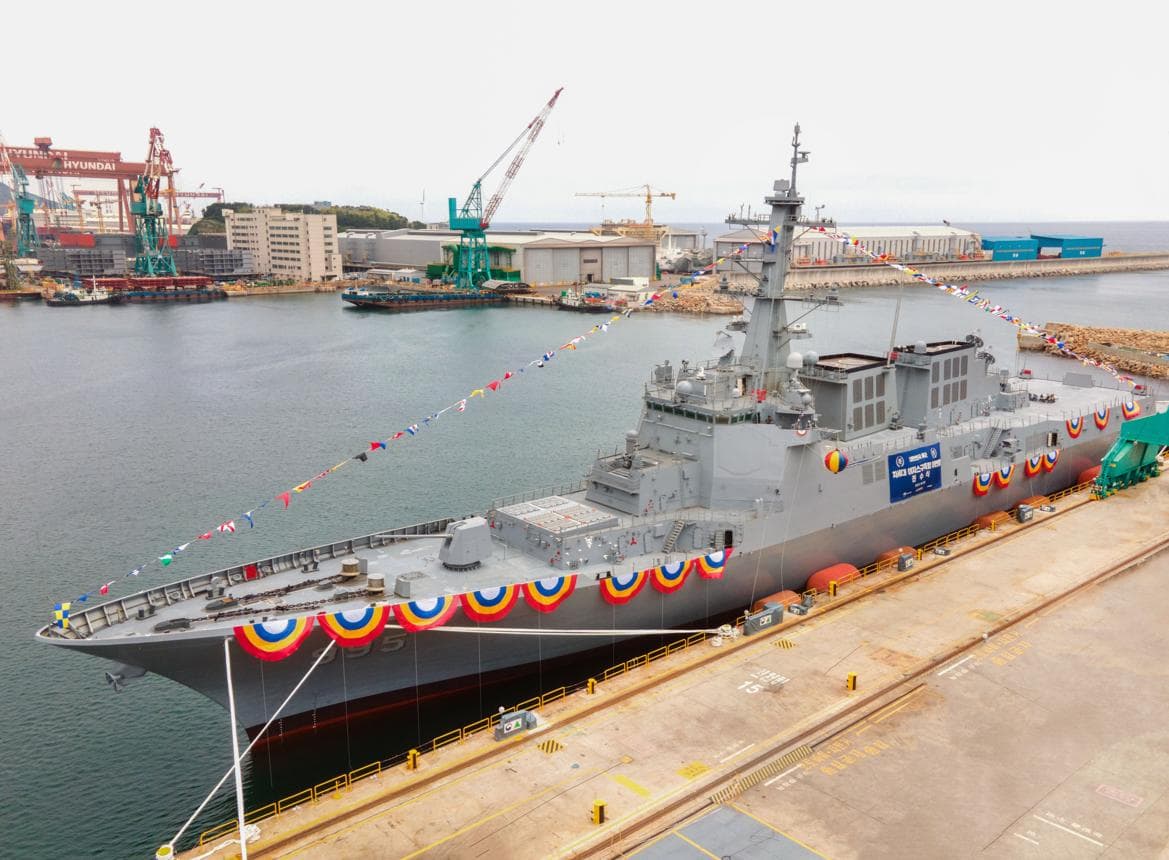
The list of areas for deeper cooperation reads like a catalogue of the threats that keep European planners awake. The two sides pledged closer work on cyber and hybrid threats, on foreign information manipulation and interference, on counter-terrorism, non-proliferation, maritime security and the increasingly contested domain of space. Each of these is a field where Seoul brings genuine capability rather than aspiration. South Korea has built one of the most technologically advanced armed forces in Asia and a defence industry that has become a serious exporter, supplying tanks, howitzers and aircraft to European members such as Poland at a speed and price that domestic producers have struggled to match.

That industrial dimension is the quiet engine of the partnership. Europe is trying to rearm after decades of underinvestment, and its own production lines cannot fill the gap quickly enough. A Korean sector geared for high-volume output offers a bridge, and closer political ties make co-development and technology sharing easier to negotiate. For Seoul, meanwhile, deeper defence links with Brussels diversify a security posture that has rested almost entirely on the United States, and they open European markets to firms eager to establish themselves as trusted suppliers rather than opportunistic sellers.

The relationship is not confined to hardware. The leaders welcomed the first collaborative projects under Korea’s association to the second pillar of Horizon Europe, the bloc’s flagship research programme, which the country joined in the summer of 2025. That association links Korean laboratories to European research consortia on global challenges and industrial competitiveness, and it signals that Brussels sees Seoul as a partner in the knowledge economy as much as on the factory floor. Research security, the protection of sensitive dual-use technology from leakage, is one of the threads that connects the scientific and defence agendas.

Scepticism is warranted about how far a partnership between two poles of Eurasia can actually go. Geography imposes limits, and Korea’s overriding preoccupation remains the peninsula and its unpredictable northern neighbour, not the security of the North Atlantic. There are also awkward questions about whether European commitments to Indo-Pacific security are credible given the bloc’s stretched resources. Analysts who follow the NATO and Korea relationship caution that turning an arms exporter into a fully trusted defence partner requires trust built over years, not summit declarations.

Still, the direction of travel is unmistakable. A continent short of industrial capacity and a middle power seeking to hedge its dependence have found a convergence of interest that trade alone never quite delivered. The summit did not produce a formal alliance, and none is on offer. What it produced was a scaffolding for practical cooperation, and in a fracturing security order that scaffolding may prove more durable than grander architecture.