August 9, 2026
LATEST
New EU Gas Market Rules Take Effect With Consumer SafeguardsDeforestation Regulation Holds Its December Deadline Despite CutsDigital Omnibus Delays Europe’s High-Risk AI Deadline to 2027Europe’s Schools Confront a Widening Basic Skills GapRule of Law Report Finds Progress but Trust Still LagsIRIS2 Gains 66 Satellites as Brussels Signs the Rollout DealNature Restoration Plans Come Due as Member States Race a DeadlineECB Rates Hold at 2.25 Percent as Frankfurt Waits on the DataEU Budget Talks Turn to Cohesion as Ireland Takes OverWildfire Response Stretches Europe’s Emergency Fleet ThinCan Europe’s Quantum Plan Match Its Big Ambitions?Armenia Edges West as Moscow’s Grip Slips AwayEurope Inherits the World’s Aid Bill It Cannot Fully PayAir Passenger Rights Get Their First Overhaul in Two DecadesErasmus Opens a 5 Billion Euro Round for Skills and MobilityCeuta Crisis Pushes the EU Toward Faster Migrant ReturnsBulky Parcels Face a Packaging Crackdown From August 12Can Europe Build Its Drone Wall Before 2030 Arrives?Indonesia’s Trade Deal With Europe Nears Its Final SignatureEurope Leans on Beijing to Keep Climate Talks Alive Before AntalyaNew EU Gas Market Rules Take Effect With Consumer SafeguardsDeforestation Regulation Holds Its December Deadline Despite CutsDigital Omnibus Delays Europe’s High-Risk AI Deadline to 2027Europe’s Schools Confront a Widening Basic Skills GapRule of Law Report Finds Progress but Trust Still LagsIRIS2 Gains 66 Satellites as Brussels Signs the Rollout DealNature Restoration Plans Come Due as Member States Race a DeadlineECB Rates Hold at 2.25 Percent as Frankfurt Waits on the DataEU Budget Talks Turn to Cohesion as Ireland Takes OverWildfire Response Stretches Europe’s Emergency Fleet ThinCan Europe’s Quantum Plan Match Its Big Ambitions?Armenia Edges West as Moscow’s Grip Slips AwayEurope Inherits the World’s Aid Bill It Cannot Fully PayAir Passenger Rights Get Their First Overhaul in Two DecadesErasmus Opens a 5 Billion Euro Round for Skills and MobilityCeuta Crisis Pushes the EU Toward Faster Migrant ReturnsBulky Parcels Face a Packaging Crackdown From August 12Can Europe Build Its Drone Wall Before 2030 Arrives?Indonesia’s Trade Deal With Europe Nears Its Final SignatureEurope Leans on Beijing to Keep Climate Talks Alive Before Antalya
August 9, 2026
LATEST
New EU Gas Market Rules Take Effect With Consumer SafeguardsDeforestation Regulation Holds Its December Deadline Despite CutsDigital Omnibus Delays Europe’s High-Risk AI Deadline to 2027Europe’s Schools Confront a Widening Basic Skills GapRule of Law Report Finds Progress but Trust Still LagsIRIS2 Gains 66 Satellites as Brussels Signs the Rollout DealNature Restoration Plans Come Due as Member States Race a DeadlineECB Rates Hold at 2.25 Percent as Frankfurt Waits on the DataEU Budget Talks Turn to Cohesion as Ireland Takes OverWildfire Response Stretches Europe’s Emergency Fleet ThinCan Europe’s Quantum Plan Match Its Big Ambitions?Armenia Edges West as Moscow’s Grip Slips AwayEurope Inherits the World’s Aid Bill It Cannot Fully PayAir Passenger Rights Get Their First Overhaul in Two DecadesErasmus Opens a 5 Billion Euro Round for Skills and MobilityCeuta Crisis Pushes the EU Toward Faster Migrant ReturnsBulky Parcels Face a Packaging Crackdown From August 12Can Europe Build Its Drone Wall Before 2030 Arrives?Indonesia’s Trade Deal With Europe Nears Its Final SignatureEurope Leans on Beijing to Keep Climate Talks Alive Before AntalyaNew EU Gas Market Rules Take Effect With Consumer SafeguardsDeforestation Regulation Holds Its December Deadline Despite CutsDigital Omnibus Delays Europe’s High-Risk AI Deadline to 2027Europe’s Schools Confront a Widening Basic Skills GapRule of Law Report Finds Progress but Trust Still LagsIRIS2 Gains 66 Satellites as Brussels Signs the Rollout DealNature Restoration Plans Come Due as Member States Race a DeadlineECB Rates Hold at 2.25 Percent as Frankfurt Waits on the DataEU Budget Talks Turn to Cohesion as Ireland Takes OverWildfire Response Stretches Europe’s Emergency Fleet ThinCan Europe’s Quantum Plan Match Its Big Ambitions?Armenia Edges West as Moscow’s Grip Slips AwayEurope Inherits the World’s Aid Bill It Cannot Fully PayAir Passenger Rights Get Their First Overhaul in Two DecadesErasmus Opens a 5 Billion Euro Round for Skills and MobilityCeuta Crisis Pushes the EU Toward Faster Migrant ReturnsBulky Parcels Face a Packaging Crackdown From August 12Can Europe Build Its Drone Wall Before 2030 Arrives?Indonesia’s Trade Deal With Europe Nears Its Final SignatureEurope Leans on Beijing to Keep Climate Talks Alive Before Antalya

Your Broken Phone Gains New Rights as Repair Rules Arrive

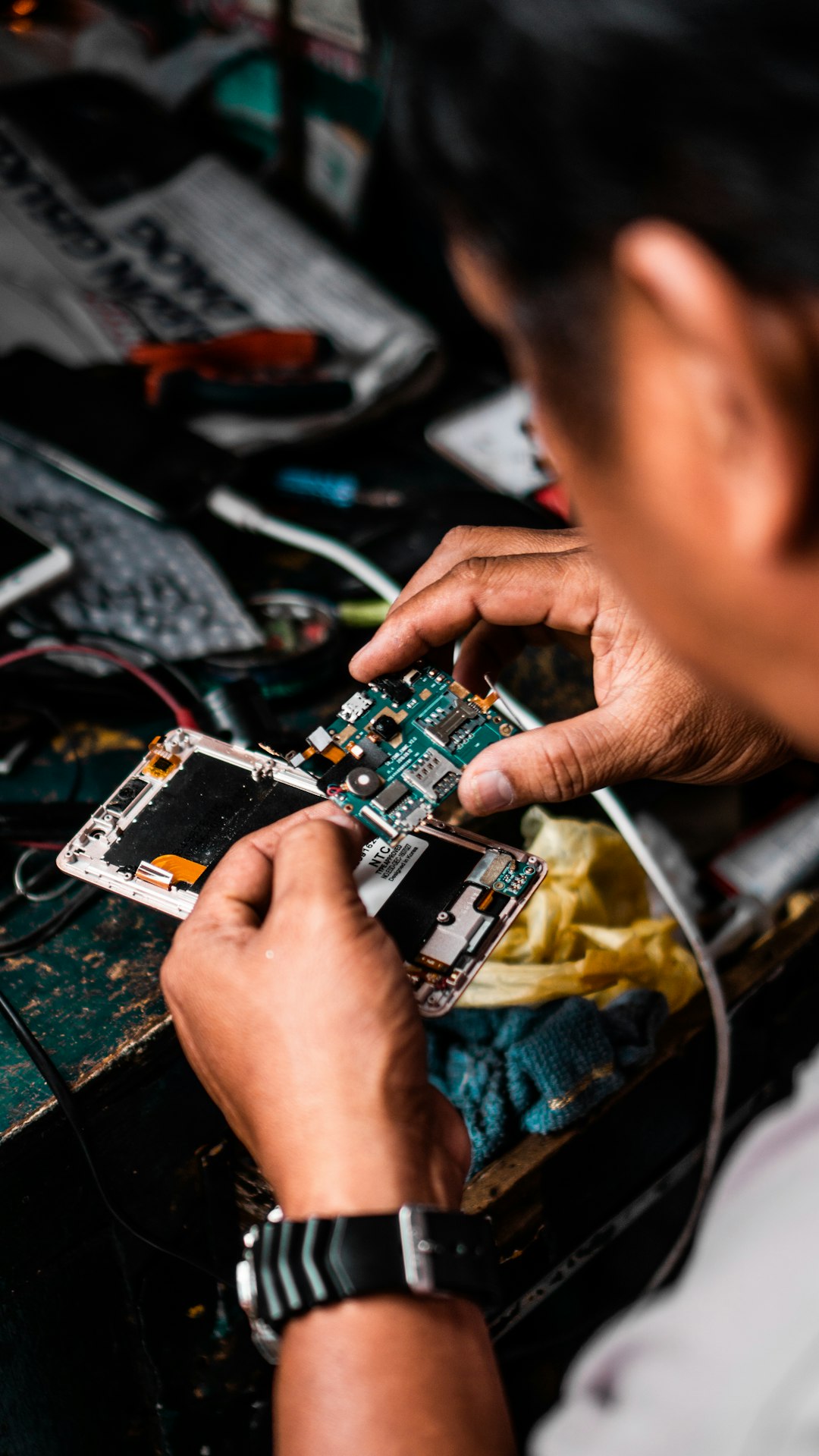
Ljubljana: In a small repair shop in the Slovenian capital, the difference between mending a device and replacing it has long come down to whether the manufacturer allowed it. Spare parts were withheld, diagnostic software locked, and repairs quietly engineered to cost more than a new model. A European directive reaching its deadline at the end of July is meant to tilt that calculation decisively back toward the customer holding the broken phone.

The Right to Repair Directive requires member states to have its provisions in national law by 31 July, and its central obligations are unusually tangible for a Union measure. Manufacturers of products within its scope, including washing machines, refrigerators, vacuum cleaners and smartphones, will be required to carry out repairs even on devices bought before the deadline. Repairs performed during a product’s warranty period will extend that warranty by a further twelve months, a small change that quietly rewrites the incentives around whether a company would rather fix a fault or wait out the guarantee.

The directive does not stand alone. It sits alongside the Ecodesign for Sustainable Products Regulation, the framework the Commission is using to push durability, repairability and recyclability into the design of goods before they ever reach a shelf. Smartphones and tablets already carry mandatory repairability labels graded from A to E, spare parts must remain available for seven years, and batteries are expected to survive hundreds of charge cycles. The logic is to attack waste at its source, on the drawing board, rather than at the recycling plant once a product has already been thrown away.

All of this is a prelude to a larger piece of legislation still on the horizon. The Circular Economy Act, expected as a formal proposal later this year, is intended to knit these scattered measures into a single coherent framework. Its aims are ambitious: to build a genuine single market for secondary raw materials, harmonise the patchwork of extended producer responsibility schemes that differ from one country to the next, set common EU-wide criteria for when waste stops being waste, and overhaul the rules governing electronic scrap. If it succeeds, the reuse of materials would become a routine industrial input rather than an afterthought.

The obstacles are real. Manufacturers warn that mandatory repairability and long spare-part obligations raise costs that ultimately reach consumers, and some argue that forcing older designs to remain serviceable can slow the introduction of more efficient successors. Independent repairers counter that they have heard these objections before, that the true cost lies in a throwaway culture that treats functioning devices as disposable, and that the balance of convenience has been rigged against them for years by design choices dressed up as engineering necessity.

For the shop in Ljubljana and thousands like it across the Union, the immediate effect is straightforward. Access to parts and information that was once at the manufacturer’s discretion is becoming a legal entitlement, and a broken appliance becomes a repair job rather than a foregone trip to the recycling bin. Whether that adds up to the circular economy the Commission envisions depends on the far tougher legislation still to come, but for once the change begins with something a consumer can actually feel in the hand.