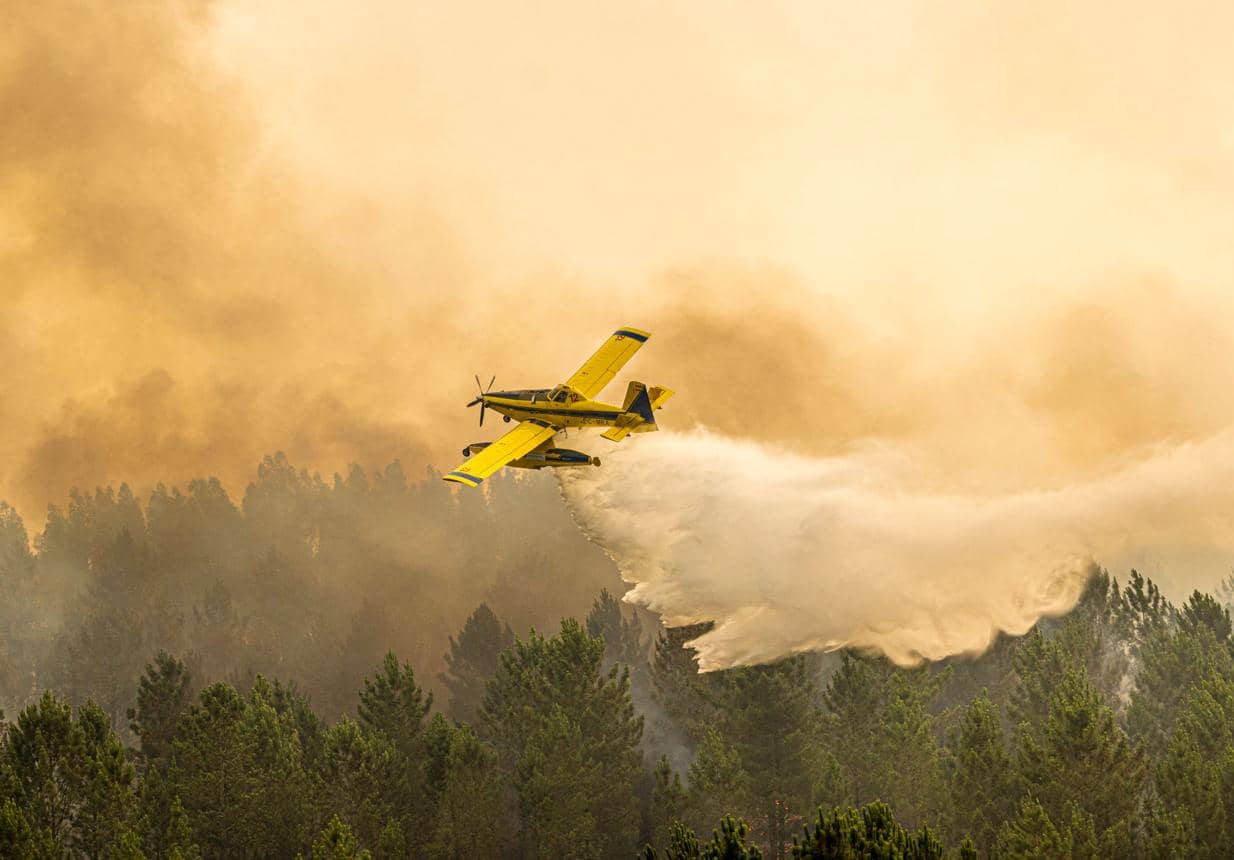
Lisbon: The wildfires cutting across central Portugal and southern France this month have triggered something that would have looked improbable a decade ago. When Lisbon activated the EU Civil Protection Mechanism on 3 July and Paris followed on 5 July, aid did not trickle in through slow bilateral phone calls. Within hours Spain had dispatched around 118 firefighters and 45 vehicles to Portugal, and firefighting aircraft and ground teams from Italy, Spain, Sweden and Cyprus were moving toward the front lines. A blaze near Vouzela had already burned through some 12,000 hectares. The speed of the response is the story, and it reflects a deliberate shift in how Europe organises for disaster.
For most of its history the mechanism worked as a switchboard. A stricken country asked for help, the Commission relayed the request, and other members offered whatever assets they could spare. The weakness was obvious. Wildfire season strikes much of the Mediterranean at the same moment, so the countries with planes to lend are often the ones fighting their own fires. Mutual aid works when crises are staggered and fails when they arrive together, which under a hotter climate they increasingly do.
The answer has been to build a standing reserve rather than rely on spare capacity. Through rescEU, the Union now funds a dedicated fleet that it can position and direct itself, and this year it pre-positioned around 777 firefighters from 14 countries in high-risk zones across Cyprus, Greece, Italy, France, Spain and Portugal, backed by roughly 22 aircraft and several helicopters held ready. Pre-positioning is the doctrinal change worth noticing. Instead of waiting for a request and then scrambling, the system now anticipates where fires are likely and stations crews before the smoke rises, compressing the response time that determines whether a fire is contained or runs.
The logic is part meteorology and part economics. Climate change has lengthened the fire season and pushed high-risk conditions into regions that once considered themselves safe, so the probability that several member states need heavy air support simultaneously has climbed. A shared, centrally directed fleet is cheaper and more effective than every capital buying and maintaining enough aircraft to handle its own worst year, since those assets would sit idle most of the time. Pooling turns a set of underused national fleets into a continental capability that can surge to wherever the season concentrates its damage.
The approach has real limits that this month will test. rescEU remains modest against the scale of a bad summer, and a fleet sized for a normal year can be overwhelmed when fires erupt across several countries at once, which is precisely the scenario the system was built to survive. Most firefighting assets still belong to national governments, and solidarity depends on their willingness to release crews and planes while facing their own risk. There is also a moral-hazard worry that a reliable European backstop could tempt member states to underinvest in their own prevention and forest management, leaning on the shared fleet as a substitute for the harder, cheaper work of clearing undergrowth and planning land use.
That prevention point matters because air support treats symptoms. Water bombers and imported crews can slow a fire that has already started, but they cannot address the accumulated fuel, abandoned rural land and building patterns that turn ignitions into disasters. The most cost-effective euro in wildfire policy is usually spent long before July, on landscape management and early-warning systems rather than on the dramatic aerial drops that dominate the coverage.
The immediate stakes belong to the communities in the fires’ path and the crews flown in to defend them. The wider significance is what this season reveals about European solidarity under strain. A pooled fleet that arrives within hours is a concrete answer to the charge that the Union is an abstraction remote from daily life. The next weeks will show whether the reserve is large enough for a warming continent, and whether the visible success of shared firefighting is matched by the quieter investment in prevention that would make fewer of these deployments necessary.