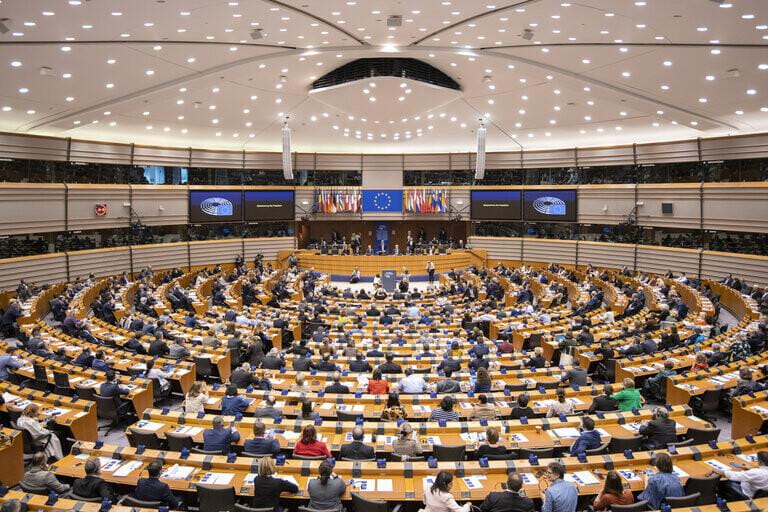
Ljubljana: The digital euro has cleared its highest political hurdle yet. Meeting in Strasbourg on 9 July, the European Parliament voted 416 to 169, with 22 abstentions, to open negotiations with the Council on the currency’s legal framework. The result launches the final stretch of a project that supporters call Europe’s answer to its dependence on foreign payment giants.
The vote does not create the currency. It authorises lawmakers to enter trilogue talks, the closed negotiations that bring Parliament, the Council, and the Commission to a single table. Those talks are expected to begin soon after the summer break, and the co-legislators aim to seal an agreement by the end of the year under the incoming Irish presidency of the Council.
A digital euro would give citizens a public form of electronic money, issued by the central bank rather than a commercial lender. People could hold it in a simple wallet and spend it across the euro area, much as they use cash today, but on a phone. Backers argue that Europe leans too heavily on American card networks, and that a sovereign option would harden the bloc against outside pressure.
Critics pushed back hard, and the near-170 votes against reflect the unease. Some lawmakers worry that a central-bank wallet could let authorities watch how people spend. Others fear that savers might pull deposits out of banks during a panic and park them in the safest asset available. The draft answers both concerns with holding limits and privacy safeguards, though the exact figures remain open for the negotiations ahead.
The European Central Bank has set a cautious timetable. Officials have pencilled in a pilot phase for 2027 and a possible retail launch around 2029, and any final decision to issue rests with the ECB’s Governing Council. None of that proceeds without the law, which is why this summer’s political groundwork matters so much.
Retailers and banks are already modelling the change. Merchants could gain a cheaper way to accept payments, since a public system would sidestep the fees that card schemes charge. Lenders, by contrast, must prepare for customers who split their money between bank accounts and a central-bank wallet, and they want the holding cap set low enough to protect their funding.
The stakes stretch beyond convenience. Central bankers frame the project as a matter of strategic autonomy, arguing that a currency the bloc controls end to end strengthens its hand in a fractured global economy. The Banca d’Italia laid out that case when Parliament first approved the file, and its summary of the vote underscores the sovereignty argument.
For now, the decision belongs to the negotiators. If they hit their end-of-year target, Europe moves from debating a digital euro to designing one.