August 9, 2026
LATEST
New EU Gas Market Rules Take Effect With Consumer SafeguardsDeforestation Regulation Holds Its December Deadline Despite CutsDigital Omnibus Delays Europe’s High-Risk AI Deadline to 2027Europe’s Schools Confront a Widening Basic Skills GapRule of Law Report Finds Progress but Trust Still LagsIRIS2 Gains 66 Satellites as Brussels Signs the Rollout DealNature Restoration Plans Come Due as Member States Race a DeadlineECB Rates Hold at 2.25 Percent as Frankfurt Waits on the DataEU Budget Talks Turn to Cohesion as Ireland Takes OverWildfire Response Stretches Europe’s Emergency Fleet ThinCan Europe’s Quantum Plan Match Its Big Ambitions?Armenia Edges West as Moscow’s Grip Slips AwayEurope Inherits the World’s Aid Bill It Cannot Fully PayAir Passenger Rights Get Their First Overhaul in Two DecadesErasmus Opens a 5 Billion Euro Round for Skills and MobilityCeuta Crisis Pushes the EU Toward Faster Migrant ReturnsBulky Parcels Face a Packaging Crackdown From August 12Can Europe Build Its Drone Wall Before 2030 Arrives?Indonesia’s Trade Deal With Europe Nears Its Final SignatureEurope Leans on Beijing to Keep Climate Talks Alive Before AntalyaNew EU Gas Market Rules Take Effect With Consumer SafeguardsDeforestation Regulation Holds Its December Deadline Despite CutsDigital Omnibus Delays Europe’s High-Risk AI Deadline to 2027Europe’s Schools Confront a Widening Basic Skills GapRule of Law Report Finds Progress but Trust Still LagsIRIS2 Gains 66 Satellites as Brussels Signs the Rollout DealNature Restoration Plans Come Due as Member States Race a DeadlineECB Rates Hold at 2.25 Percent as Frankfurt Waits on the DataEU Budget Talks Turn to Cohesion as Ireland Takes OverWildfire Response Stretches Europe’s Emergency Fleet ThinCan Europe’s Quantum Plan Match Its Big Ambitions?Armenia Edges West as Moscow’s Grip Slips AwayEurope Inherits the World’s Aid Bill It Cannot Fully PayAir Passenger Rights Get Their First Overhaul in Two DecadesErasmus Opens a 5 Billion Euro Round for Skills and MobilityCeuta Crisis Pushes the EU Toward Faster Migrant ReturnsBulky Parcels Face a Packaging Crackdown From August 12Can Europe Build Its Drone Wall Before 2030 Arrives?Indonesia’s Trade Deal With Europe Nears Its Final SignatureEurope Leans on Beijing to Keep Climate Talks Alive Before Antalya
August 9, 2026
LATEST
New EU Gas Market Rules Take Effect With Consumer SafeguardsDeforestation Regulation Holds Its December Deadline Despite CutsDigital Omnibus Delays Europe’s High-Risk AI Deadline to 2027Europe’s Schools Confront a Widening Basic Skills GapRule of Law Report Finds Progress but Trust Still LagsIRIS2 Gains 66 Satellites as Brussels Signs the Rollout DealNature Restoration Plans Come Due as Member States Race a DeadlineECB Rates Hold at 2.25 Percent as Frankfurt Waits on the DataEU Budget Talks Turn to Cohesion as Ireland Takes OverWildfire Response Stretches Europe’s Emergency Fleet ThinCan Europe’s Quantum Plan Match Its Big Ambitions?Armenia Edges West as Moscow’s Grip Slips AwayEurope Inherits the World’s Aid Bill It Cannot Fully PayAir Passenger Rights Get Their First Overhaul in Two DecadesErasmus Opens a 5 Billion Euro Round for Skills and MobilityCeuta Crisis Pushes the EU Toward Faster Migrant ReturnsBulky Parcels Face a Packaging Crackdown From August 12Can Europe Build Its Drone Wall Before 2030 Arrives?Indonesia’s Trade Deal With Europe Nears Its Final SignatureEurope Leans on Beijing to Keep Climate Talks Alive Before AntalyaNew EU Gas Market Rules Take Effect With Consumer SafeguardsDeforestation Regulation Holds Its December Deadline Despite CutsDigital Omnibus Delays Europe’s High-Risk AI Deadline to 2027Europe’s Schools Confront a Widening Basic Skills GapRule of Law Report Finds Progress but Trust Still LagsIRIS2 Gains 66 Satellites as Brussels Signs the Rollout DealNature Restoration Plans Come Due as Member States Race a DeadlineECB Rates Hold at 2.25 Percent as Frankfurt Waits on the DataEU Budget Talks Turn to Cohesion as Ireland Takes OverWildfire Response Stretches Europe’s Emergency Fleet ThinCan Europe’s Quantum Plan Match Its Big Ambitions?Armenia Edges West as Moscow’s Grip Slips AwayEurope Inherits the World’s Aid Bill It Cannot Fully PayAir Passenger Rights Get Their First Overhaul in Two DecadesErasmus Opens a 5 Billion Euro Round for Skills and MobilityCeuta Crisis Pushes the EU Toward Faster Migrant ReturnsBulky Parcels Face a Packaging Crackdown From August 12Can Europe Build Its Drone Wall Before 2030 Arrives?Indonesia’s Trade Deal With Europe Nears Its Final SignatureEurope Leans on Beijing to Keep Climate Talks Alive Before Antalya

Europe’s Water Resilience Plan Meets a Drier Future

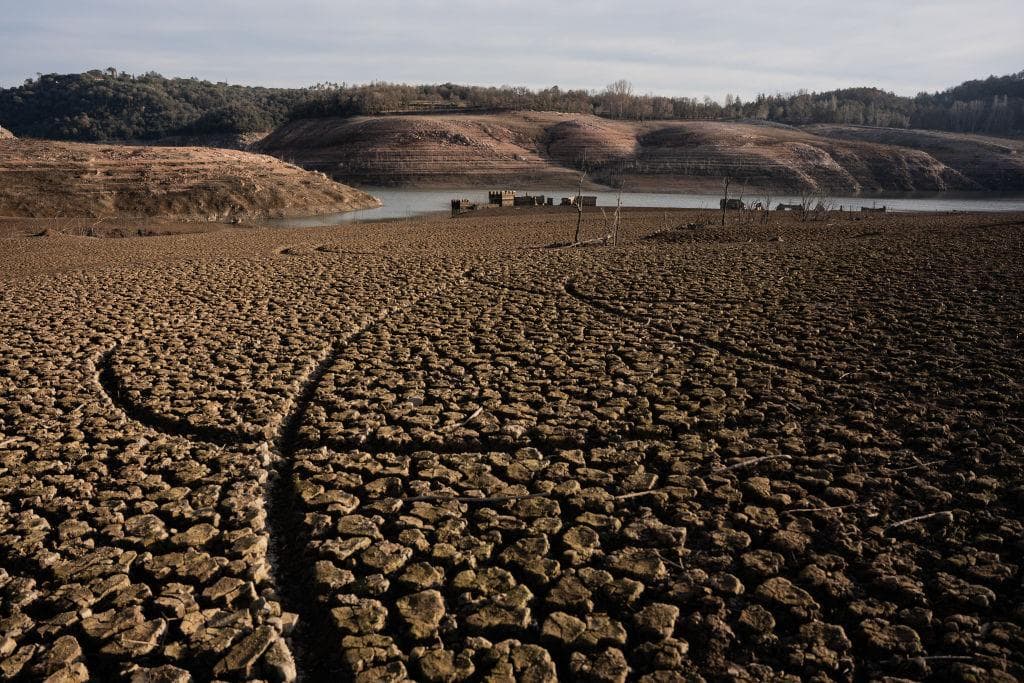
Brussels: Europe still treats water as if the taps will always run, yet the arithmetic argues otherwise. Drought now touches roughly 4 percent of the Union’s territory in an average year, and the parched summer of 2022 alone drained an estimated 50 billion euros from the economy, with Italy, Spain and France absorbing the deepest losses. The Commission’s water resilience strategy, first tabled in June 2025, tries to turn that recurring shock into a coordinated plan rather than a seasonal scramble.

The strategy rests on a blunt premise. Europe wastes too much of the water it has, prices it too cheaply to signal scarcity, and manages it through a patchwork of national rules that stop at every border a river happens to cross. Brussels wants member states to lift water efficiency by at least 10 percent by 2030, a target that sounds modest until one considers how little most capitals currently measure, let alone control.

From pledges to plumbing

Ambition on paper rarely survives contact with infrastructure. Leaky distribution networks lose a fifth or more of treated water in several member states before it reaches a household. Agriculture, which consumes the largest share of Europe’s freshwater, still leans on irrigation methods that predate the climate the continent now lives in. The Commission’s answer favours nature-based fixes, from restored wetlands to replenished floodplains and reconnected rivers, which the Nature Restoration Regulation is meant to bankroll and reinforce.

To keep the effort from drifting, the Commission is standing up a Water Resilience Stakeholder Platform in 2026, an expert forum that pulls regional authorities, utilities and industry into implementation. The first EU Water Resilience Forum, co-hosted with the Committee of the Regions in December 2025, signalled the political weight now behind the file. Regions, after all, own most of the pipes.

Why the economics matter

Water scarcity is no longer only an environmental worry; it is an industrial one. Chip fabrication, data centres, hydrogen production and thermal power generation all demand vast, reliable volumes of water. A continent that wants to reindustrialise while decarbonising cannot afford rivers that shrink each August. Investors reading Europe’s competitiveness pitch increasingly ask where the water will come from.

Independent analysts frame the strategy as a lever rather than a cure. The Real Instituto Elcano, in a recent assessment, argues that water sits at the junction of climate adaptation and mitigation, and that ignoring it undermines both. Efficient use cuts the energy spent pumping and heating water; healthy ecosystems buffer the floods that would otherwise wreck the same infrastructure Europe is racing to build.

The plan’s weakness is the one that haunts most Commission frameworks. It sets direction without commanding budgets or binding capitals to hard numbers. A 10 percent efficiency goal carries no penalty for the government that misses it. Financing depends on a tangle of existing funds rather than fresh money, and national treasuries facing defence and industrial demands may leave water near the bottom of the list.

Still, the shift in framing counts. Europe has spent decades treating water as a local utility question. Recasting it as a matter of economic security, food supply and industrial survival changes who pays attention. Whether that attention translates into refurbished networks and smarter farms will show up not in strategy documents but in the reservoir levels of the next dry summer. On current trends, that test will not wait long.