August 8, 2026
LATEST
New EU Gas Market Rules Take Effect With Consumer SafeguardsDeforestation Regulation Holds Its December Deadline Despite CutsDigital Omnibus Delays Europe’s High-Risk AI Deadline to 2027Europe’s Schools Confront a Widening Basic Skills GapRule of Law Report Finds Progress but Trust Still LagsIRIS2 Gains 66 Satellites as Brussels Signs the Rollout DealNature Restoration Plans Come Due as Member States Race a DeadlineECB Rates Hold at 2.25 Percent as Frankfurt Waits on the DataEU Budget Talks Turn to Cohesion as Ireland Takes OverWildfire Response Stretches Europe’s Emergency Fleet ThinCan Europe’s Quantum Plan Match Its Big Ambitions?Armenia Edges West as Moscow’s Grip Slips AwayEurope Inherits the World’s Aid Bill It Cannot Fully PayAir Passenger Rights Get Their First Overhaul in Two DecadesErasmus Opens a 5 Billion Euro Round for Skills and MobilityCeuta Crisis Pushes the EU Toward Faster Migrant ReturnsBulky Parcels Face a Packaging Crackdown From August 12Can Europe Build Its Drone Wall Before 2030 Arrives?Indonesia’s Trade Deal With Europe Nears Its Final SignatureEurope Leans on Beijing to Keep Climate Talks Alive Before AntalyaNew EU Gas Market Rules Take Effect With Consumer SafeguardsDeforestation Regulation Holds Its December Deadline Despite CutsDigital Omnibus Delays Europe’s High-Risk AI Deadline to 2027Europe’s Schools Confront a Widening Basic Skills GapRule of Law Report Finds Progress but Trust Still LagsIRIS2 Gains 66 Satellites as Brussels Signs the Rollout DealNature Restoration Plans Come Due as Member States Race a DeadlineECB Rates Hold at 2.25 Percent as Frankfurt Waits on the DataEU Budget Talks Turn to Cohesion as Ireland Takes OverWildfire Response Stretches Europe’s Emergency Fleet ThinCan Europe’s Quantum Plan Match Its Big Ambitions?Armenia Edges West as Moscow’s Grip Slips AwayEurope Inherits the World’s Aid Bill It Cannot Fully PayAir Passenger Rights Get Their First Overhaul in Two DecadesErasmus Opens a 5 Billion Euro Round for Skills and MobilityCeuta Crisis Pushes the EU Toward Faster Migrant ReturnsBulky Parcels Face a Packaging Crackdown From August 12Can Europe Build Its Drone Wall Before 2030 Arrives?Indonesia’s Trade Deal With Europe Nears Its Final SignatureEurope Leans on Beijing to Keep Climate Talks Alive Before Antalya
August 8, 2026
LATEST
New EU Gas Market Rules Take Effect With Consumer SafeguardsDeforestation Regulation Holds Its December Deadline Despite CutsDigital Omnibus Delays Europe’s High-Risk AI Deadline to 2027Europe’s Schools Confront a Widening Basic Skills GapRule of Law Report Finds Progress but Trust Still LagsIRIS2 Gains 66 Satellites as Brussels Signs the Rollout DealNature Restoration Plans Come Due as Member States Race a DeadlineECB Rates Hold at 2.25 Percent as Frankfurt Waits on the DataEU Budget Talks Turn to Cohesion as Ireland Takes OverWildfire Response Stretches Europe’s Emergency Fleet ThinCan Europe’s Quantum Plan Match Its Big Ambitions?Armenia Edges West as Moscow’s Grip Slips AwayEurope Inherits the World’s Aid Bill It Cannot Fully PayAir Passenger Rights Get Their First Overhaul in Two DecadesErasmus Opens a 5 Billion Euro Round for Skills and MobilityCeuta Crisis Pushes the EU Toward Faster Migrant ReturnsBulky Parcels Face a Packaging Crackdown From August 12Can Europe Build Its Drone Wall Before 2030 Arrives?Indonesia’s Trade Deal With Europe Nears Its Final SignatureEurope Leans on Beijing to Keep Climate Talks Alive Before AntalyaNew EU Gas Market Rules Take Effect With Consumer SafeguardsDeforestation Regulation Holds Its December Deadline Despite CutsDigital Omnibus Delays Europe’s High-Risk AI Deadline to 2027Europe’s Schools Confront a Widening Basic Skills GapRule of Law Report Finds Progress but Trust Still LagsIRIS2 Gains 66 Satellites as Brussels Signs the Rollout DealNature Restoration Plans Come Due as Member States Race a DeadlineECB Rates Hold at 2.25 Percent as Frankfurt Waits on the DataEU Budget Talks Turn to Cohesion as Ireland Takes OverWildfire Response Stretches Europe’s Emergency Fleet ThinCan Europe’s Quantum Plan Match Its Big Ambitions?Armenia Edges West as Moscow’s Grip Slips AwayEurope Inherits the World’s Aid Bill It Cannot Fully PayAir Passenger Rights Get Their First Overhaul in Two DecadesErasmus Opens a 5 Billion Euro Round for Skills and MobilityCeuta Crisis Pushes the EU Toward Faster Migrant ReturnsBulky Parcels Face a Packaging Crackdown From August 12Can Europe Build Its Drone Wall Before 2030 Arrives?Indonesia’s Trade Deal With Europe Nears Its Final SignatureEurope Leans on Beijing to Keep Climate Talks Alive Before Antalya

Armenia Edges West as Moscow’s Grip Slips Away

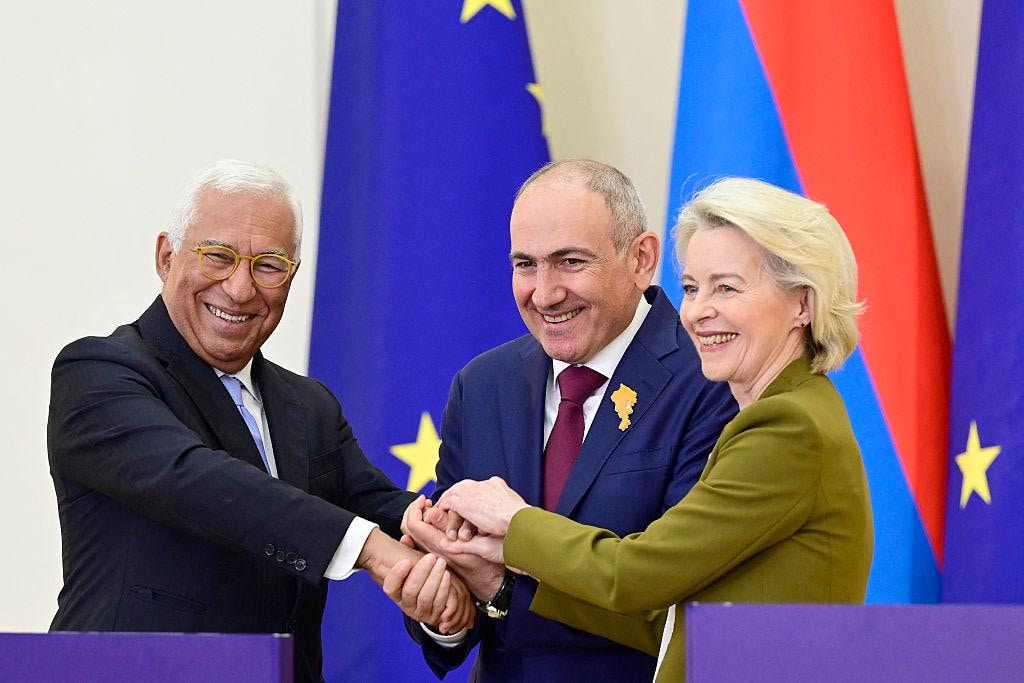
Yerevan: For most of three decades, Armenia measured its security in a single currency, its alliance with Moscow. That calculation has quietly collapsed, and the European Union has moved into the space Russia vacated.

The shift is not merely rhetorical. In July, Brussels and Yerevan sealed a new partnership on resilience, trade and connectivity, building on the first-ever EU-Armenia summit held in the Armenian capital in May. Ursula von der Leyen then toured both Yerevan and Baku, framing the visit around peace, energy and transport corridors rather than any grand promise of membership.

Armenia’s westward turn has clear roots. When war returned to Nagorno-Karabakh, Russian peacekeepers stood aside, and the failure shattered Yerevan’s faith in its guarantor. Prime Minister Nikol Pashinyan drew the lesson bluntly. He froze Armenia’s role in the Moscow-led security bloc, and in April 2025 he signed a law that formally opens a path toward EU accession.

Brussels reads Armenia’s recent parliamentary elections as a confirmation of that direction. European officials now speak of ties that are closer than ever, and they have folded Armenia into crisis-management missions and security consultations that would have been unthinkable five years ago.

Yet the language of a clean break oversells the reality. Armenia still buys most of its gas from Russia, hosts a Russian base, and depends on remittances that flow west from Russian cities. Analysts describe the policy more precisely as diversification with a tilt, not a rupture. Yerevan is widening its options, not burning its bridges.

The peace track with Azerbaijan complicates the picture further. The two capitals initialled a peace treaty in 2025, and the EU has cast itself as a patron of that fragile process. But Brussels also courts Azerbaijani gas, which strains its normative posture whenever Baku’s human-rights record surfaces. Europe cannot lecture one neighbour while it signs energy deals with the other and expect its credibility to survive intact.

For the Union, the prize is strategic rather than economic. A South Caucasus corridor that bypasses Russia would thin Moscow’s grip on a region it long treated as its backyard, and it would knit Central Asian trade routes closer to Europe. That ambition explains why von der Leyen talks about connectivity in almost every sentence about Armenia.

The danger lies in overpromising. Accession remains a distant horizon, and Armenians who hear warm words from Brussels may expect a timetable that no European capital is ready to offer. If Europe wants Yerevan’s pivot to hold, it must match its rhetoric with concrete money, market access and security guarantees, and it must do so before the next crisis tests Armenia’s nerve. The window is open, but it will not stay open on goodwill alone.