Sixty-six extra satellites rarely count as a political statement. In the case of the European Union’s secure connectivity programme, they are precisely that.
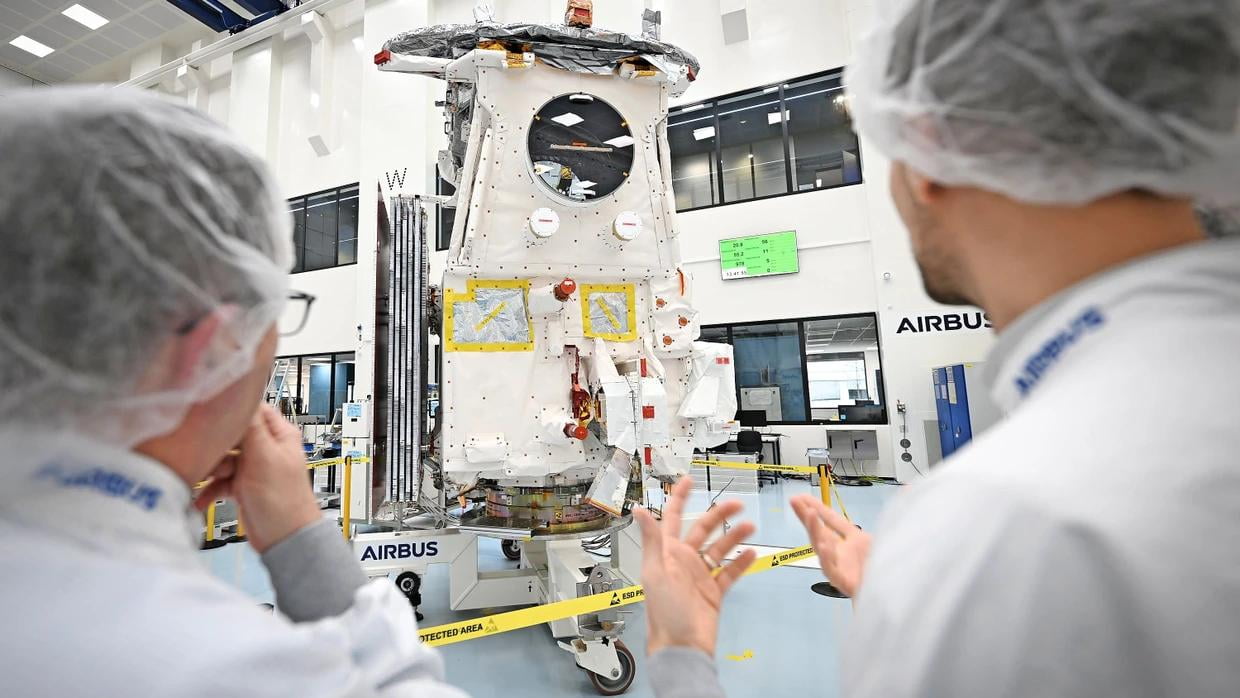
The European Commission and the SpaceRISE consortium signed an implementation agreement on 7 August that pushes IRIS2 out of the drawing-board phase and into construction. The deal enlarges the main constellation from 282 to 348 spacecraft and locks in a faster delivery schedule than the one industry accepted when the concession was first awarded. The Commission set out the terms after seven months of talks that opened in January and covered design, system capacity, target price and how much private money the operators would put on the table.
The arithmetic matters more than it first appears. The additional tranche sits in low Earth orbit and carries a dedicated layer for defence, security and emergency users, the customers who cannot rely on a commercial network run outside European jurisdiction. Governments gain roughly sixty per cent more capacity than the original blueprint offered, and they gain it from infrastructure that European manufacturers build and European operators fly.
IRIS2 now counts 330 satellites in low Earth orbit and 18 in medium Earth orbit, with optional elements held back for missions nobody has fully specified. SES, Eutelsat and Hispasat carry the private half of the partnership. The EU budget contributes around €10.6 billion, and the full programme value climbs well beyond that figure once industrial and member state contributions join the total.
Timing remains the hard part. Deployment begins in 2029, services arrive progressively from that year, and the exploitation phase runs to 2037. Anyone who followed the programme through 2024 and 2025 will remember how often those dates moved. The Commission now frames the August agreement as an acceleration, which is an honest way of admitting the original schedule had drifted.
The European Space Agency supports the technical work, and EUSPA takes on security accreditation alongside the job of keeping governmental users at the centre of service design. That division of labour looks tidy on paper. It will be tested the first time an operational requirement collides with a delivery deadline.
Critics reach for the obvious comparison, and they are not wrong to do so. Starlink already flies thousands of satellites and sells service today. IRIS2 will fly a fraction of that number and start selling in 2029. But the two systems answer different questions. One asks how to reach consumers cheaply. The other asks whether European governments can talk to their embassies, their soldiers and their crisis teams without depending on a single foreign company whose owner takes political positions of his own.
Two risks deserve attention. Launch capacity is the first. Europe needs Ariane 6 and Vega C flying at a cadence neither rocket has yet demonstrated, and 348 satellites do not reach orbit on optimism. The second risk is budgetary. The next multiannual financial framework decides whether the exploitation phase carries the funding the design assumes, and that negotiation will run alongside every other spending fight in the bloc.
Signing a contract puts nothing into orbit. What the August agreement does end is the ambiguity about intent. Europe has decided it wants sovereign secure communications, has priced that decision, and has told industry to start building. The remaining question is whether the schedule survives contact with reality any better than the last one did.