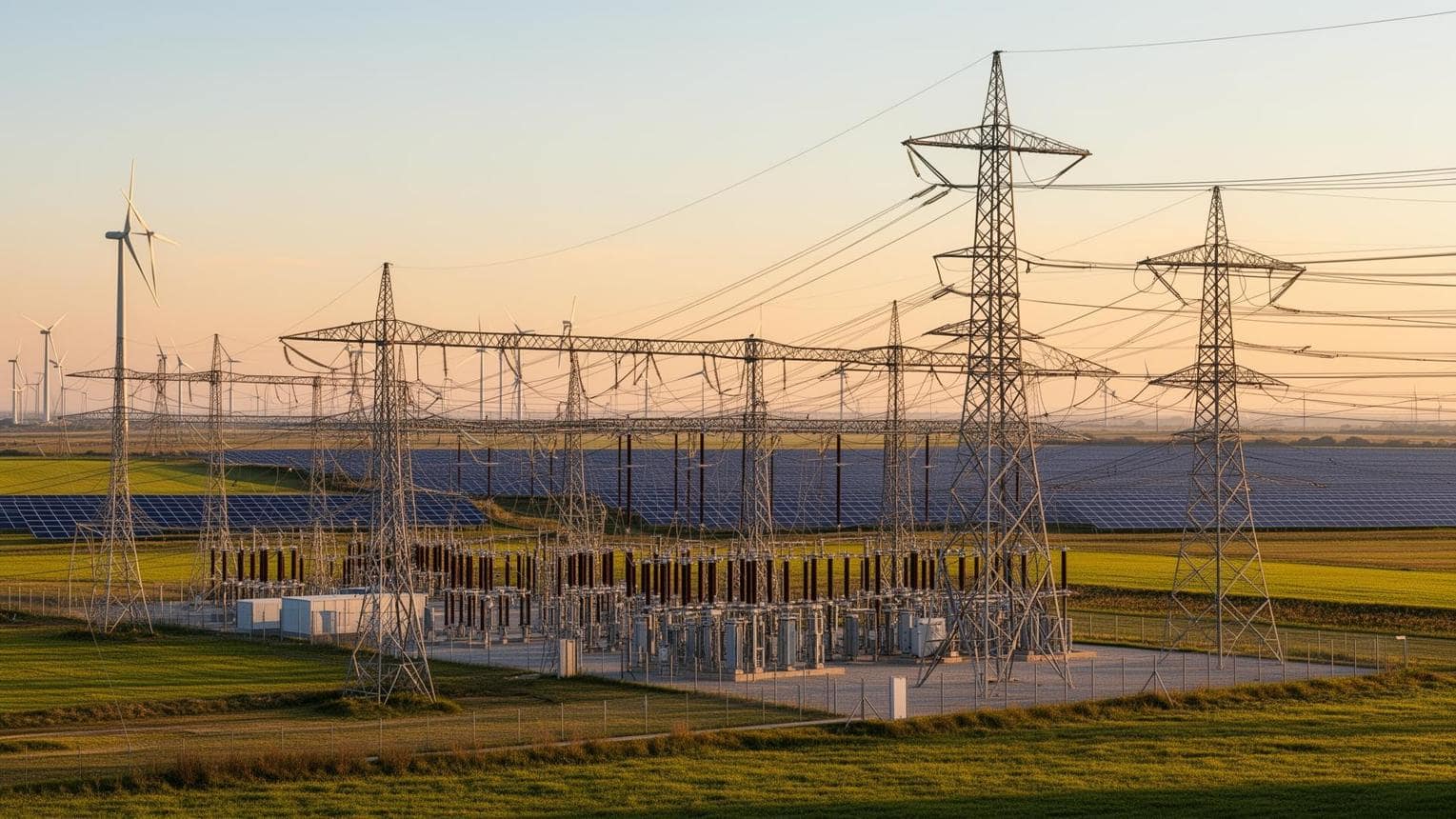
Europe punishes the very energy it wants households and factories to use. The electricity tax burden across the European Union runs at roughly twice the level applied to natural gas in the median member state, and the gap widens to around four and a half times once every levy and surcharge across the bloc is added together. The European Commission has finally put that contradiction in writing, and proposed to fix it.
The admission sits inside COM(2026) 600, a proposal published on 17 July 2026 to future-proof electricity bills, which arrived alongside the Commission’s Electrification Action Plan. The plan sets an indicative target of 46% electrification by 2040 and will be reassessed in the post-2030 Energy Union package. The starting point is unflattering: Europe’s electrification rate has barely moved from 23% in a decade.
The pricing arithmetic explains a great deal of that stagnation. Electricity costs European companies almost three times what gas costs them, and households roughly two and a half times. A factory manager weighing an electric boiler against a gas one, or a family choosing between a heat pump and a condensing boiler, reads those numbers and reaches the rational conclusion. Climate policy loses to the invoice.
Much of the gap has nothing to do with generation costs. Governments across the bloc have spent two decades loading renewable subsidy schemes, social tariffs, energy efficiency programmes and assorted policy costs onto the electricity bill, because that bill reaches every customer and the money arrives reliably. Gas escaped the same treatment almost everywhere. The result is a tax structure that quietly subsidises the fossil fuel Europe says it wants to retire.
The proposal attacks the problem from several directions. It would require member states to shift non-grid levies off electricity bills and onto general taxation or fossil fuels. It would let governments cut network charges for specific consumer groups and reduce taxes for energy-intensive industry. It also pushes faster smart meter deployment, on the reasoning that customers cannot shift consumption to cheap hours they cannot see.
Wind and solar developers welcomed the direction while warning about the mechanics. Moving costs onto general taxation means finding the revenue somewhere else, and finance ministries facing defence commitments and ageing populations have little appetite for a new hole in the budget. Shifting the burden onto fossil fuels raises heating bills for households that have not yet switched, which is precisely the group most likely to punish a government at the ballot box.
Politics complicates the file further. Taxation decisions in the European Union require unanimity in Council, and the revision of the Energy Taxation Directive has sat unresolved since 2021 for exactly that reason. Any measure that touches national tax sovereignty invites a veto, and several capitals guard their energy levy structures fiercely because those levies fund domestic commitments that predate the Green Deal.
The Commission has therefore framed much of the package as an enabling exercise rather than a mandate. Governments gain permission to cut, flexibility to restructure and guidance on sequencing, but the decisive choices stay national. Critics inside the electrification lobby call that approach a good plan that remains only a plan, and the description is fair. Nothing in the text forces a reluctant treasury to act.
Industry federations still see value in the diagnosis alone. Having the Commission state plainly that Europe taxes clean power harder than dirty power changes the terms of argument in national capitals, where energy ministries and finance ministries have fought this battle privately for years. A published number is harder to ignore than a lobbying paper.
The proposal now enters Council and Parliament, where the negotiation will run through 2027 at best. Watch the carbon market strand closely, because a stronger emissions trading system offers the cleanest route to closing the gap from the fossil side without a direct tax fight. Watch also whether any large member state moves first on its own levies. One government breaking ranks would do more for European electrification than another communication from Brussels.