Trade defence rarely makes headlines, yet the anti-dumping duties that took effect on 11 August 2026 will quietly reprice a chemical almost every European household touches. The Commission adopted Implementing Regulation (EU) 2026/1904 on 7 August and published it in the Official Journal three days later, closing an investigation that ran for almost exactly a year.
The measures target terephthalic acid, the feedstock refiners convert into polyethylene terephthalate. PET becomes drinks bottles, food trays and polyester fabric. Korean producers now face rates between 6.1 and 13.3 percent depending on the exporter, while Mexican shipments carry a single rate of 24.1 percent. The published regulation sets out the individual company margins.
INEOS Aromatics lodged the original complaint on 30 June 2025 and the Commission opened proceedings on 13 August that year. Investigators concluded that both origins sold into the European market below normal value and that the resulting price pressure injured domestic producers. Those producers employ roughly 600 people directly across plants in Belgium, Poland and Spain.
Six hundred jobs is a modest number, and critics of European trade defence seize on exactly that arithmetic. The converters, bottlers and textile firms downstream of terephthalic acid employ vastly more people, and every one of them now buys a slightly dearer input. The Commission’s injury test does not weigh those two employment figures against each other in any direct way. It asks whether the Union industry suffered material injury, then applies a separate and much softer Union interest test.
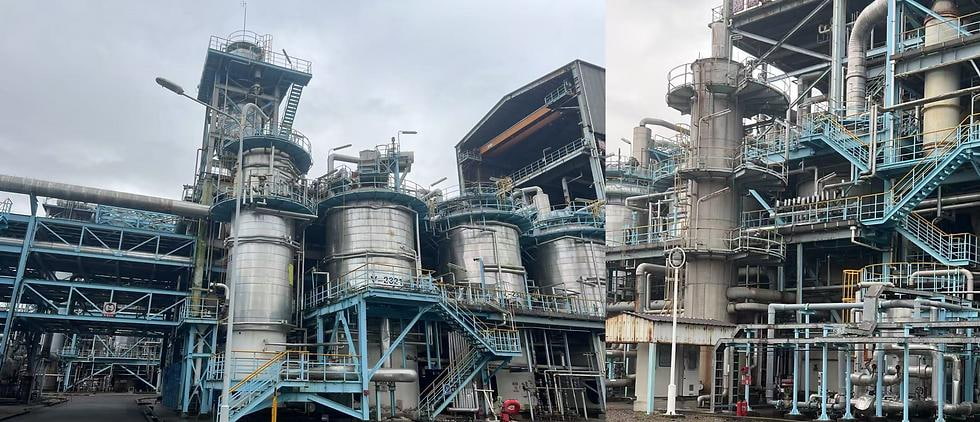
The counterargument deserves a hearing. Europe has watched basic chemical capacity close plant by plant over the past five years, and once an oxidation unit shuts it does not reopen. Defenders of the anti-dumping duties argue that the alternative is not cheaper feedstock forever but a European PET chain that depends entirely on imports, with no domestic price anchor at all. Whether 24.1 percent on Mexican material is the right insurance premium for that risk is a judgement the regulation does not attempt to justify in cost-benefit terms.
The practical effect will show up in sourcing decisions rather than in shortages. Traders have already begun modelling shifts toward suppliers outside the two targeted origins, and analysts tracking the polyester chain expect purchasing patterns to redirect toward Asian and Middle Eastern producers not covered by the measures. That redirection blunts the protective effect over time, which is why anti-dumping cases so often return in expiry reviews five years later with a new set of origins attached.
Seoul reacted with visible irritation. Korean chemical exporters have spent two years absorbing weaker Chinese demand, and European duties arrive at an awkward moment for an industry already running below capacity. Korean commentary framed the decision as another squeeze on a sector under pressure, though the government has not yet signalled whether it will pursue the matter through dispute settlement.
There is a circular-economy wrinkle the regulation does not mention. European packaging rules push converters toward recycled PET, and dearer virgin feedstock narrows the price gap that has long favoured new material. Recyclers may find the duties an unexpected tailwind. Whether that counts as coherent policy or lucky accident depends on how generous one feels toward the Commission’s left hand knowing what its right hand does.
Importers should note the mechanics. Duties apply from the day after publication, customs authorities collect them at the border, and provisional amounts already secured will be definitively collected under the terms the regulation sets out. Companies holding supply contracts signed before August will absorb the difference themselves unless their terms allocate duty risk to the seller.
The measures run for five years unless a review shortens or extends them. That gives European producers a defined window to prove the injury was temporary and reversible rather than structural.