August 22, 2026
LATEST
What the EU Taiwan Framework Would Actually Have to DoKorea Signed a Digital Trade Deal That Nobody Has RatifiedCritical Minerals in Mongolia Still Have to Cross Two BordersCan an Indonesia Trade Deal Survive Two Years of RatifyingCross-Border Data Orders Went Live Before the Plumbing DidPlatform Work Rules Take Effect in December and Few Are ReadyCan Europe’s Firefighting Fleet Keep Pace With EU WildfiresThe AI Act Deadline Passed on 2 August and Nothing BitWhy Construction Keeps Shrinking While Confidence ImprovesAccession Talks Stall Again and September 1 Is the TestBrussels Applied a Trade Deal It Cannot Yet RatifyAfrica’s Power Market Now Needs Money More Than BlueprintsLong-Term Budget Talks Enter Autumn Without a Council LineForeign Subsidies Enforcement Now Turns on a Dublin RaidWho Writes Europe’s Telecom Rules Once Copper DisappearsDisability Cards Exist on Paper and Nowhere Else Until 2028Losing Visa-Free Travel Now Takes a Thirty Percent SwingTwenty Flagship Actions Will Test Whether the Culture Compass WorksEurope’s Quality Jobs Act Now Rests on What Unions Do by SeptemberDoes a Three Euro Parcel Duty Change Anything About Cheap ImportsWhat the EU Taiwan Framework Would Actually Have to DoKorea Signed a Digital Trade Deal That Nobody Has RatifiedCritical Minerals in Mongolia Still Have to Cross Two BordersCan an Indonesia Trade Deal Survive Two Years of RatifyingCross-Border Data Orders Went Live Before the Plumbing DidPlatform Work Rules Take Effect in December and Few Are ReadyCan Europe’s Firefighting Fleet Keep Pace With EU WildfiresThe AI Act Deadline Passed on 2 August and Nothing BitWhy Construction Keeps Shrinking While Confidence ImprovesAccession Talks Stall Again and September 1 Is the TestBrussels Applied a Trade Deal It Cannot Yet RatifyAfrica’s Power Market Now Needs Money More Than BlueprintsLong-Term Budget Talks Enter Autumn Without a Council LineForeign Subsidies Enforcement Now Turns on a Dublin RaidWho Writes Europe’s Telecom Rules Once Copper DisappearsDisability Cards Exist on Paper and Nowhere Else Until 2028Losing Visa-Free Travel Now Takes a Thirty Percent SwingTwenty Flagship Actions Will Test Whether the Culture Compass WorksEurope’s Quality Jobs Act Now Rests on What Unions Do by SeptemberDoes a Three Euro Parcel Duty Change Anything About Cheap Imports
August 22, 2026
LATEST
What the EU Taiwan Framework Would Actually Have to DoKorea Signed a Digital Trade Deal That Nobody Has RatifiedCritical Minerals in Mongolia Still Have to Cross Two BordersCan an Indonesia Trade Deal Survive Two Years of RatifyingCross-Border Data Orders Went Live Before the Plumbing DidPlatform Work Rules Take Effect in December and Few Are ReadyCan Europe’s Firefighting Fleet Keep Pace With EU WildfiresThe AI Act Deadline Passed on 2 August and Nothing BitWhy Construction Keeps Shrinking While Confidence ImprovesAccession Talks Stall Again and September 1 Is the TestBrussels Applied a Trade Deal It Cannot Yet RatifyAfrica’s Power Market Now Needs Money More Than BlueprintsLong-Term Budget Talks Enter Autumn Without a Council LineForeign Subsidies Enforcement Now Turns on a Dublin RaidWho Writes Europe’s Telecom Rules Once Copper DisappearsDisability Cards Exist on Paper and Nowhere Else Until 2028Losing Visa-Free Travel Now Takes a Thirty Percent SwingTwenty Flagship Actions Will Test Whether the Culture Compass WorksEurope’s Quality Jobs Act Now Rests on What Unions Do by SeptemberDoes a Three Euro Parcel Duty Change Anything About Cheap ImportsWhat the EU Taiwan Framework Would Actually Have to DoKorea Signed a Digital Trade Deal That Nobody Has RatifiedCritical Minerals in Mongolia Still Have to Cross Two BordersCan an Indonesia Trade Deal Survive Two Years of RatifyingCross-Border Data Orders Went Live Before the Plumbing DidPlatform Work Rules Take Effect in December and Few Are ReadyCan Europe’s Firefighting Fleet Keep Pace With EU WildfiresThe AI Act Deadline Passed on 2 August and Nothing BitWhy Construction Keeps Shrinking While Confidence ImprovesAccession Talks Stall Again and September 1 Is the TestBrussels Applied a Trade Deal It Cannot Yet RatifyAfrica’s Power Market Now Needs Money More Than BlueprintsLong-Term Budget Talks Enter Autumn Without a Council LineForeign Subsidies Enforcement Now Turns on a Dublin RaidWho Writes Europe’s Telecom Rules Once Copper DisappearsDisability Cards Exist on Paper and Nowhere Else Until 2028Losing Visa-Free Travel Now Takes a Thirty Percent SwingTwenty Flagship Actions Will Test Whether the Culture Compass WorksEurope’s Quality Jobs Act Now Rests on What Unions Do by SeptemberDoes a Three Euro Parcel Duty Change Anything About Cheap Imports

Power Plants Drive Europe’s Greenhouse Gas Emissions Back Up

Luxembourg: Eurostat reported on 14 August 2026 that greenhouse gas emissions from the EU economy rose 0.3% in the first quarter of 2026 compared with the previous quarter, reaching 837 million tonnes of CO2 equivalent while the bloc’s GDP stayed flat. Power generation drove the increase; households pulled in the opposite direction.

The headline number looks small, and it is smaller than the 0.9% jump recorded in the last quarter of 2025. But the direction still runs against the trend the EU needs. Emissions climbed while output did not, which means the economy briefly became more carbon-intensive rather than less.

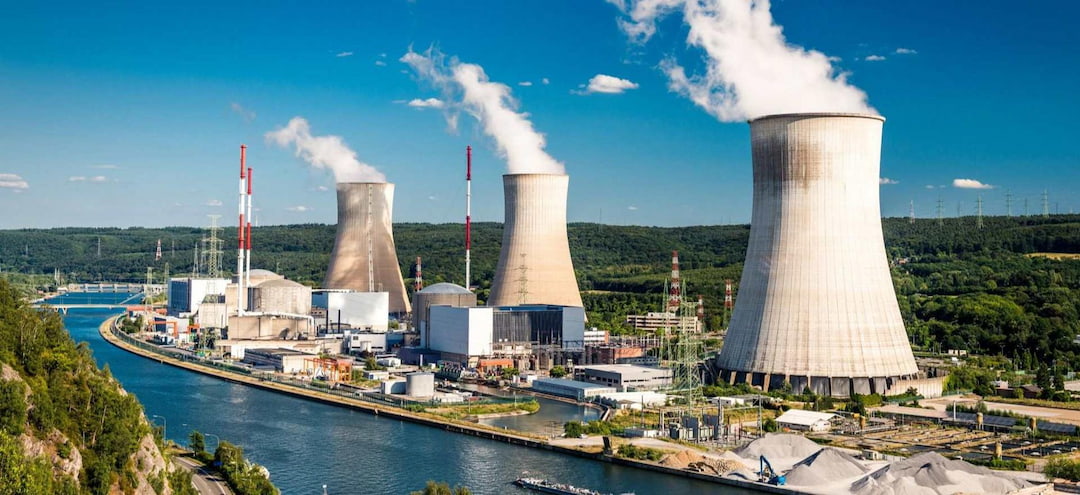
The sectoral split explains most of it. Electricity, gas, steam and air conditioning supply posted the steepest rise at 4.8%, a swing that usually reflects colder weather, weaker wind and hydro output, and more gas and coal burned to fill the gap. Everything else moved down.

  • Total Q1 2026 emissions: 837 million tonnes CO2 equivalent, up from 835 million in Q4 2025
  • Energy supply sector: up 4.8% quarter on quarter
  • Households: down 1.3%
  • Manufacturing: down 0.6%
  • Transport and storage: down 0.6%
  • Year on year: emissions down 1.2% while GDP grew 0.8%

The annual comparison carries the better news. Against the first quarter of 2025, greenhouse gas emissions fell 1.2% even as the EU economy expanded 0.8%. That is the decoupling pattern policymakers cite when they argue growth and decarbonisation can run together, and it has held across most quarters since 2021.

Eurostat attributes the quarterly reversal squarely to power producers.

The supply of electricity, gas, steam and air conditioning sector continued to have the highest emissions growth, at 4.8%, while the overall figure was reduced mainly by households, down 1.3%, and by the manufacturing and transport and storage sectors, both down 0.6%. Eurostat, greenhouse gas emission accounts, 14 August 2026

Analysts reading the series should treat single quarters carefully. The quarterly greenhouse gas dataset tracks emissions by economic activity under the air emissions accounts framework, not by the inventory rules used for the EU’s climate targets. The two series answer different questions. One tells you what European producers and households emitted; the other tells you what the Union reports under the Paris Agreement.

Context still matters for the target. Eurostat’s June 2026 release put EU economy emissions 17% below their 2015 level, a fall achieved while the bloc added real output. The Union’s binding goal remains a 55% cut in net emissions by 2030 against 1990, with climate neutrality legislated for 2050.

A single 0.3% quarter will not derail either date. It does sharpen a familiar argument in Brussels about electricity. Households and factories cut their direct emissions partly by electrifying heat and processes, which shifts the carbon burden onto generators. If wind and solar cover that shift, total emissions keep falling. If gas plants cover it during a still, cold quarter, the number goes the way it went in early 2026.

The next quarterly estimate, covering April to June 2026, lands in the autumn. Warmer months and stronger solar output usually flatter the energy supply figure, so the more informative test will be the winter quarters that follow.