August 22, 2026
LATEST
What the EU Taiwan Framework Would Actually Have to DoKorea Signed a Digital Trade Deal That Nobody Has RatifiedCritical Minerals in Mongolia Still Have to Cross Two BordersCan an Indonesia Trade Deal Survive Two Years of RatifyingCross-Border Data Orders Went Live Before the Plumbing DidPlatform Work Rules Take Effect in December and Few Are ReadyCan Europe’s Firefighting Fleet Keep Pace With EU WildfiresThe AI Act Deadline Passed on 2 August and Nothing BitWhy Construction Keeps Shrinking While Confidence ImprovesAccession Talks Stall Again and September 1 Is the TestBrussels Applied a Trade Deal It Cannot Yet RatifyAfrica’s Power Market Now Needs Money More Than BlueprintsLong-Term Budget Talks Enter Autumn Without a Council LineForeign Subsidies Enforcement Now Turns on a Dublin RaidWho Writes Europe’s Telecom Rules Once Copper DisappearsDisability Cards Exist on Paper and Nowhere Else Until 2028Losing Visa-Free Travel Now Takes a Thirty Percent SwingTwenty Flagship Actions Will Test Whether the Culture Compass WorksEurope’s Quality Jobs Act Now Rests on What Unions Do by SeptemberDoes a Three Euro Parcel Duty Change Anything About Cheap ImportsWhat the EU Taiwan Framework Would Actually Have to DoKorea Signed a Digital Trade Deal That Nobody Has RatifiedCritical Minerals in Mongolia Still Have to Cross Two BordersCan an Indonesia Trade Deal Survive Two Years of RatifyingCross-Border Data Orders Went Live Before the Plumbing DidPlatform Work Rules Take Effect in December and Few Are ReadyCan Europe’s Firefighting Fleet Keep Pace With EU WildfiresThe AI Act Deadline Passed on 2 August and Nothing BitWhy Construction Keeps Shrinking While Confidence ImprovesAccession Talks Stall Again and September 1 Is the TestBrussels Applied a Trade Deal It Cannot Yet RatifyAfrica’s Power Market Now Needs Money More Than BlueprintsLong-Term Budget Talks Enter Autumn Without a Council LineForeign Subsidies Enforcement Now Turns on a Dublin RaidWho Writes Europe’s Telecom Rules Once Copper DisappearsDisability Cards Exist on Paper and Nowhere Else Until 2028Losing Visa-Free Travel Now Takes a Thirty Percent SwingTwenty Flagship Actions Will Test Whether the Culture Compass WorksEurope’s Quality Jobs Act Now Rests on What Unions Do by SeptemberDoes a Three Euro Parcel Duty Change Anything About Cheap Imports
August 22, 2026
LATEST
What the EU Taiwan Framework Would Actually Have to DoKorea Signed a Digital Trade Deal That Nobody Has RatifiedCritical Minerals in Mongolia Still Have to Cross Two BordersCan an Indonesia Trade Deal Survive Two Years of RatifyingCross-Border Data Orders Went Live Before the Plumbing DidPlatform Work Rules Take Effect in December and Few Are ReadyCan Europe’s Firefighting Fleet Keep Pace With EU WildfiresThe AI Act Deadline Passed on 2 August and Nothing BitWhy Construction Keeps Shrinking While Confidence ImprovesAccession Talks Stall Again and September 1 Is the TestBrussels Applied a Trade Deal It Cannot Yet RatifyAfrica’s Power Market Now Needs Money More Than BlueprintsLong-Term Budget Talks Enter Autumn Without a Council LineForeign Subsidies Enforcement Now Turns on a Dublin RaidWho Writes Europe’s Telecom Rules Once Copper DisappearsDisability Cards Exist on Paper and Nowhere Else Until 2028Losing Visa-Free Travel Now Takes a Thirty Percent SwingTwenty Flagship Actions Will Test Whether the Culture Compass WorksEurope’s Quality Jobs Act Now Rests on What Unions Do by SeptemberDoes a Three Euro Parcel Duty Change Anything About Cheap ImportsWhat the EU Taiwan Framework Would Actually Have to DoKorea Signed a Digital Trade Deal That Nobody Has RatifiedCritical Minerals in Mongolia Still Have to Cross Two BordersCan an Indonesia Trade Deal Survive Two Years of RatifyingCross-Border Data Orders Went Live Before the Plumbing DidPlatform Work Rules Take Effect in December and Few Are ReadyCan Europe’s Firefighting Fleet Keep Pace With EU WildfiresThe AI Act Deadline Passed on 2 August and Nothing BitWhy Construction Keeps Shrinking While Confidence ImprovesAccession Talks Stall Again and September 1 Is the TestBrussels Applied a Trade Deal It Cannot Yet RatifyAfrica’s Power Market Now Needs Money More Than BlueprintsLong-Term Budget Talks Enter Autumn Without a Council LineForeign Subsidies Enforcement Now Turns on a Dublin RaidWho Writes Europe’s Telecom Rules Once Copper DisappearsDisability Cards Exist on Paper and Nowhere Else Until 2028Losing Visa-Free Travel Now Takes a Thirty Percent SwingTwenty Flagship Actions Will Test Whether the Culture Compass WorksEurope’s Quality Jobs Act Now Rests on What Unions Do by SeptemberDoes a Three Euro Parcel Duty Change Anything About Cheap Imports

Eight Governments Keep the Border Checks Schengen Was to End

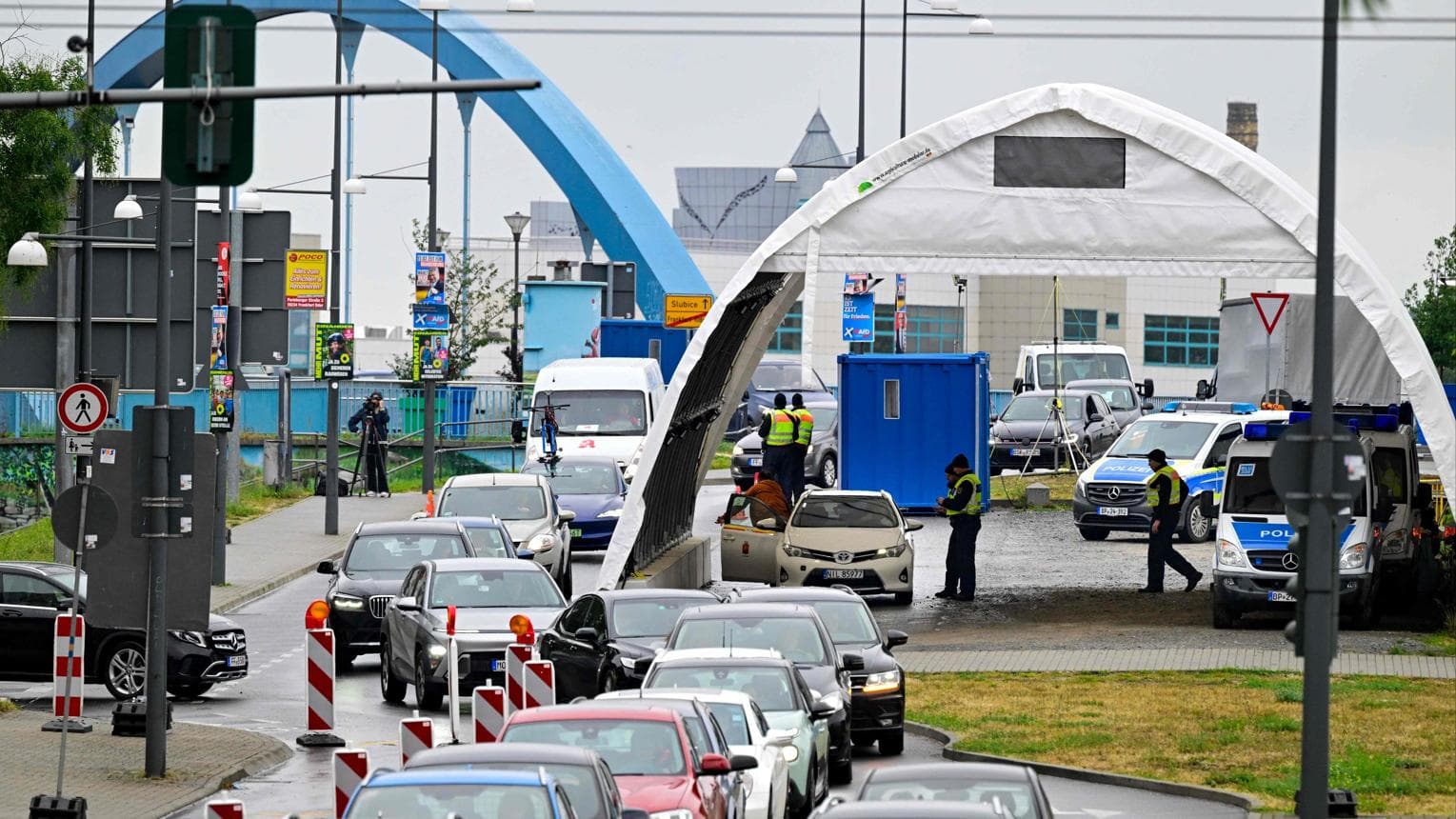
Berlin: Eight Schengen governments will keep internal border controls running into September and December 2026, extending checks that the Schengen Borders Code treats as an emergency measure into their fourth consecutive year. Austria, France, Germany, Italy, the Netherlands, Norway, Poland and Sweden all hold live notifications with the European Commission.

Germany runs the widest set. Berlin extended checks for a further six months from 16 March 2026 to 15 September 2026, covering every land border the country has, from France and Luxembourg through Belgium, the Netherlands, Denmark, Switzerland, Austria, the Czech Republic and Poland. The Interior Ministry cites irregular migration, smuggling networks and security risks it links to the wars in Ukraine and the Middle East.

The Commission has pushed back without moving to enforcement. It issued opinions on prolonged controls in Austria, Denmark, France, Germany, Italy, the Netherlands, Norway, Slovenia and Sweden, and repeated the standard the code sets.

Internal border controls must remain temporary, exceptional and proportionate.

Those opinions carry no sanction. A member state that reintroduces controls notifies the Commission, receives an assessment and then decides for itself whether to renew, which is why the same nine capitals reappear in successive rounds of the same procedure.

Spain and Italy added a further layer, applying checks on arrivals from each other’s territory until September 2026 after the Ceuta incident. That pairing is unusual because it puts two southern members on both sides of a measure most of the standing notifications aim at the central and northern routes.

The timing sharpens the contradiction. The Pact on Migration and Asylum entered into application on 12 June 2026 and rewrote how screening at the external frontier works, on the argument that a stronger perimeter removes the case for checks inside the area. Ten weeks later, the internal checks have not come down.

Technology has not settled it either. The Entry/Exit System is now fully operational at the Schengen external frontier, registering biometric data from third-country nationals at every crossing, and the European Travel Information and Authorisation System is expected in the final quarter of 2026. Both were sold partly as answers to the security gaps capitals invoke when they reintroduce checks.

Carriers and frontier regions absorb the cost. Freight operators on the German-Polish and Austrian-Italian corridors report queues at peak hours, and cross-border commuters around Aachen and Basel now plan around checks that were meant to disappear in 2016. The Commission’s 2026 State of Schengen Report, published on 18 May, urged the nine capitals concerned to phase the measures out and to reach instead for police cooperation and joint patrols.

The history explains why nobody expects a clean exit. Checks returned in September 2015 during the arrivals through the Western Balkans, and Germany, Austria, Denmark, Sweden and Norway have renewed them in unbroken sequence since. Each renewal has rested on a fresh legal justification, from secondary movement to terrorism to organised crime, while the physical stops at the same crossing points have changed very little.

A further proposal expanding Frontex operational powers is due this year, and it will test whether capitals treat a stronger EU agency as a substitute for national measures or as one more instrument alongside them. On the record of the past decade, the second reading looks the safer bet.