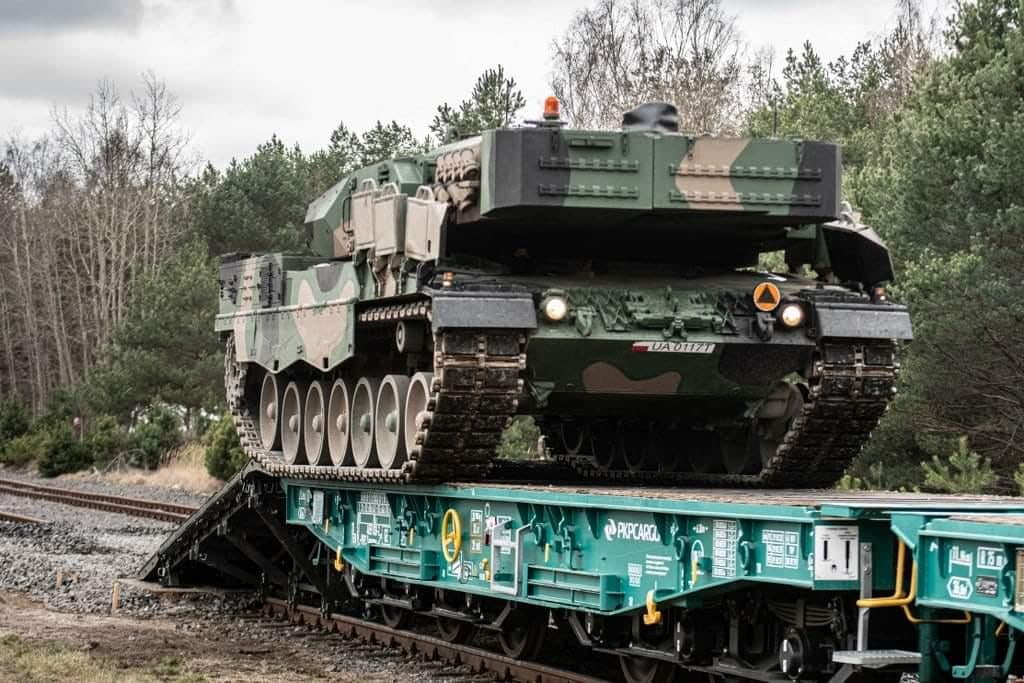
Rzeszów: Freight planners in this Polish city already know what military mobility costs, because every eastbound convoy crossing Poland competes for the same rail paths as commercial cargo. On 17 June 2026 member states unanimously approved the Council’s negotiating mandate on the EU regulation on military mobility, and since talks with the European Parliament opened in Brussels in July one question has dominated the table: who pays when soldiers get priority over freight.
The Commission and the High Representative tabled the military mobility package on 19 November 2025. It pairs a Joint Communication with a draft regulation that strips away national permit paperwork, digitalises authorisations and builds a shared pool of transport assets. EU leaders had named the file a priority in their conclusions of 6 March 2025, then pushed again in June 2025 and March 2026.
Cyprus, which steered the file through the Council, framed the mandate as a readiness test rather than a transport reform.
In an increasingly unpredictable security environment, the ability to deploy military personnel and equipment swiftly across Europe is essential to our collective security and defence. We are delivering on this objective at an unprecedented and record pace, responding to the call of EU leaders with urgency and determination. Vasilis Palmas, Minister of Defence of the Republic of Cyprus
The Council’s negotiating position changed the Commission text in ways that matter to anyone who runs a train. Ministers sharpened the proposed European military mobility enhanced response system, known as EMMERS, so that the Council can switch it on within 72 hours of a member state request, with or without a Commission proposal. Once EMMERS fires, military convoys jump the queue.
That is precisely where rail operators dig in. Private freight companies and infrastructure managers want binding compensation when their paths are requisitioned, and the European Parliament has backed mandatory payment mechanisms. Governments prefer flexibility and cheaper wording. The Community of European Railway and Infrastructure Companies welcomed the harmonisation drive but has pressed throughout for clarity on who reimburses a cancelled commercial service.
The Council’s mandate covers five blocks of measures:
- harmonised permission procedures and digital paperwork to remove regulatory barriers
- the EMMERS emergency system for large-scale, accelerated troop and equipment movement
- upgrades and physical protection for dual-use transport infrastructure
- a military mobility solidarity pool of registered civilian and military transport capacity
- national coordinators for military transport acting as single points of contact
Ministers also insisted that non-EU NATO members sit inside the framework, treating military mobility as a flagship of EU-NATO cooperation. That matters for Norway, Britain and Turkey, whose ports and roads carry allied traffic that never touches an EU permit desk.
Money follows later. The Commission has earmarked €17.65 billion for military mobility in its proposed Connecting Europe Facility budget for 2028 to 2034, and its services have mapped roughly 500 hotspot projects where bridges, tunnels and sidings cannot take the weight or width of modern armour. Almost none of that cash arrives before the regulation applies.
The timetable is tight. Negotiators aim to close the file by the end of 2026, with a fully operational and harmonised framework by the end of 2027. Commissioner for Sustainable Transport and Tourism Apostolos Tzitzikostas called the package a decisive step in strengthening Europe’s ability to respond to any security crisis, while Defence and Space Commissioner Andrius Kubilius told MEPs he wants implementation as soon as the Union can be ready. Several MEPs want the deadline pulled forward by two years.
Behind the acronyms sits a plain logistical fact. Moving a heavy brigade from a North Sea port to the Lithuanian border still means dozens of separate national clearances, gauge changes at the Polish frontier and wagons that Europe does not own in sufficient numbers. The Commission’s military mobility work has run since 2018 without solving that. This regulation is the first attempt to make the corridors legally binding rather than merely mapped, and the compensation fight will decide whether operators cooperate willingly or under protest.