August 22, 2026
LATEST
What the EU Taiwan Framework Would Actually Have to DoKorea Signed a Digital Trade Deal That Nobody Has RatifiedCritical Minerals in Mongolia Still Have to Cross Two BordersCan an Indonesia Trade Deal Survive Two Years of RatifyingCross-Border Data Orders Went Live Before the Plumbing DidPlatform Work Rules Take Effect in December and Few Are ReadyCan Europe’s Firefighting Fleet Keep Pace With EU WildfiresThe AI Act Deadline Passed on 2 August and Nothing BitWhy Construction Keeps Shrinking While Confidence ImprovesAccession Talks Stall Again and September 1 Is the TestBrussels Applied a Trade Deal It Cannot Yet RatifyAfrica’s Power Market Now Needs Money More Than BlueprintsLong-Term Budget Talks Enter Autumn Without a Council LineForeign Subsidies Enforcement Now Turns on a Dublin RaidWho Writes Europe’s Telecom Rules Once Copper DisappearsDisability Cards Exist on Paper and Nowhere Else Until 2028Losing Visa-Free Travel Now Takes a Thirty Percent SwingTwenty Flagship Actions Will Test Whether the Culture Compass WorksEurope’s Quality Jobs Act Now Rests on What Unions Do by SeptemberDoes a Three Euro Parcel Duty Change Anything About Cheap ImportsWhat the EU Taiwan Framework Would Actually Have to DoKorea Signed a Digital Trade Deal That Nobody Has RatifiedCritical Minerals in Mongolia Still Have to Cross Two BordersCan an Indonesia Trade Deal Survive Two Years of RatifyingCross-Border Data Orders Went Live Before the Plumbing DidPlatform Work Rules Take Effect in December and Few Are ReadyCan Europe’s Firefighting Fleet Keep Pace With EU WildfiresThe AI Act Deadline Passed on 2 August and Nothing BitWhy Construction Keeps Shrinking While Confidence ImprovesAccession Talks Stall Again and September 1 Is the TestBrussels Applied a Trade Deal It Cannot Yet RatifyAfrica’s Power Market Now Needs Money More Than BlueprintsLong-Term Budget Talks Enter Autumn Without a Council LineForeign Subsidies Enforcement Now Turns on a Dublin RaidWho Writes Europe’s Telecom Rules Once Copper DisappearsDisability Cards Exist on Paper and Nowhere Else Until 2028Losing Visa-Free Travel Now Takes a Thirty Percent SwingTwenty Flagship Actions Will Test Whether the Culture Compass WorksEurope’s Quality Jobs Act Now Rests on What Unions Do by SeptemberDoes a Three Euro Parcel Duty Change Anything About Cheap Imports
August 22, 2026
LATEST
What the EU Taiwan Framework Would Actually Have to DoKorea Signed a Digital Trade Deal That Nobody Has RatifiedCritical Minerals in Mongolia Still Have to Cross Two BordersCan an Indonesia Trade Deal Survive Two Years of RatifyingCross-Border Data Orders Went Live Before the Plumbing DidPlatform Work Rules Take Effect in December and Few Are ReadyCan Europe’s Firefighting Fleet Keep Pace With EU WildfiresThe AI Act Deadline Passed on 2 August and Nothing BitWhy Construction Keeps Shrinking While Confidence ImprovesAccession Talks Stall Again and September 1 Is the TestBrussels Applied a Trade Deal It Cannot Yet RatifyAfrica’s Power Market Now Needs Money More Than BlueprintsLong-Term Budget Talks Enter Autumn Without a Council LineForeign Subsidies Enforcement Now Turns on a Dublin RaidWho Writes Europe’s Telecom Rules Once Copper DisappearsDisability Cards Exist on Paper and Nowhere Else Until 2028Losing Visa-Free Travel Now Takes a Thirty Percent SwingTwenty Flagship Actions Will Test Whether the Culture Compass WorksEurope’s Quality Jobs Act Now Rests on What Unions Do by SeptemberDoes a Three Euro Parcel Duty Change Anything About Cheap ImportsWhat the EU Taiwan Framework Would Actually Have to DoKorea Signed a Digital Trade Deal That Nobody Has RatifiedCritical Minerals in Mongolia Still Have to Cross Two BordersCan an Indonesia Trade Deal Survive Two Years of RatifyingCross-Border Data Orders Went Live Before the Plumbing DidPlatform Work Rules Take Effect in December and Few Are ReadyCan Europe’s Firefighting Fleet Keep Pace With EU WildfiresThe AI Act Deadline Passed on 2 August and Nothing BitWhy Construction Keeps Shrinking While Confidence ImprovesAccession Talks Stall Again and September 1 Is the TestBrussels Applied a Trade Deal It Cannot Yet RatifyAfrica’s Power Market Now Needs Money More Than BlueprintsLong-Term Budget Talks Enter Autumn Without a Council LineForeign Subsidies Enforcement Now Turns on a Dublin RaidWho Writes Europe’s Telecom Rules Once Copper DisappearsDisability Cards Exist on Paper and Nowhere Else Until 2028Losing Visa-Free Travel Now Takes a Thirty Percent SwingTwenty Flagship Actions Will Test Whether the Culture Compass WorksEurope’s Quality Jobs Act Now Rests on What Unions Do by SeptemberDoes a Three Euro Parcel Duty Change Anything About Cheap Imports

Growth Outpaced Hiring and That May Be the Better News

Economists spent the past decade complaining that Europe created jobs without creating output. The second quarter of 2026 delivered something closer to the opposite, and the reaction has been oddly muted.

Eurostat reported on 14 August that seasonally adjusted GDP rose 0.4 percent in the euro area and 0.5 percent across the EU in the three months to June, while employment rose just 0.1 percent in the euro area. Year on year, output gained 1.0 percent in the euro area and 1.2 percent in the EU, against employment growth of 0.5 percent. Output is now running ahead of headcount by a visible margin.

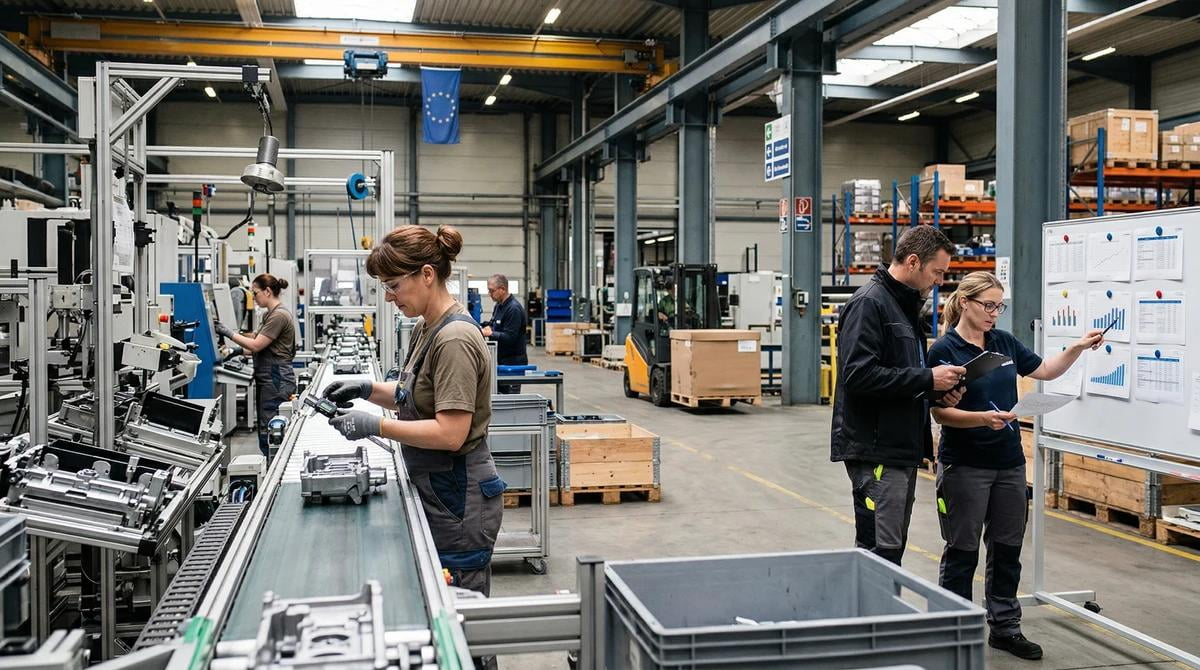
That arithmetic produces something Europe has lacked since the pandemic, namely measurable labour productivity growth. Firms are squeezing more value from roughly the same number of workers. Mario Draghi’s competitiveness report built its entire diagnosis around the absence of exactly this, arguing that the gap between European and American income per head comes down to productivity rather than hours worked. One quarter proves nothing, but the direction has changed.

The national breakdown complicates any celebration. Germany, France and Italy each managed 0.2 percent quarterly growth, while Spain expanded by 0.7 percent. On an annual basis Spain leads at 2.7 percent, followed by the Netherlands at 1.3 percent, Italy at 1.0 percent, Germany at 0.9 percent and France at 0.7 percent. The bloc’s three largest economies, which together account for more than half its output, are barely moving. Aggregate eurozone growth currently depends on the Iberian peninsula and a handful of smaller members carrying the average.

Spain’s performance rests on foundations that other capitals cannot copy quickly. Cheap renewable electricity insulated Spanish industry from the energy price shocks that hit German manufacturing, migration has expanded its labour force, and tourism receipts keep arriving. Germany, by contrast, is still absorbing higher energy costs, weaker Chinese demand and the tariff environment that Washington has imposed on European goods this year.

Slower hiring alongside faster output also carries a warning. Productivity gains that come from firms holding back recruitment during uncertainty look different from gains that come from investment in equipment and skills. If companies are simply refusing to replace departures while they wait to see how trade policy settles, the measured improvement will fade the moment confidence returns. Distinguishing between the two requires investment data that arrives later, and the composition of that growth will decide whether this reading marks a turn or a pause.

For the European Central Bank the numbers cut both ways. Output above expectations with restrained employment growth reduces the wage pressure that governing council members watch most closely, which supports the case for holding rates rather than tightening further. Yet the divergence between Spanish momentum and German stagnation makes a single policy rate harder to justify to either government.

The Commission faces a narrower version of the same problem. Its competitiveness agenda, the savings and investment union and the push to simplify reporting rules all assume that European firms will invest once the regulatory cost falls. This data offers a partial test of that assumption. Output is rising, employment is not keeping pace, and the missing variable is whether capital spending follows. Autumn forecasts will show whether Europe found a productivity engine or simply a hiring freeze wearing the same clothes.