Health security work rarely surfaces in August, when the Brussels calendar thins out and duty officers keep the lights on. This summer breaks the pattern.
The European Centre for Disease Prevention and Control published its communicable disease threats report for week 33 on Friday, and the Ebola entry again sits at the top. The outbreak of Bundibugyo virus disease in the Democratic Republic of the Congo and Uganda has now produced 4,665 confirmed cases and 2,184 deaths in the DRC alone, according to figures the agency logged on 13 August. The World Health Organization declared the outbreak a public health emergency of international concern on 17 May.
Two of those cases reached the continent. Doctors treated a medically evacuated patient in Germany, and France confirmed a second imported case on 24 June. Neither seeded onward transmission. ECDC still rates the likelihood of infection for people living in the EU and the European Economic Area as very low, and the epidemiology supports that judgement.
The interesting question is not whether Europe faces an outbreak. It almost certainly does not. The question is what two imported cases reveal about machinery that European governments built after 2014 and have rarely tested since.
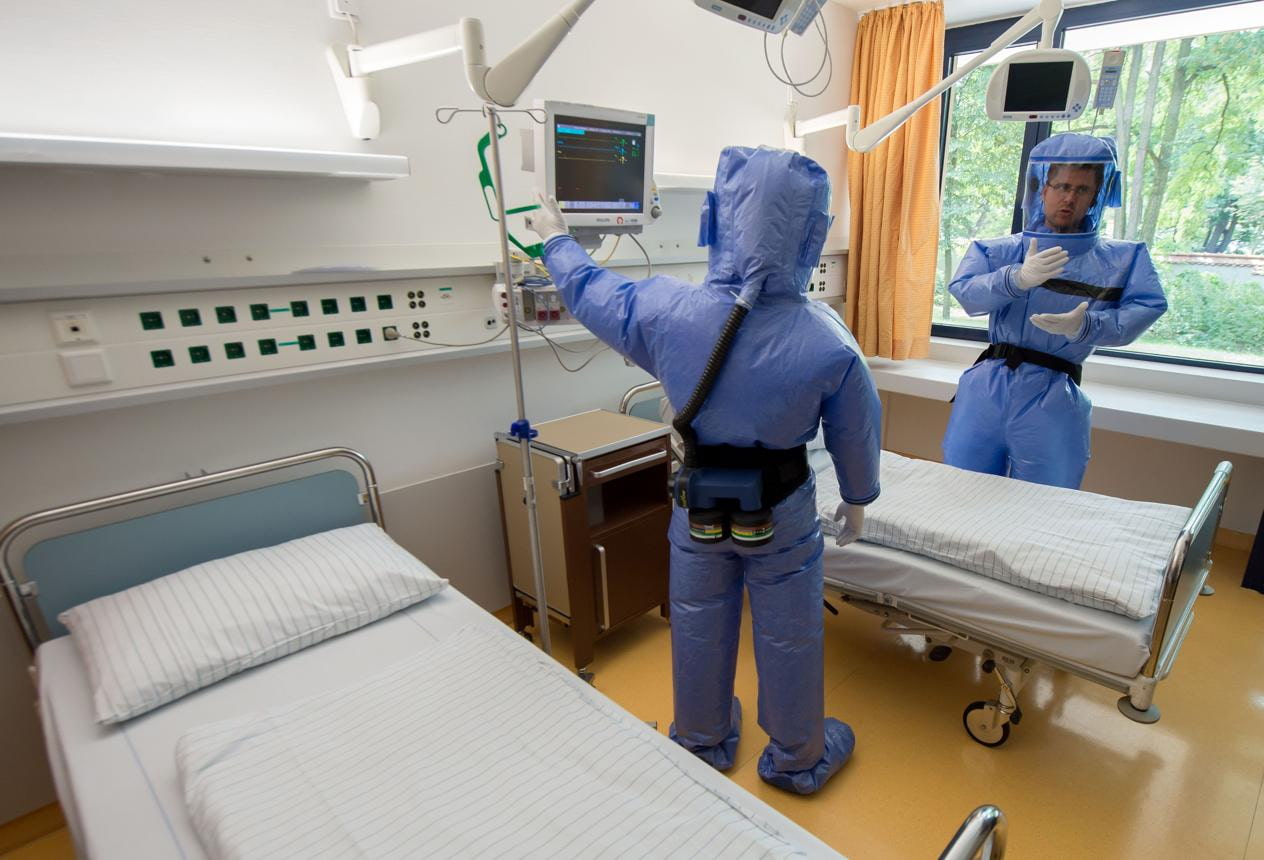
Medical evacuation illustrates the point. Only a handful of member states operate high-level isolation units capable of receiving a viral haemorrhagic fever patient, and fewer still run the specialised air transport that gets someone there. When France and Germany absorbed those two patients, they drew on capacity that most of the Union does not hold and cannot quickly build. Solidarity in this domain means a small number of countries carrying the load for everyone.
ECDC has pushed guidance, training material and operational resources at national authorities, hospital staff and transport operators through its dedicated outbreak page. Airports and border staff sit inside that chain, which matters because imported cases arrive through commercial aviation far more often than through planned evacuations.
The Ebola file also competes for attention. Week 33 tracks chikungunya, dengue, West Nile virus, Crimean-Congo haemorrhagic fever, Vibrio infections in warming coastal waters, mpox and the seasonal respiratory picture. Several of those threats now behave as recurring European problems rather than distant ones, and they draw on the same laboratories, the same field epidemiologists and the same limited pool of trained staff.
That squeeze frames the political argument waiting in September. The Commission’s health preparedness agenda, and the Health Emergency Preparedness and Response Authority in particular, still depends on budget lines that member states scrutinise closely. Ministers who watched the 2026 outbreak stay in central Africa may reasonably conclude that the current arrangements work. Public health directors reading the same report tend to draw the opposite lesson: the system held because the pressure stayed low.
Both readings deserve a hearing. Preparedness spending buys capacity that sits idle by design, and taxpayers rarely applaud idle capacity. Yet the cost of rebuilding an isolation unit or a surveillance network under emergency conditions dwarfs the cost of keeping one warm.
The WHO has not lifted the emergency declaration, and the DRC case count continues to climb. Europe’s next test will look much like the last two, and probably arrives on a scheduled flight.