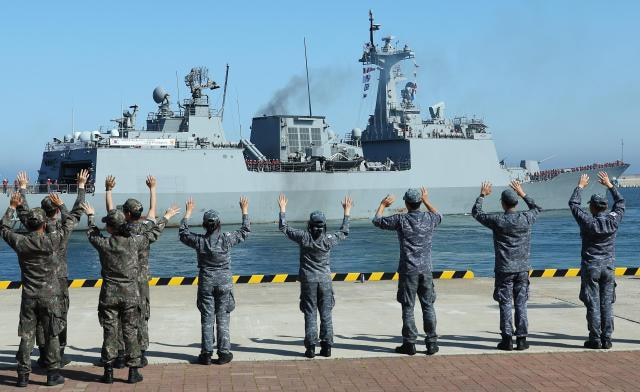
Seoul: The most tangible product of the defence partnership between the European Union and the Republic of Korea has so far been a warship operating roughly seven thousand kilometres from the Korean peninsula. Korean destroyers have drilled alongside Operation Atalanta in the waters off the Horn of Africa, and officials on both sides cite those exercises whenever they are asked what the arrangement has actually delivered.
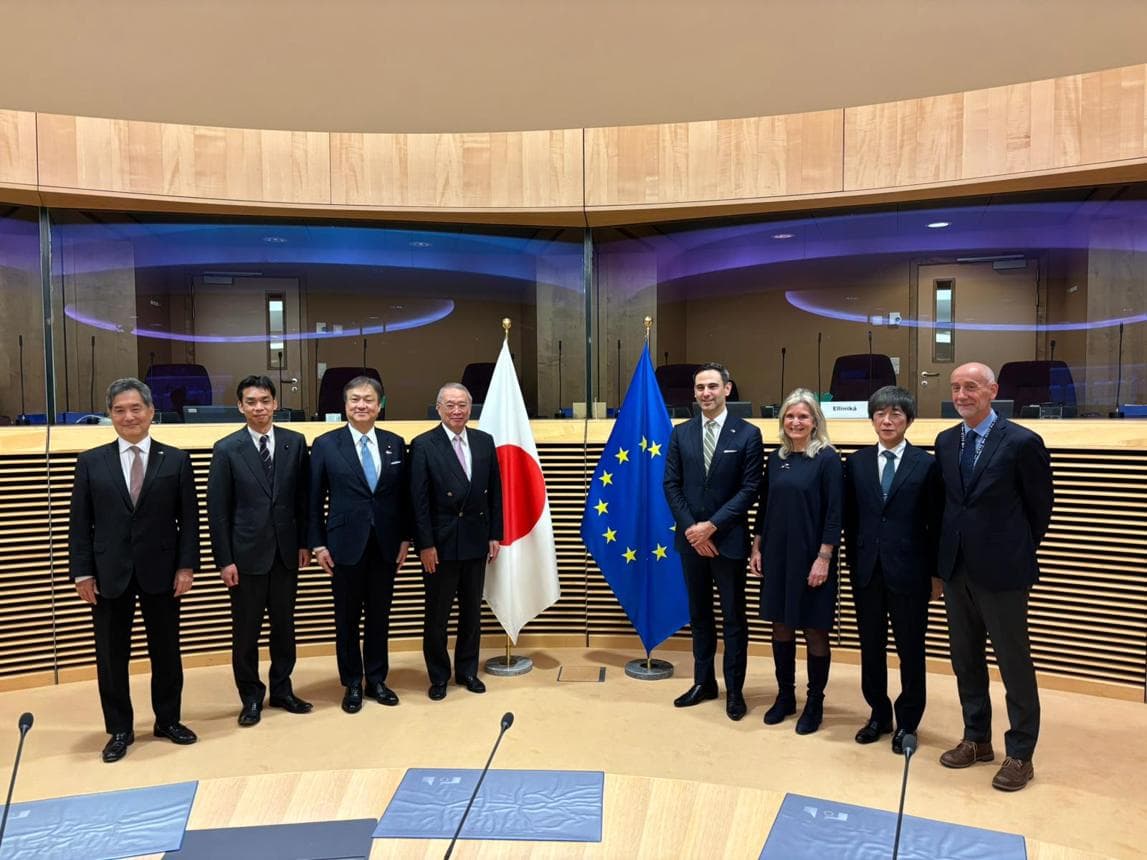
That geography is not an accident, and it explains more about the relationship than the communiques do. Brussels and Seoul signed their partnership in November 2024, making Korea one of the first two Asian states to hold such an instrument with the EU. Japan signed the other. Both documents list maritime security, cyber defence, hybrid threats, space and crisis management. Neither commits either side to anything resembling collective defence.
So the two partners work where their interests overlap without forcing awkward questions. Counter-piracy suits that purpose exactly. Korea has contributed to Operation Atalanta under a framework participation agreement concluded in December 2016, long before anyone in Brussels used the word Indo-Pacific in a strategy paper. Building on an existing legal instrument costs nothing politically and produces photographs of grey hulls in formation.
The harder cooperation sits closer to home for both. Korean defence manufacturers have supplied howitzers, tanks and ammunition to Poland on a scale that reshaped European land forces after 2022. That commercial relationship runs through national capitals rather than through the EU institutions, and it sits uneasily beside the Commission’s push to spend European defence money inside Europe. When Brussels writes local-content rules into its industrial instruments, it writes them against suppliers like Korea as much as against anyone else.
Seoul has noticed. Korean firms answered by opening production lines in Poland and Romania rather than lobbying for exemptions, which is the rational response to a market that rewards presence over price. The result is a partnership in which the defence-industrial substance flows through bilateral contracts while the EU-level dialogue handles doctrine, information sharing and exercises.
Officials have tried to close that gap. They upgraded the security and defence dialogue to managing-director level and planned a military adviser posted to the EU delegation in Seoul, a step the European External Action Service describes as routine but which changes more than it sounds. A resident adviser turns episodic consultation into daily contact, and daily contact is how intelligence on North Korean procurement networks, Russian technology transfers and cyber intrusions actually moves between bureaucracies.
The strategic logic points the same way. Korea watches Russian and North Korean cooperation deepen and reads it as a direct threat to its own deterrence calculus. Europe watches the same relationship and counts artillery shells arriving on the Ukrainian front. That convergence gives the two sides a shared file neither had to invent, and it survives changes of government in Seoul better than trade irritants do.
What the partnership still lacks is a mechanism that turns shared analysis into shared capability. The EU cannot easily fund Korean industry, and Korea will not subordinate its alliance planning to a European framework. Sceptics in Brussels argue the gap hardly matters, since the real work happens between Warsaw and Seoul anyway. That reading underestimates how much the EU now shapes procurement rules across the continent.
Until someone designs an instrument that bridges those constraints, the defence partnership will keep producing its clearest results in the Gulf of Aden, where the politics stay simple and the pirates ignore whose flag flies overhead.