August 22, 2026
LATEST
What the EU Taiwan Framework Would Actually Have to DoKorea Signed a Digital Trade Deal That Nobody Has RatifiedCritical Minerals in Mongolia Still Have to Cross Two BordersCan an Indonesia Trade Deal Survive Two Years of RatifyingCross-Border Data Orders Went Live Before the Plumbing DidPlatform Work Rules Take Effect in December and Few Are ReadyCan Europe’s Firefighting Fleet Keep Pace With EU WildfiresThe AI Act Deadline Passed on 2 August and Nothing BitWhy Construction Keeps Shrinking While Confidence ImprovesAccession Talks Stall Again and September 1 Is the TestBrussels Applied a Trade Deal It Cannot Yet RatifyAfrica’s Power Market Now Needs Money More Than BlueprintsLong-Term Budget Talks Enter Autumn Without a Council LineForeign Subsidies Enforcement Now Turns on a Dublin RaidWho Writes Europe’s Telecom Rules Once Copper DisappearsDisability Cards Exist on Paper and Nowhere Else Until 2028Losing Visa-Free Travel Now Takes a Thirty Percent SwingTwenty Flagship Actions Will Test Whether the Culture Compass WorksEurope’s Quality Jobs Act Now Rests on What Unions Do by SeptemberDoes a Three Euro Parcel Duty Change Anything About Cheap ImportsWhat the EU Taiwan Framework Would Actually Have to DoKorea Signed a Digital Trade Deal That Nobody Has RatifiedCritical Minerals in Mongolia Still Have to Cross Two BordersCan an Indonesia Trade Deal Survive Two Years of RatifyingCross-Border Data Orders Went Live Before the Plumbing DidPlatform Work Rules Take Effect in December and Few Are ReadyCan Europe’s Firefighting Fleet Keep Pace With EU WildfiresThe AI Act Deadline Passed on 2 August and Nothing BitWhy Construction Keeps Shrinking While Confidence ImprovesAccession Talks Stall Again and September 1 Is the TestBrussels Applied a Trade Deal It Cannot Yet RatifyAfrica’s Power Market Now Needs Money More Than BlueprintsLong-Term Budget Talks Enter Autumn Without a Council LineForeign Subsidies Enforcement Now Turns on a Dublin RaidWho Writes Europe’s Telecom Rules Once Copper DisappearsDisability Cards Exist on Paper and Nowhere Else Until 2028Losing Visa-Free Travel Now Takes a Thirty Percent SwingTwenty Flagship Actions Will Test Whether the Culture Compass WorksEurope’s Quality Jobs Act Now Rests on What Unions Do by SeptemberDoes a Three Euro Parcel Duty Change Anything About Cheap Imports
August 22, 2026
LATEST
What the EU Taiwan Framework Would Actually Have to DoKorea Signed a Digital Trade Deal That Nobody Has RatifiedCritical Minerals in Mongolia Still Have to Cross Two BordersCan an Indonesia Trade Deal Survive Two Years of RatifyingCross-Border Data Orders Went Live Before the Plumbing DidPlatform Work Rules Take Effect in December and Few Are ReadyCan Europe’s Firefighting Fleet Keep Pace With EU WildfiresThe AI Act Deadline Passed on 2 August and Nothing BitWhy Construction Keeps Shrinking While Confidence ImprovesAccession Talks Stall Again and September 1 Is the TestBrussels Applied a Trade Deal It Cannot Yet RatifyAfrica’s Power Market Now Needs Money More Than BlueprintsLong-Term Budget Talks Enter Autumn Without a Council LineForeign Subsidies Enforcement Now Turns on a Dublin RaidWho Writes Europe’s Telecom Rules Once Copper DisappearsDisability Cards Exist on Paper and Nowhere Else Until 2028Losing Visa-Free Travel Now Takes a Thirty Percent SwingTwenty Flagship Actions Will Test Whether the Culture Compass WorksEurope’s Quality Jobs Act Now Rests on What Unions Do by SeptemberDoes a Three Euro Parcel Duty Change Anything About Cheap ImportsWhat the EU Taiwan Framework Would Actually Have to DoKorea Signed a Digital Trade Deal That Nobody Has RatifiedCritical Minerals in Mongolia Still Have to Cross Two BordersCan an Indonesia Trade Deal Survive Two Years of RatifyingCross-Border Data Orders Went Live Before the Plumbing DidPlatform Work Rules Take Effect in December and Few Are ReadyCan Europe’s Firefighting Fleet Keep Pace With EU WildfiresThe AI Act Deadline Passed on 2 August and Nothing BitWhy Construction Keeps Shrinking While Confidence ImprovesAccession Talks Stall Again and September 1 Is the TestBrussels Applied a Trade Deal It Cannot Yet RatifyAfrica’s Power Market Now Needs Money More Than BlueprintsLong-Term Budget Talks Enter Autumn Without a Council LineForeign Subsidies Enforcement Now Turns on a Dublin RaidWho Writes Europe’s Telecom Rules Once Copper DisappearsDisability Cards Exist on Paper and Nowhere Else Until 2028Losing Visa-Free Travel Now Takes a Thirty Percent SwingTwenty Flagship Actions Will Test Whether the Culture Compass WorksEurope’s Quality Jobs Act Now Rests on What Unions Do by SeptemberDoes a Three Euro Parcel Duty Change Anything About Cheap Imports

CBAM Now Charges Asian Steel for Carbon Its Makers Already Pay

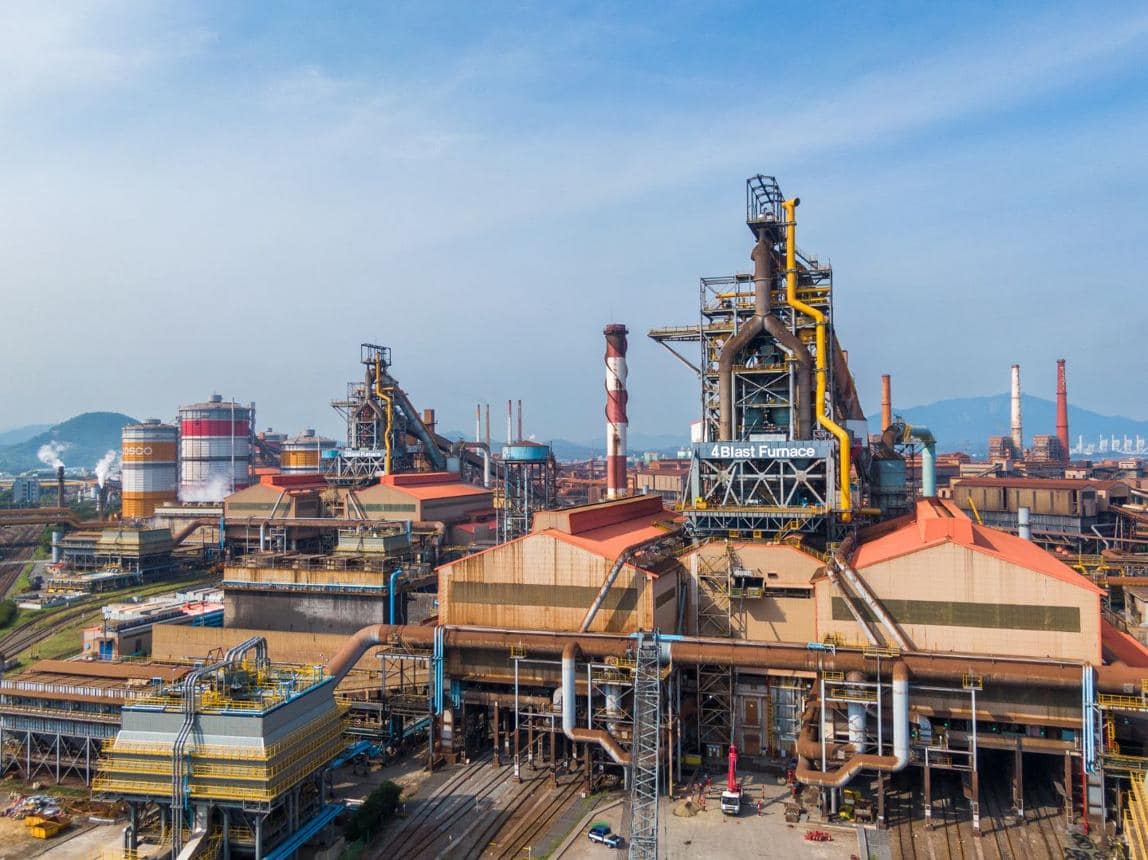
Gwangyang: The steelworks on this stretch of the southern Korean coast rolls plate for European shipyards and coils for European carmakers, and since January every tonne of it has carried a second invoice. The European Union moved its carbon border adjustment mechanism into the definitive period on 1 January 2026, ending three years in which importers only had to file paperwork. CBAM now costs money. Importers must surrender certificates covering the emissions embedded in steel, aluminium, cement, fertiliser, hydrogen and electricity crossing the Union border, and the Commission set the first quarterly price at EUR 75.36 per tonne for the opening quarter, easing marginally to EUR 75.28 for the second.

Korea ships roughly two million tonnes of steel into the Union each year. Applied against the carbon intensity of an integrated blast furnace, that certificate price translates into a cost that no Korean sales director can absorb quietly. The obvious defence is Article 9 of the regulation, which lets an exporter deduct a carbon price already paid at home. Korea has run a national emissions trading scheme since 2015. China operates the largest carbon market in the world by covered tonnage and extended it to steel, cement and aluminium last year. Japan turned its GX scheme into a mandatory obligation for large emitters this fiscal year. Three of Europe’s largest industrial suppliers price carbon. On paper the deduction should do considerable work.

It does not, and the reason exposes something the trade argument keeps missing. CBAM deducts what an exporter actually paid in cash, not what a regulator nominally priced. Asian schemes hand out the overwhelming majority of allowances free and set them against intensity benchmarks rather than an absolute cap. A Korean mill that beats its benchmark surrenders allowances it never bought. Its effective outlay approaches zero, so its deduction approaches zero too. The scheme works as domestic climate policy and disappears entirely at the European border.

That gap turns a border tax into a design instruction. Brussels is not telling Seoul, Beijing or Tokyo to price carbon, because all three already do. It is telling them to auction allowances instead of granting them, and to move from intensity benchmarks to absolute caps, because only those choices generate the paid price that Article 9 can recognise. Korean officials understand this clearly. The Commission continues to assess whether the Korean scheme meets the criteria for recognition, and the outcome will matter far beyond steel, since it establishes the template every other partner will read.

The second effect lands unevenly. Exporters who cannot produce verified installation-level emissions data fall back on default values, which the Commission sets deliberately conservative to remove any reward for withholding information. Large integrated producers carry the accountants and the monitoring systems to prove their real figures. Mid-sized rolling mills and component fabricators across Southeast Asia frequently do not. The mechanism therefore prices administrative capacity alongside carbon, and it concentrates Asian supply to Europe in the hands of firms big enough to document themselves.

Neither consequence appeared in the impact assessments, and neither is easy to reverse now that money changes hands. Europe built CBAM to stop carbon leakage. What it has produced in East Asia is a quieter and more consequential result: a European accounting rule reaching into how sovereign governments structure their own carbon markets, enforced not by negotiation but by the price of a certificate nobody in Gwangyang voted for.