August 22, 2026
LATEST
What the EU Taiwan Framework Would Actually Have to DoKorea Signed a Digital Trade Deal That Nobody Has RatifiedCritical Minerals in Mongolia Still Have to Cross Two BordersCan an Indonesia Trade Deal Survive Two Years of RatifyingCross-Border Data Orders Went Live Before the Plumbing DidPlatform Work Rules Take Effect in December and Few Are ReadyCan Europe’s Firefighting Fleet Keep Pace With EU WildfiresThe AI Act Deadline Passed on 2 August and Nothing BitWhy Construction Keeps Shrinking While Confidence ImprovesAccession Talks Stall Again and September 1 Is the TestBrussels Applied a Trade Deal It Cannot Yet RatifyAfrica’s Power Market Now Needs Money More Than BlueprintsLong-Term Budget Talks Enter Autumn Without a Council LineForeign Subsidies Enforcement Now Turns on a Dublin RaidWho Writes Europe’s Telecom Rules Once Copper DisappearsDisability Cards Exist on Paper and Nowhere Else Until 2028Losing Visa-Free Travel Now Takes a Thirty Percent SwingTwenty Flagship Actions Will Test Whether the Culture Compass WorksEurope’s Quality Jobs Act Now Rests on What Unions Do by SeptemberDoes a Three Euro Parcel Duty Change Anything About Cheap ImportsWhat the EU Taiwan Framework Would Actually Have to DoKorea Signed a Digital Trade Deal That Nobody Has RatifiedCritical Minerals in Mongolia Still Have to Cross Two BordersCan an Indonesia Trade Deal Survive Two Years of RatifyingCross-Border Data Orders Went Live Before the Plumbing DidPlatform Work Rules Take Effect in December and Few Are ReadyCan Europe’s Firefighting Fleet Keep Pace With EU WildfiresThe AI Act Deadline Passed on 2 August and Nothing BitWhy Construction Keeps Shrinking While Confidence ImprovesAccession Talks Stall Again and September 1 Is the TestBrussels Applied a Trade Deal It Cannot Yet RatifyAfrica’s Power Market Now Needs Money More Than BlueprintsLong-Term Budget Talks Enter Autumn Without a Council LineForeign Subsidies Enforcement Now Turns on a Dublin RaidWho Writes Europe’s Telecom Rules Once Copper DisappearsDisability Cards Exist on Paper and Nowhere Else Until 2028Losing Visa-Free Travel Now Takes a Thirty Percent SwingTwenty Flagship Actions Will Test Whether the Culture Compass WorksEurope’s Quality Jobs Act Now Rests on What Unions Do by SeptemberDoes a Three Euro Parcel Duty Change Anything About Cheap Imports
August 22, 2026
LATEST
What the EU Taiwan Framework Would Actually Have to DoKorea Signed a Digital Trade Deal That Nobody Has RatifiedCritical Minerals in Mongolia Still Have to Cross Two BordersCan an Indonesia Trade Deal Survive Two Years of RatifyingCross-Border Data Orders Went Live Before the Plumbing DidPlatform Work Rules Take Effect in December and Few Are ReadyCan Europe’s Firefighting Fleet Keep Pace With EU WildfiresThe AI Act Deadline Passed on 2 August and Nothing BitWhy Construction Keeps Shrinking While Confidence ImprovesAccession Talks Stall Again and September 1 Is the TestBrussels Applied a Trade Deal It Cannot Yet RatifyAfrica’s Power Market Now Needs Money More Than BlueprintsLong-Term Budget Talks Enter Autumn Without a Council LineForeign Subsidies Enforcement Now Turns on a Dublin RaidWho Writes Europe’s Telecom Rules Once Copper DisappearsDisability Cards Exist on Paper and Nowhere Else Until 2028Losing Visa-Free Travel Now Takes a Thirty Percent SwingTwenty Flagship Actions Will Test Whether the Culture Compass WorksEurope’s Quality Jobs Act Now Rests on What Unions Do by SeptemberDoes a Three Euro Parcel Duty Change Anything About Cheap ImportsWhat the EU Taiwan Framework Would Actually Have to DoKorea Signed a Digital Trade Deal That Nobody Has RatifiedCritical Minerals in Mongolia Still Have to Cross Two BordersCan an Indonesia Trade Deal Survive Two Years of RatifyingCross-Border Data Orders Went Live Before the Plumbing DidPlatform Work Rules Take Effect in December and Few Are ReadyCan Europe’s Firefighting Fleet Keep Pace With EU WildfiresThe AI Act Deadline Passed on 2 August and Nothing BitWhy Construction Keeps Shrinking While Confidence ImprovesAccession Talks Stall Again and September 1 Is the TestBrussels Applied a Trade Deal It Cannot Yet RatifyAfrica’s Power Market Now Needs Money More Than BlueprintsLong-Term Budget Talks Enter Autumn Without a Council LineForeign Subsidies Enforcement Now Turns on a Dublin RaidWho Writes Europe’s Telecom Rules Once Copper DisappearsDisability Cards Exist on Paper and Nowhere Else Until 2028Losing Visa-Free Travel Now Takes a Thirty Percent SwingTwenty Flagship Actions Will Test Whether the Culture Compass WorksEurope’s Quality Jobs Act Now Rests on What Unions Do by SeptemberDoes a Three Euro Parcel Duty Change Anything About Cheap Imports

Europe’s Subsea Cables Reach the Pacific Before Its Diplomats

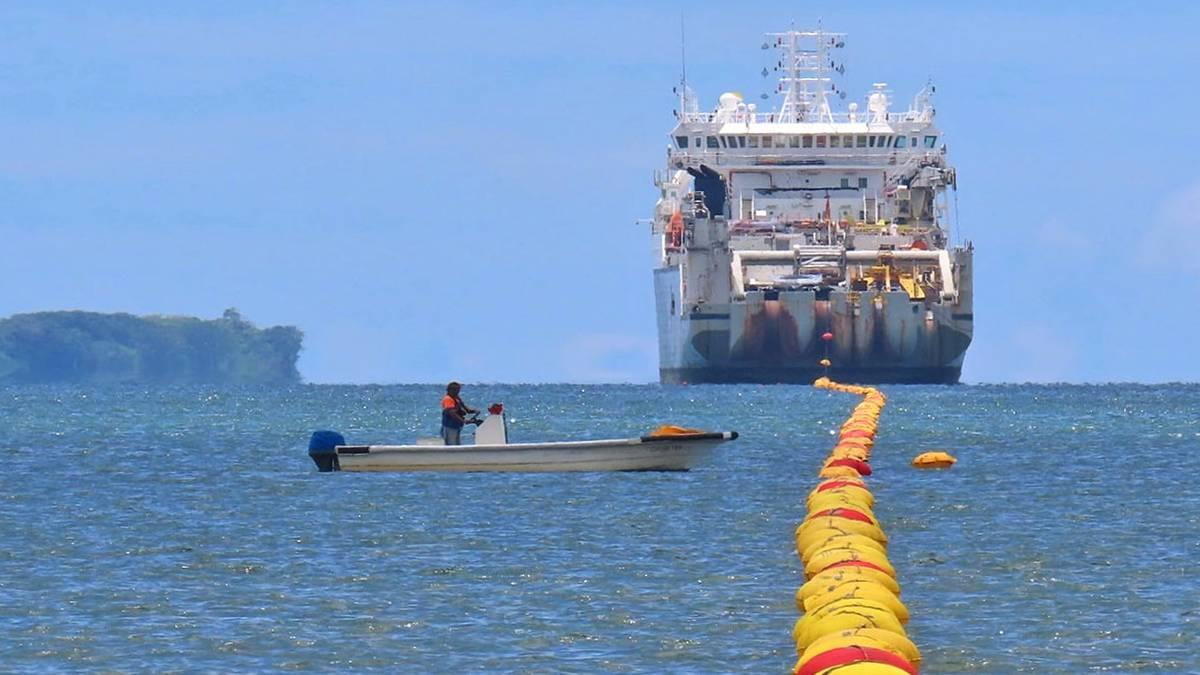
Suva: Europe has committed real money to subsea cables in a region where it maintains barely a handful of embassies. That mismatch between infrastructure spending and diplomatic presence defines the EU’s digital strategy across the Pacific and the wider Far East, and it will decide whether the investment buys influence or simply buys fibre.

The Commission amended its Connecting Europe Facility programme in 2026 to allocate further funding for strategic cable projects, part of a broader envelope for digital backbone infrastructure running to 2027. Its 2025 action plan on cable security put the total commitment near one billion euros and called explicitly for what officials termed advanced cable diplomacy with partners abroad. Pacific island states sit near the top of that list.

The engineering case is straightforward. Small island economies depend on one or two cables for every byte that leaves their territory, and a single anchor drag or seabed slide can isolate a country for weeks. Redundancy costs more per head in the Pacific than almost anywhere on earth, which is precisely why commercial operators have historically avoided building it. Public money changes that arithmetic.

The political case needs more work. China has financed and built telecommunications infrastructure across the region for two decades, and Australia, Japan and the United States have each answered with cable projects of their own. Europe arrives late into a crowded field, offering finance under the Global Gateway banner and regulatory standards that Pacific governments did not request.

Those standards are the actual European product. Security requirements on repair vessels, route diversity, landing-station access and equipment vendors travel with the money. A government that accepts EU financing accepts a supply-chain architecture, and that architecture is what Brussels is really exporting. Cable diplomacy is industrial policy conducted at the bottom of the ocean.

Europe’s own vulnerability sharpens the urgency. Repeated damage to cables in the Baltic Sea forced European governments to treat seabed infrastructure as a defence question rather than a telecoms one. Officials who spent two years arguing about anchor incidents now find it easy to understand why a Pacific state with a single cable considers itself exposed. Shared vulnerability makes for credible conversation.

The gap remains presence. Financing a cable requires a signature. Maintaining influence requires people who show up when a landing station floods, when a regulator drafts licensing rules, or when a rival bidder undercuts on price. The EU delegation network across the Pacific is thin, and the Commission has not paired its infrastructure push with a comparable diplomatic build-out.

Timelines compound the problem. Survey, permitting, manufacture and laying stretch across multiple Commission mandates, which means the officials who announced the money will not be the ones who cut the ribbon. Continuity has never been Europe’s strength in distant regions, and Pacific governments keep long memories for promises that arrived with a press release and left without a landing.

Some in Brussels argue presence hardly matters, since infrastructure outlasts diplomats and a cable in the ground speaks for itself. Operators in the region disagree, pointing out that maintenance contracts, spectrum decisions and vendor choices get made in rooms Europe rarely occupies. The money is real and the need is real. Converting one into standing depends on decisions that have nothing to do with fibre.