August 22, 2026
LATEST
What the EU Taiwan Framework Would Actually Have to DoKorea Signed a Digital Trade Deal That Nobody Has RatifiedCritical Minerals in Mongolia Still Have to Cross Two BordersCan an Indonesia Trade Deal Survive Two Years of RatifyingCross-Border Data Orders Went Live Before the Plumbing DidPlatform Work Rules Take Effect in December and Few Are ReadyCan Europe’s Firefighting Fleet Keep Pace With EU WildfiresThe AI Act Deadline Passed on 2 August and Nothing BitWhy Construction Keeps Shrinking While Confidence ImprovesAccession Talks Stall Again and September 1 Is the TestBrussels Applied a Trade Deal It Cannot Yet RatifyAfrica’s Power Market Now Needs Money More Than BlueprintsLong-Term Budget Talks Enter Autumn Without a Council LineForeign Subsidies Enforcement Now Turns on a Dublin RaidWho Writes Europe’s Telecom Rules Once Copper DisappearsDisability Cards Exist on Paper and Nowhere Else Until 2028Losing Visa-Free Travel Now Takes a Thirty Percent SwingTwenty Flagship Actions Will Test Whether the Culture Compass WorksEurope’s Quality Jobs Act Now Rests on What Unions Do by SeptemberDoes a Three Euro Parcel Duty Change Anything About Cheap ImportsWhat the EU Taiwan Framework Would Actually Have to DoKorea Signed a Digital Trade Deal That Nobody Has RatifiedCritical Minerals in Mongolia Still Have to Cross Two BordersCan an Indonesia Trade Deal Survive Two Years of RatifyingCross-Border Data Orders Went Live Before the Plumbing DidPlatform Work Rules Take Effect in December and Few Are ReadyCan Europe’s Firefighting Fleet Keep Pace With EU WildfiresThe AI Act Deadline Passed on 2 August and Nothing BitWhy Construction Keeps Shrinking While Confidence ImprovesAccession Talks Stall Again and September 1 Is the TestBrussels Applied a Trade Deal It Cannot Yet RatifyAfrica’s Power Market Now Needs Money More Than BlueprintsLong-Term Budget Talks Enter Autumn Without a Council LineForeign Subsidies Enforcement Now Turns on a Dublin RaidWho Writes Europe’s Telecom Rules Once Copper DisappearsDisability Cards Exist on Paper and Nowhere Else Until 2028Losing Visa-Free Travel Now Takes a Thirty Percent SwingTwenty Flagship Actions Will Test Whether the Culture Compass WorksEurope’s Quality Jobs Act Now Rests on What Unions Do by SeptemberDoes a Three Euro Parcel Duty Change Anything About Cheap Imports
August 22, 2026
LATEST
What the EU Taiwan Framework Would Actually Have to DoKorea Signed a Digital Trade Deal That Nobody Has RatifiedCritical Minerals in Mongolia Still Have to Cross Two BordersCan an Indonesia Trade Deal Survive Two Years of RatifyingCross-Border Data Orders Went Live Before the Plumbing DidPlatform Work Rules Take Effect in December and Few Are ReadyCan Europe’s Firefighting Fleet Keep Pace With EU WildfiresThe AI Act Deadline Passed on 2 August and Nothing BitWhy Construction Keeps Shrinking While Confidence ImprovesAccession Talks Stall Again and September 1 Is the TestBrussels Applied a Trade Deal It Cannot Yet RatifyAfrica’s Power Market Now Needs Money More Than BlueprintsLong-Term Budget Talks Enter Autumn Without a Council LineForeign Subsidies Enforcement Now Turns on a Dublin RaidWho Writes Europe’s Telecom Rules Once Copper DisappearsDisability Cards Exist on Paper and Nowhere Else Until 2028Losing Visa-Free Travel Now Takes a Thirty Percent SwingTwenty Flagship Actions Will Test Whether the Culture Compass WorksEurope’s Quality Jobs Act Now Rests on What Unions Do by SeptemberDoes a Three Euro Parcel Duty Change Anything About Cheap ImportsWhat the EU Taiwan Framework Would Actually Have to DoKorea Signed a Digital Trade Deal That Nobody Has RatifiedCritical Minerals in Mongolia Still Have to Cross Two BordersCan an Indonesia Trade Deal Survive Two Years of RatifyingCross-Border Data Orders Went Live Before the Plumbing DidPlatform Work Rules Take Effect in December and Few Are ReadyCan Europe’s Firefighting Fleet Keep Pace With EU WildfiresThe AI Act Deadline Passed on 2 August and Nothing BitWhy Construction Keeps Shrinking While Confidence ImprovesAccession Talks Stall Again and September 1 Is the TestBrussels Applied a Trade Deal It Cannot Yet RatifyAfrica’s Power Market Now Needs Money More Than BlueprintsLong-Term Budget Talks Enter Autumn Without a Council LineForeign Subsidies Enforcement Now Turns on a Dublin RaidWho Writes Europe’s Telecom Rules Once Copper DisappearsDisability Cards Exist on Paper and Nowhere Else Until 2028Losing Visa-Free Travel Now Takes a Thirty Percent SwingTwenty Flagship Actions Will Test Whether the Culture Compass WorksEurope’s Quality Jobs Act Now Rests on What Unions Do by SeptemberDoes a Three Euro Parcel Duty Change Anything About Cheap Imports

Can Riyadh in October Salvage Europe’s Gulf Trade Ambition

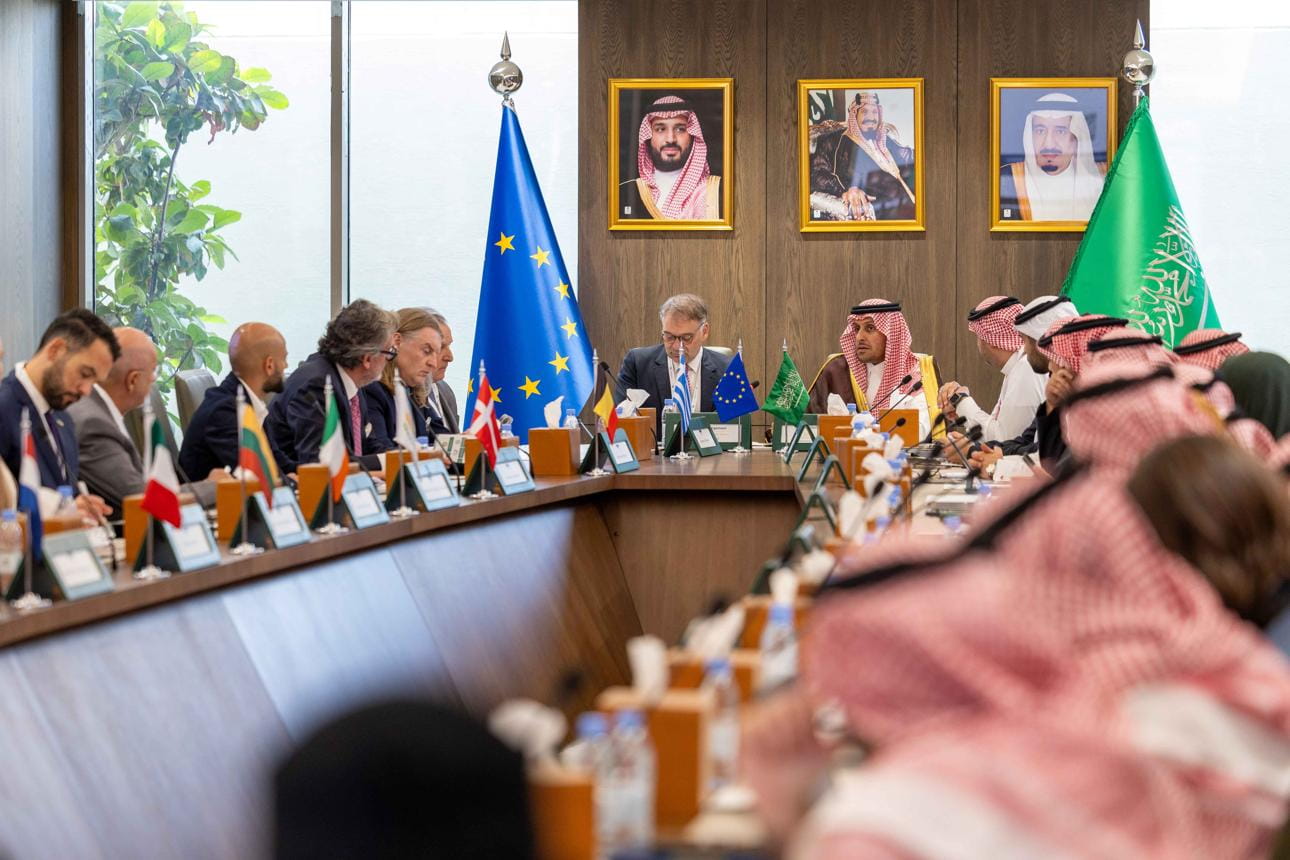
Riyadh: Gulf trade is where European ambition keeps colliding with the European calendar. Negotiators from the Union and the United Arab Emirates closed a seventh round in the first week of July, conducted virtually, and pencilled the eighth for the week of 5 October. Ministers and leaders expect to meet in this city in the same month. The proximity of those dates is not an accident, and it tells you how the deal is meant to land.

Brussels launched the Emirati talks in May 2025 after President von der Leyen and Sheikh Mohamed bin Zayed Al Nahyan agreed to open them a few weeks earlier. The Commission logged the July round as progress on customs cooperation and on sanitary and phytosanitary measures, alongside an exchange of market access requests for goods and initial offers on services and establishment. Negotiators also worked through digital trade, government procurement, subsidies, state-owned enterprises, energy and raw materials. The published state of play reads like a file moving steadily. Abu Dhabi tells a blunter story, blaming non-trade matters for the pace.

That phrase carries weight. It usually points at the sustainable development chapter, at labour provisions, and at the human rights conditionality the European Parliament will demand before it consents to anything. Gulf negotiators have spent three decades objecting to exactly this linkage. The original region-to-region talks opened in 1990 and collapsed in 2008 after eighteen years produced nothing, and the same clause family did much of the damage.

Europe has learned something from that failure, which explains the current design. Rather than pursue one comprehensive treaty with six governments whose customs union works unevenly, the Commission now runs a bilateral track with the Emirates and a broader scoping exercise with the Gulf Cooperation Council as a whole. Officials on both sides increasingly talk about sector packages covering renewable energy, digital trade and industrial supply chains instead of a single grand bargain.

The logic holds. A hydrogen and renewables package binds Emirati and Saudi capital to European electrolyser manufacturing without requiring anyone to settle the labour chapter first. A digital trade package can move data flow commitments while agriculture stays parked. Modularity converts a deadlock into a sequence.

It also carries a cost that deserves saying out loud. Sector packages shed the leverage that comprehensive negotiations create. Europe extracts concessions on governance precisely because it bundles market access with everything else. Unbundle the file and the Union trades away its strongest instrument for the sake of momentum. Critics inside the Parliament will make this argument loudly when the first package reaches them, and they will not be wrong on the mechanics.

The counter-case rests on where the capital goes if Europe hesitates. Canada concluded its own agreement with the Emirates in July. The Eurasian Economic Union has one entering into force in October. Gulf sovereign funds allocate on multi-year cycles and do not wait for European ratification calendars. Every quarter Brussels spends refining conditionality is a quarter in which other jurisdictions write the terms.

October therefore matters more than a routine round would suggest. If the eighth session produces consolidated texts before leaders convene here, the summit can announce substance. If it does not, the summit produces another declaration of intent, the ninth round slides into 2027, and a file that opened with unusual speed joins the long list of European trade projects measured in decades rather than years. The first EU and Gulf summit took thirty-four years to arrange. The second should not need to prove that the exercise was worth repeating.