Ulaanbaatar: A country that calls Europe its third neighbour has waited nine years for the paperwork that would make the phrase mean something commercial.
Mongolia built its foreign policy around a simple problem of geography. It borders Russia and China and nobody else, so every export leaves through one of them. The response, developed since the 1990s, is the third neighbour policy, a deliberate cultivation of ties with democracies far enough away to offer leverage. Europe has been the most flattered of those neighbours and the least committed.
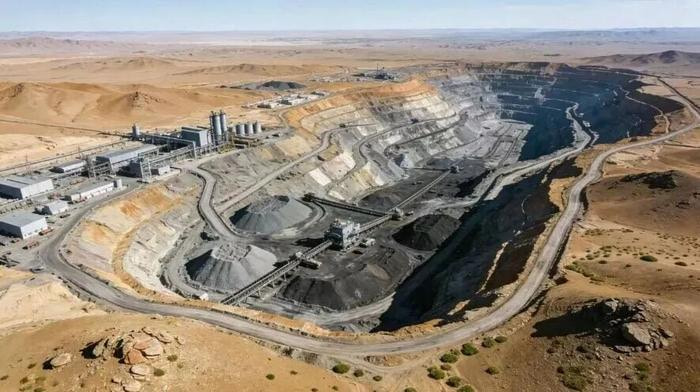
The legal basis exists. The EU–Mongolia Partnership and Cooperation Agreement entered into force in 2017 and covers political dialogue, trade and development cooperation. What it does not include is the instrument Mongolia actually wants, a raw materials partnership of the kind Brussels has signed with Kazakhstan, Ukraine, Chile, Namibia and others. European Parliament researchers examined the case for a critical raw materials partnership and concluded that the economic logic fits both sides. Mongolia holds copper, fluorspar, rare earths and coking coal. Europe wants supply that does not run through Beijing.
The logic has not produced a signature. Kazakhstan moved further and faster, and the European External Action Service published another step in that cooperation while the Mongolian file stayed at the exploratory stage. Officials in Brussels cite three obstacles, and each is real. Mongolian ore has no route to a European port that avoids Russian rail or Chinese ports. Environmental standards at existing mines fall short of what the deforestation and due diligence rulebooks will demand. Investor protection remains uneven, and foreign operators have spent years litigating tax and ownership questions at the country’s largest copper project.
None of those obstacles is decisive, and treating them as such reveals something about how the Mongolia partnership question gets handled. Landlocked supply is a problem for any diversification strategy, yet Europe signed with Kazakhstan, which faces the same constraint. Standards can be raised through the partnership rather than demanded before it. Investor protection improves when there is a counterparty large enough to insist on it.
What is missing is urgency. Mongolia produces at a scale that matters to a specific bottleneck rather than to European demand overall, and a Commission triaging partnerships by volume will always rank it low. That calculation ignores what the third neighbour policy offers politically. A state that actively seeks European involvement, without being asked, is rare in a region where most governments are hedging between larger powers.
There is a case for patience. Signing thin partnerships that produce no tonnage has already damaged the credibility of the instrument, and Brussels has learned that a memorandum without financing is a press release. A partnership that arrives late but carries development bank money behind it would serve both sides better than one signed for symbolism.
Mongolia will keep using the phrase either way. Whether it eventually describes a trading relationship or a diplomatic courtesy depends on decisions Europe has now deferred for the better part of a decade.