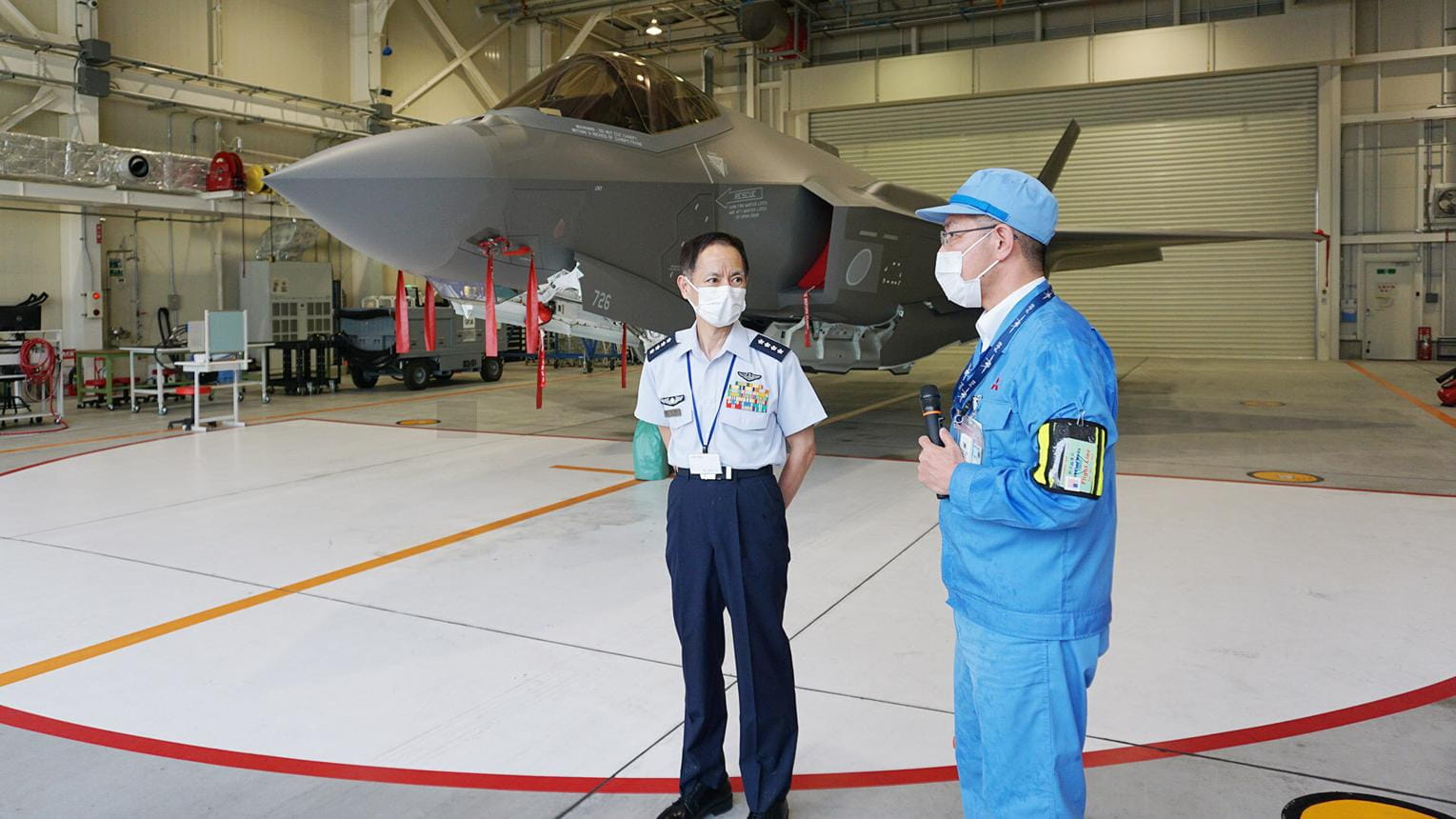
Nagoya: Japanese defence manufacturers clustered around this city build components that European armies would plausibly buy, and their government filed for access to Europe’s defence lending instrument after the queue had already formed.
Security Action for Europe lends one hundred and fifty billion euros to member states for the joint acquisition of high-priority defence equipment produced in Europe. The regulation permits limited non-European content and, more unusually, lets a defined set of closely aligned third countries negotiate enhanced participation. Eligibility runs through the Union’s security and defence partnerships, which means Canada, Japan, Norway, South Korea and the United Kingdom all qualify to ask. An analysis of the regulation sets out how narrow those conditions actually are.
Tokyo applied. It applied late. The Commission, asked what that means for Japan’s prospects, advised caution about predictions, which is the phrasing officials use when the honest answer would be discouraging. Canada concluded its bilateral agreement first. South Korea and Turkey sit next in the queue, and Seoul missed its own application window despite having signalled interest in full association.
The sequencing is not bureaucratic accident. SAFE money flows to member states, member states place orders, and orders placed early shape the industrial base that later orders reinforce. A supplier admitted after the first contracts are signed enters a market whose supply relationships have hardened. Late association buys formal access to a process whose commercially significant decisions have partly been taken.
Japan’s case for inclusion is nonetheless strong on the merits. Its shipbuilding capacity exceeds anything in Europe. Its work on rocket motors, sensors and naval propulsion addresses gaps that European producers acknowledge. The security and defence partnership signed in Tokyo in November 2024, the first the Union concluded with an Indo-Pacific state, already covers maritime security, cyber defence, space and defence industry exchange. The institutional relationship exists. What Japan wants now is the commercial channel that runs alongside it.
European resistance is real and worth stating fairly. SAFE was designed to rebuild European production capacity after three decades of underinvestment, and every euro that leaves for a non-European supplier is a euro that does not fund a European production line. Member states with significant defence industries make this argument openly. Member states without them care more about delivery dates than about where the factory sits, and they make the opposite argument with equal conviction.
Tokyo has also been managing a second commitment. Japan agreed to expand co-development and production of interceptors and space-based infrastructure under the American Golden Dome missile defence programme, and finite engineering capacity cannot serve two continental architectures at full effort. Every hour committed to one is an hour unavailable to the other, and Japanese officials know that European negotiators can read a capacity chart.
The likeliest outcome is a narrow agreement covering specific capability gaps rather than broad market access, negotiated slowly and concluded after the first tranche of SAFE contracts. That result would disappoint Tokyo without embarrassing it, and it would let Brussels claim Indo-Pacific defence industrial cooperation while protecting the domestic base the instrument was written to serve. Neither capital would call it a success. Both would sign it.