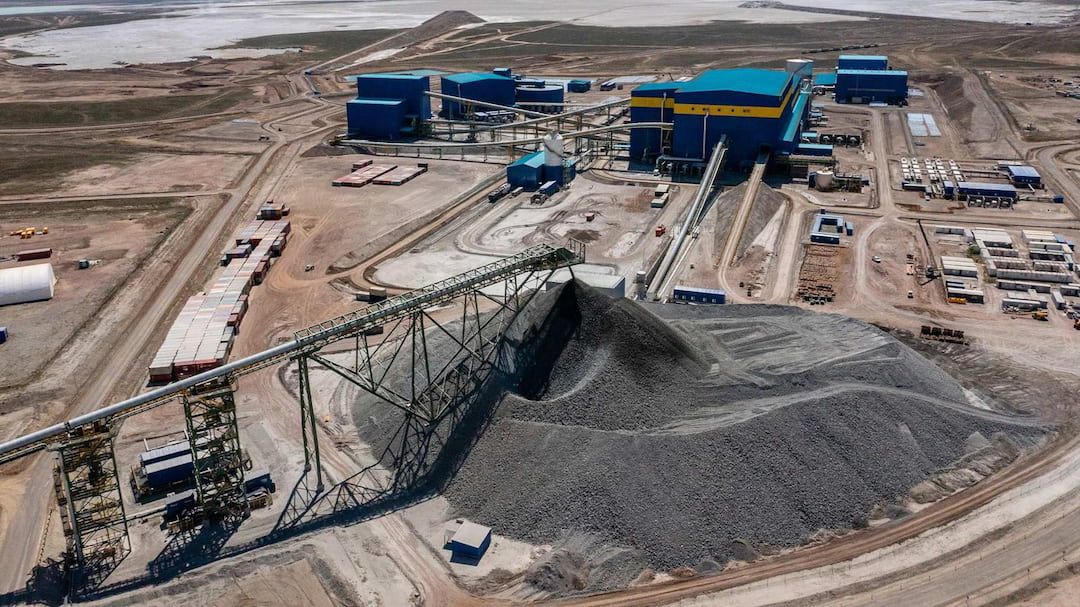
La Rochelle: The plant on France’s Atlantic coast that separates rare earth elements for European magnet makers runs on feedstock that mostly begins its journey in China, and the people who buy from it spent this summer reading Chinese licence paperwork more closely than their own order books.
Beijing widened its rare earth export control list twice this year. Ten American companies went on in June. Fourteen European ones followed in July. The additions matter less for the individual firms named than for what they signal about how China now calibrates a tool it first reached for in 2010 and has since refined into something far more precise.
The mechanics are worth stating plainly, because the shorthand of headlines obscures them. China does not ban these shipments. It licenses them. Samarium, gadolinium and lutetium compounds all entered the 2026 Import-Export Licensing Catalogue with new documentation requirements attached. An exporter files, waits and finds out. European buyers of magnet-grade material watched approval rates for their applications fall from comfortably above ninety percent to well under a quarter during the worst stretch of 2025, and two rounds of production suspensions moved through the European automotive supply chain as a result. Licensing is not an embargo. It is something harder to plan around, because the answer arrives late and varies.
A second wave of controls, announced last autumn, sits suspended until 10 November 2026. That date now anchors every industrial planning conversation in Europe that touches permanent magnets, and permanent magnets touch almost everything the Union says it wants to build. Wind turbine generators use them. Electric drivetrains use them. So do guided munitions, medical imaging systems and the actuators inside commercial aircraft. A suspension is not a settlement, and the European buyers who treated it as one have spent the year since discovering the difference.
The Commission has answered on two tracks. Ursula von der Leyen announced RESourceEU last October, a joint purchasing and stockpiling vehicle paired with support for domestic separation and recycling projects. Stephane Sejourne followed in November with plans for a critical minerals centre to coordinate the buying. Both rest on the same premise, which is that twenty-seven national procurement efforts bidding separately against a single supplier will lose, and one buyer might not. The Commission’s own competitiveness work makes the argument in more diplomatic language.
The premise is sound. The timeline is the problem. Separation and refining capacity takes years to permit and build, and the chemistry is unpleasant enough that the permitting rarely goes quietly. Stockpiles buy months, not independence, and they cost money that competes with everything else on strained national budgets. Recycling recovers material that Europe already imported, which helps at the margin and cannot substitute for primary supply at current volumes.
What Europe can realistically do before November is narrower than the rhetoric suggests. It can map exposure honestly, firm by firm, rather than relying on aggregate trade statistics that hide the chokepoints. It can pre-position stock for the applications where substitution is impossible. It can accelerate the Australian, Canadian and Central Asian sourcing routes already under negotiation, accepting that these deliver in 2028 rather than this winter.
Critics of the stockpiling approach argue it treats a structural dependency as a liquidity problem, and they have a point. Defenders reply that buying time is what you do while building capacity, and they have one too. The honest reading is that both are right and neither is sufficient. The November date will arrive with European magnet supply still concentrated where it is today, and the only open question is whether Brussels spends the intervening weeks negotiating or preparing.