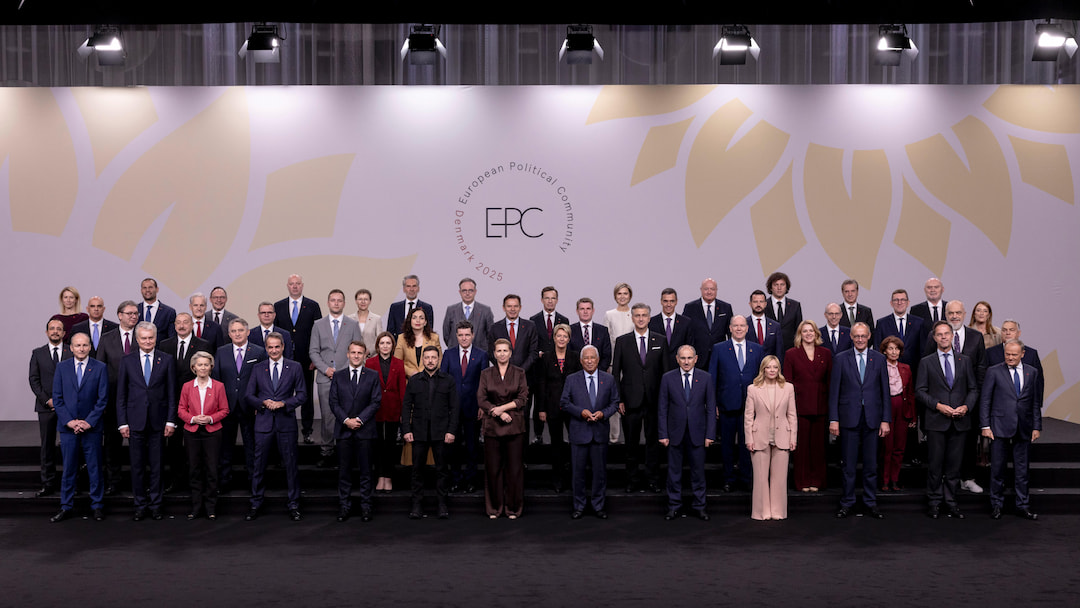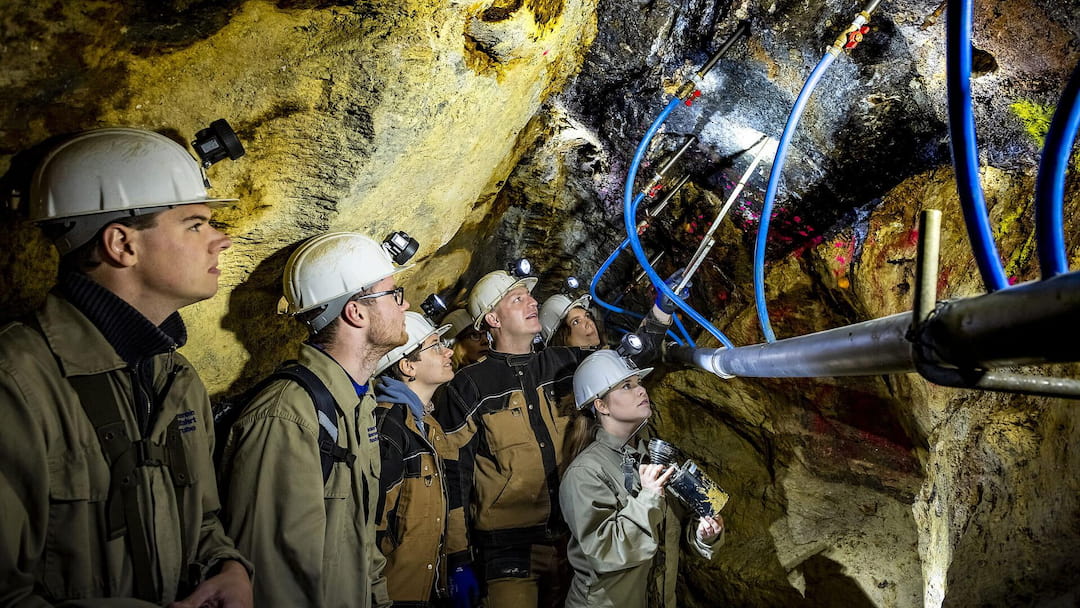
Freiberg: German Chancellor Friedrich Merz wants a critical raw materials stockpile managed at EU level, a call he made at an economic conference in Berlin on 5 November 2026. The idea lands in a country with no state reserves of its own and in a Union that depends on China for most processed minerals. Freiberg, home since 1765 to the mining university TU Bergakademie, has long trained the engineers such a strategy would need.
What Merz proposed in Berlin
Merz listed three tasks: diversify supply, expand recycling and the circular economy, and build stockpiles in Brussels. He argued that Europe would have no batteries, no high-performance electric motors and no modern semiconductors without these inputs.
He had floated a related idea on 21 October at the Berlin Global Dialogues, describing an EU agency for critical raw materials. He also cited partnerships with Australia, Brazil, Canada, Chile, India, Kazakhstan, Ghana and Argentina.
The domestic context matters. In August, a federal government reply to the Bundestag confirmed that Germany held no state or state-commissioned reserves of critical raw materials.
How a critical raw materials stockpile fits RESourceEU
Brussels already has a framework. The Commission adopted the RESourceEU action plan in December 2025, which foresees a European Critical Raw Materials Centre in 2026 and a stockpiling pilot.
In her September State of the Union address, von der Leyen announced a European Corporation on Critical Raw Materials to handle stockpiling. She said the EU relies on China for more than 80% of many critical raw materials and up to 90% for some rare earths. A critical raw materials stockpile would give that corporation its first concrete task.
Benchmarks under the Critical Raw Materials Act
The Critical Raw Materials Act, in force since 23 May 2024, sets 2030 benchmarks. The EU should extract 10% of its annual consumption, process 40% and recycle 25%, while sourcing no more than 65% of any strategic material from a single third country at the processing stage.
On 9 October 2026, the Commission selected 46 new strategic projects in 16 member states from 102 applications. Its Raw Materials Mechanism has produced more than 30 buyer-supplier matches across 10 materials.
Who pays and who draws on the reserve
The Merz plan leaves the hardest questions open. No legal act, budget, materials list, storage site or timetable exists yet. Governments must still decide who owns the stocks, who finances them and who may draw on them during a shortage.
Market design will shape any critical raw materials stockpile. Public buyers purchase against political volume targets rather than price, and rare earths trade in small volumes, so new demand could move prices noticeably. If a reserve buys only on spot markets, it may end up holding material processed in China, which defeats its purpose.
Long-term offtake agreements with strategic projects offer a better route. They would tie the critical raw materials stockpile to new European and partner capacity in lithium, graphite, gallium, germanium and magnet rare earths.
Key takeaways
Germany’s backing gives the stockpile debate political weight it lacked. The test comes with the Commission’s next call for strategic projects, planned for the end of 2026, and with the legal form of the new corporation. A critical raw materials stockpile that buys European and partner output could strengthen economic security; one that simply hoards imports would not.