Abu Dhabi: The Abu Dhabi peace talks on Russia’s war against Ukraine opened on 10 November 2026 with a European Union delegation in the room for the first time. The United States hosts the two-day trilateral round, the first since February, and the EU sent a joint team from the Commission and the European Council.
Who speaks for the EU at the Abu Dhabi peace talks
Bjoern Seibert, chief of cabinet to Commission President Ursula von der Leyen, leads the EU team with Anna-Maria Boura, chief foreign policy adviser to European Council President António Costa. Pairing the two institutions avoids the old question of which Brussels voice counts.
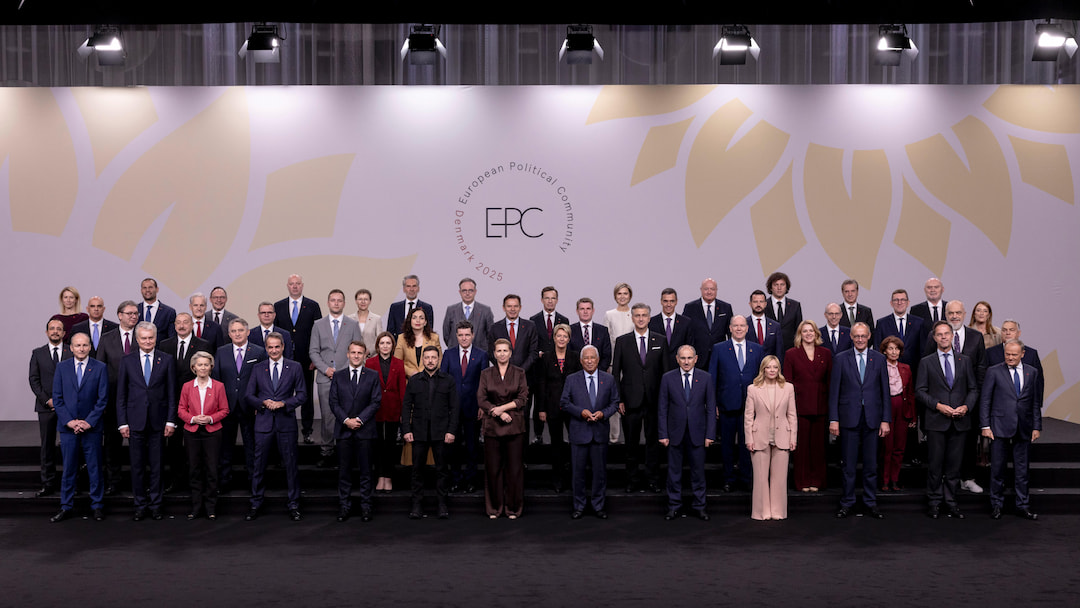
National capitals sent their own people. France, Germany and the United Kingdom attend at national security adviser level, Italy takes part, and NATO Chief of Staff Geoffrey Van Leeuwen represents the alliance. US envoys Steve Witkoff and Jared Kushner run the format.
Rustem Umerov heads Ukraine’s delegation, joined by Kyrylo Budanov, Sergiy Kyslytsya and Davyd Arakhamia. Vladimir Medinsky leads Russia’s team with Deputy Foreign Ministers Sergei Ryabkov and Mikhail Galuzin.
Presence without a defined mandate
Both EU institutions signalled readiness to engage the Russian delegation directly at the Abu Dhabi peace talks, yet it remains unclear whether any such contact will occur. Kushner said a multilateral format would follow only if progress is made.
That conditionality defines the EU’s position. Brussels controls instruments that any durable settlement needs, including sanctions, reconstruction finance and the €90 billion Ukraine Support Loan. It does not control the sequencing of the talks.
A seat therefore buys information and visibility rather than agenda power. The Abu Dhabi peace talks will show whether Washington treats Europe as a co-guarantor or as a funder briefed after decisions.
Security architecture becomes the flashpoint
A social media post by Kushner on reframing European security architecture drew a sharp response. President Volodymyr Zelenskyy called the idea dangerous, and European officials described the discussion as premature.
Commission spokesperson Paula Pinho set out the institutional line: any European security framework is for the EU to decide. The remark reflects a wider concern that a ceasefire deal could carry clauses on NATO posture or EU defence planning negotiated without European signatures.
Meloni’s call for a single European envoy
Italian Prime Minister Giorgia Meloni wrote to Costa criticising the disarray of overlapping diplomatic formats and asked for a special European envoy. Polish Foreign Minister Radosław Sikorski backed her concern, and Costa agreed to raise the request at the informal leaders’ meeting in Dublin that follows the Abu Dhabi peace talks.
The proposal exposes a real gap. The E3, Italy, NATO and two EU institutions all attend, but no single figure can commit European resources on the spot.
What happens next
Von der Leyen has set out the EU’s immediate asks after a call with Zelenskyy: a ceasefire covering food and energy infrastructure and restored freedom of navigation in the Black Sea. Both demands touch EU interests directly, from grain markets to energy prices.
If the Abu Dhabi peace talks move to a wider multilateral format, the EU will need a clear mandate and a single negotiator. Without both, Brussels risks paying for a settlement it did not shape.