August 9, 2026
LATEST
New EU Gas Market Rules Take Effect With Consumer SafeguardsDeforestation Regulation Holds Its December Deadline Despite CutsDigital Omnibus Delays Europe’s High-Risk AI Deadline to 2027Europe’s Schools Confront a Widening Basic Skills GapRule of Law Report Finds Progress but Trust Still LagsIRIS2 Gains 66 Satellites as Brussels Signs the Rollout DealNature Restoration Plans Come Due as Member States Race a DeadlineECB Rates Hold at 2.25 Percent as Frankfurt Waits on the DataEU Budget Talks Turn to Cohesion as Ireland Takes OverWildfire Response Stretches Europe’s Emergency Fleet ThinCan Europe’s Quantum Plan Match Its Big Ambitions?Armenia Edges West as Moscow’s Grip Slips AwayEurope Inherits the World’s Aid Bill It Cannot Fully PayAir Passenger Rights Get Their First Overhaul in Two DecadesErasmus Opens a 5 Billion Euro Round for Skills and MobilityCeuta Crisis Pushes the EU Toward Faster Migrant ReturnsBulky Parcels Face a Packaging Crackdown From August 12Can Europe Build Its Drone Wall Before 2030 Arrives?Indonesia’s Trade Deal With Europe Nears Its Final SignatureEurope Leans on Beijing to Keep Climate Talks Alive Before AntalyaNew EU Gas Market Rules Take Effect With Consumer SafeguardsDeforestation Regulation Holds Its December Deadline Despite CutsDigital Omnibus Delays Europe’s High-Risk AI Deadline to 2027Europe’s Schools Confront a Widening Basic Skills GapRule of Law Report Finds Progress but Trust Still LagsIRIS2 Gains 66 Satellites as Brussels Signs the Rollout DealNature Restoration Plans Come Due as Member States Race a DeadlineECB Rates Hold at 2.25 Percent as Frankfurt Waits on the DataEU Budget Talks Turn to Cohesion as Ireland Takes OverWildfire Response Stretches Europe’s Emergency Fleet ThinCan Europe’s Quantum Plan Match Its Big Ambitions?Armenia Edges West as Moscow’s Grip Slips AwayEurope Inherits the World’s Aid Bill It Cannot Fully PayAir Passenger Rights Get Their First Overhaul in Two DecadesErasmus Opens a 5 Billion Euro Round for Skills and MobilityCeuta Crisis Pushes the EU Toward Faster Migrant ReturnsBulky Parcels Face a Packaging Crackdown From August 12Can Europe Build Its Drone Wall Before 2030 Arrives?Indonesia’s Trade Deal With Europe Nears Its Final SignatureEurope Leans on Beijing to Keep Climate Talks Alive Before Antalya
August 9, 2026
LATEST
New EU Gas Market Rules Take Effect With Consumer SafeguardsDeforestation Regulation Holds Its December Deadline Despite CutsDigital Omnibus Delays Europe’s High-Risk AI Deadline to 2027Europe’s Schools Confront a Widening Basic Skills GapRule of Law Report Finds Progress but Trust Still LagsIRIS2 Gains 66 Satellites as Brussels Signs the Rollout DealNature Restoration Plans Come Due as Member States Race a DeadlineECB Rates Hold at 2.25 Percent as Frankfurt Waits on the DataEU Budget Talks Turn to Cohesion as Ireland Takes OverWildfire Response Stretches Europe’s Emergency Fleet ThinCan Europe’s Quantum Plan Match Its Big Ambitions?Armenia Edges West as Moscow’s Grip Slips AwayEurope Inherits the World’s Aid Bill It Cannot Fully PayAir Passenger Rights Get Their First Overhaul in Two DecadesErasmus Opens a 5 Billion Euro Round for Skills and MobilityCeuta Crisis Pushes the EU Toward Faster Migrant ReturnsBulky Parcels Face a Packaging Crackdown From August 12Can Europe Build Its Drone Wall Before 2030 Arrives?Indonesia’s Trade Deal With Europe Nears Its Final SignatureEurope Leans on Beijing to Keep Climate Talks Alive Before AntalyaNew EU Gas Market Rules Take Effect With Consumer SafeguardsDeforestation Regulation Holds Its December Deadline Despite CutsDigital Omnibus Delays Europe’s High-Risk AI Deadline to 2027Europe’s Schools Confront a Widening Basic Skills GapRule of Law Report Finds Progress but Trust Still LagsIRIS2 Gains 66 Satellites as Brussels Signs the Rollout DealNature Restoration Plans Come Due as Member States Race a DeadlineECB Rates Hold at 2.25 Percent as Frankfurt Waits on the DataEU Budget Talks Turn to Cohesion as Ireland Takes OverWildfire Response Stretches Europe’s Emergency Fleet ThinCan Europe’s Quantum Plan Match Its Big Ambitions?Armenia Edges West as Moscow’s Grip Slips AwayEurope Inherits the World’s Aid Bill It Cannot Fully PayAir Passenger Rights Get Their First Overhaul in Two DecadesErasmus Opens a 5 Billion Euro Round for Skills and MobilityCeuta Crisis Pushes the EU Toward Faster Migrant ReturnsBulky Parcels Face a Packaging Crackdown From August 12Can Europe Build Its Drone Wall Before 2030 Arrives?Indonesia’s Trade Deal With Europe Nears Its Final SignatureEurope Leans on Beijing to Keep Climate Talks Alive Before Antalya

Wind and solar overtake fossil power across European grids in 2025

Madrid: Spain’s energy ministry began assembling its formal response to the European Commission’s post-2030 renewables consultation this week, joining seventeen other capitals racing to shape what will become the bloc’s second-generation green-power framework. The twelve-week consultation that closes on 12 June 2026 is the most consequential listening exercise the Berlaymont has launched in this Parliament’s term, and its outputs will be threaded into the legislative proposal scheduled for adoption before December.

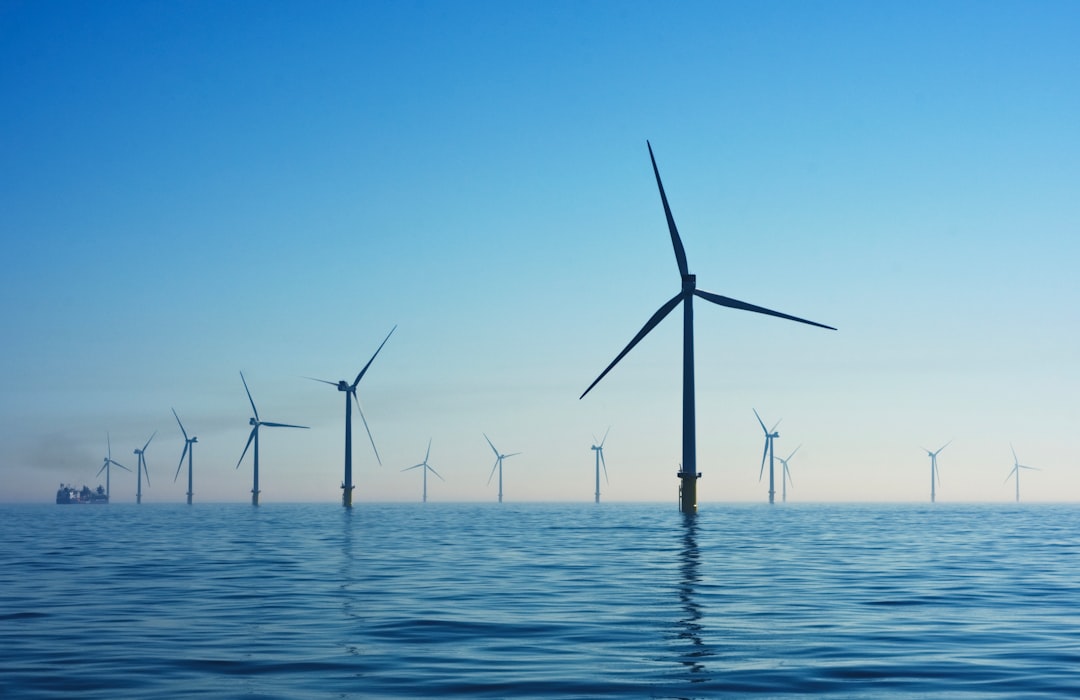
The numbers behind the exercise are striking. According to Ember’s European Electricity Review 2026, wind and solar generated 30 percent of EU electricity last year, outpacing fossil power’s 29 percent share for the first time. In fourteen Member States, intermittent renewables now produce more electricity than gas, coal and oil combined. Yet the binding 2030 target, fixed at 42.5 percent under the 2023 revision of the Renewable Energy Directive, looks comfortably reachable in some northern grids and a stretch in several southern ones where permitting backlogs persist.

That mismatch lies at the heart of the post-2030 redesign. Commission services have hinted that the next directive will move beyond a single bloc-wide percentage and adopt a layered architecture, with sectoral sub-targets, separate trajectories for industry and transport, and harder rules on cross-border infrastructure. The Commission’s 22 April recommendation on Power Purchase Agreements signals the direction of travel: corporate offtakers, particularly energy-intensive manufacturers, will be steered into long-term private contracts as a way to reduce reliance on state subsidies.

A separate compliance deadline has already exposed friction. Under the current directive, every Member State was required to designate renewables acceleration areas, geographically prescribed zones with streamlined permitting, by February 2026. Several governments missed the date; others designated areas so narrowly that industry associations have privately complained the designations carry no operational consequence. Spanish authorities, by contrast, mapped a 41,000-hectare zone across Castilla–La Mancha for solar PV with environmental pre-clearance covering ninety percent of the relevant Natura 2000 overlays, an approach Commission officials have cited as a possible template.

The consultation also probes the bloc’s grid bottleneck. Roughly 1,700 gigawatts of renewable capacity is currently waiting in connection queues across the EU according to ENTSO-E figures shared with Member State energy attachés in February. Madrid’s submission, which officials have previewed informally, will press for a binding cross-border interconnection target and the introduction of dynamic line ratings as a mandatory operating standard. The Spanish position dovetails with proposals from Portugal and Ireland but is opposed by several Central European systems operators worried about the regulatory burden of real-time monitoring obligations.

Industrial policy hovers above the whole exercise. The Net-Zero Industry Act requires that at least forty percent of EU clean-tech demand be met by domestic manufacturing by 2030; without a renewable buildout that creates predictable orders for wind tower sections, blades, inverters and battery storage modules, that target is meaningless. The post-2030 framework is being drafted with one eye on the United States Inflation Reduction Act and another on Chinese export pricing, both of which have squeezed European turbine and panel makers throughout 2025 and into the first quarter of 2026.

Officials close to the file expect a draft directive in the fourth quarter, followed by what is likely to be a contentious trilogue. The Council’s energy formation has historically split along grid-architecture lines: large baseload nuclear systems on one side, fully renewable archipelagos on the other, with Germany attempting to broker. The post-2030 file will not break that pattern. What is changing is the urgency. With fossil generation already overtaken, the next directive must be about absorbing what is being built, not encouraging more of it.