Now that the European Defence Industry Programme has cleared its final hurdle and entered the statute book, the question on Industry Day agendas is no longer whether the regulation will pass but whether the joint ammunition track inside it can deliver something the European Union has never produced before. The Joint Ammunition Qualification project, allocated fifty million euro under EDIP and coordinated by the European Defence Agency, sets out to harmonise national qualification procedures for one-hundred-and-fifty-five-millimetre artillery ammunition. If it works, it changes the economics of the European artillery supply chain. If it does not, the rest of the EDIP defence-industrial story will need to carry weight that the programme was not designed to carry alone.
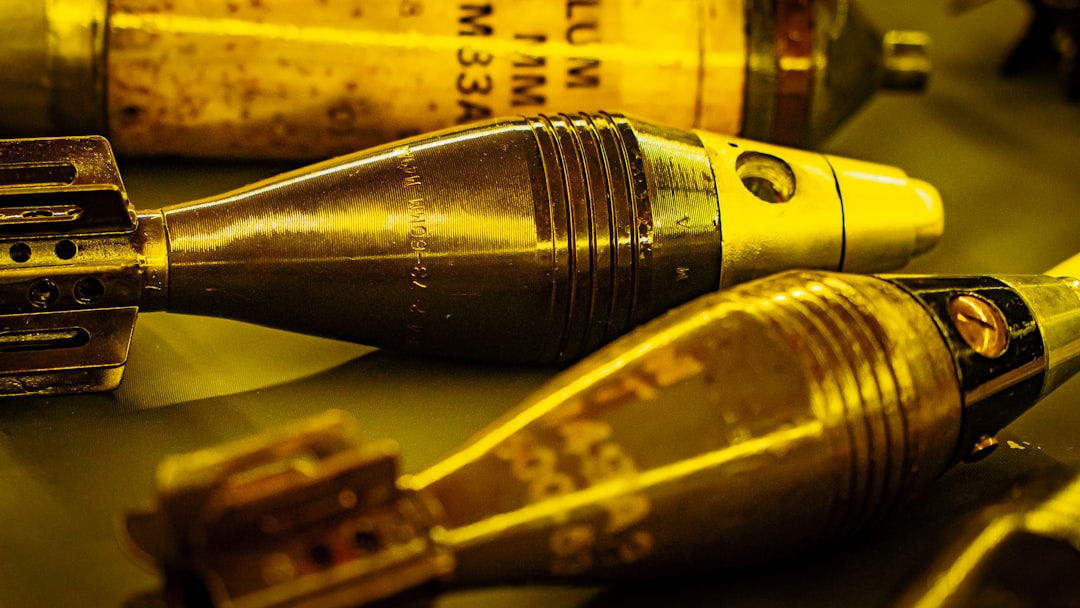
The political backdrop is well known. Under the earlier Act in Support of Ammunition Production, European output expanded from roughly three-hundred-thousand artillery shells in 2022 to a production ceiling approaching two million annually. That progression solved a quantitative bottleneck. What it did not resolve is the qualitative one. National armed forces continue to operate twenty-six distinct sets of qualification procedures for ammunition that is nominally interchangeable. A French-made shell may pass French qualification testing, satisfy NATO STANAG metrics, and still require a six-to-twelve-month re-qualification cycle before being procured at scale by a German or a Polish customer. For a war of attrition fought against an adversary that produces under one logic, that delay is operationally significant.
The pilot inside JAQ is therefore narrower than the headline ambition. It will run joint tests on one calibre, with a defined number of national qualification authorities participating, and compare the resulting datasets. The deliverable is not a single harmonised standard from the start. It is a procedural template that demonstrates whether national authorities can converge on common test conditions, sample sizes, and acceptance criteria without altering domestic regulatory ownership. Industry observers have noted in pre-launch briefings that the pilot has been deliberately scoped to avoid two pitfalls. It does not attempt to centralise qualification authority at EU level, which would have generated immediate sovereignty objections. And it does not attempt to harmonise propellant chemistry or fuze design, which would have collided with safety regimes that took decades to settle.
EDIP as a whole carries a one-and-a-half-billion-euro envelope, of which three-hundred million flows to the Ukraine Support Instrument and more than seven-hundred million goes to ramping up weapon systems production, including counter-drone technology, missiles and ammunition. Within that, one-hundred-and-eighty million is earmarked for missiles, ammunition and bombs, with priority lines covering air defence missiles and counter-uncrewed-systems munitions, deep-strike capability including long-range missiles, and rockets, smart bombs and loitering munitions. These are large lines by previous European standards but they are not large in the context of comparable single-state defence-industrial reflows. Their leverage depends on whether procurement consortia of three or more member states can be assembled inside the EDIP framework and whether the resulting orders trigger genuine multi-year production commitments rather than annual replenishment buys.
The qualification pilot matters because it is the only piece of EDIP that addresses a structural rather than a transactional barrier. A successful pilot produces a method that can be extended to other calibres, to short-range air-defence munitions, and eventually to missile components. An unsuccessful one produces a report explaining why the national authorities could not converge, which would harden the case made by some capitals that European-level defence-industrial coordination should remain bounded to financial instruments rather than regulatory ones.
Three signals will be worth tracking over the next twelve months. The first is the composition of the pilot’s participating authorities. A pilot that includes the largest three producers gives the methodological output near-automatic standing. One that does not produces a narrower precedent. The second is the time spent on test-condition negotiation versus actual joint firing. Earlier defence-cooperation efforts have stalled at the pre-test phase, with national authorities unable to agree on environmental conditions and instrumentation. The third is whether industry is invited into the methodological review or kept downstream. European ammunition manufacturers operate under contractually defined acceptance criteria that vary by customer. If they are read into the qualification template early, the resulting procedure has a chance of becoming usable. If they are read in late, the procedure risks producing a politically attractive document that procurement officers will quietly route around.
The wider EDIP architecture will be assessed in 2027 and 2028 against jobs, factories and output. The JAQ pilot will be assessed sooner and more narrowly, against whether twenty-six national procedures can be reduced to one workable template. That is the real EDIP test.