Nagoya: In the industrial belt that builds much of Japan’s aircraft and heavy machinery, the language of European defence cooperation is shifting from communiques to contracts. The Security and Defence Partnership that the European Union and Japan signed in November 2024 was, for its first year, mostly a statement of intent across maritime security, cyber defence, space, and crisis management. In 2026 it has begun to acquire an industrial spine.
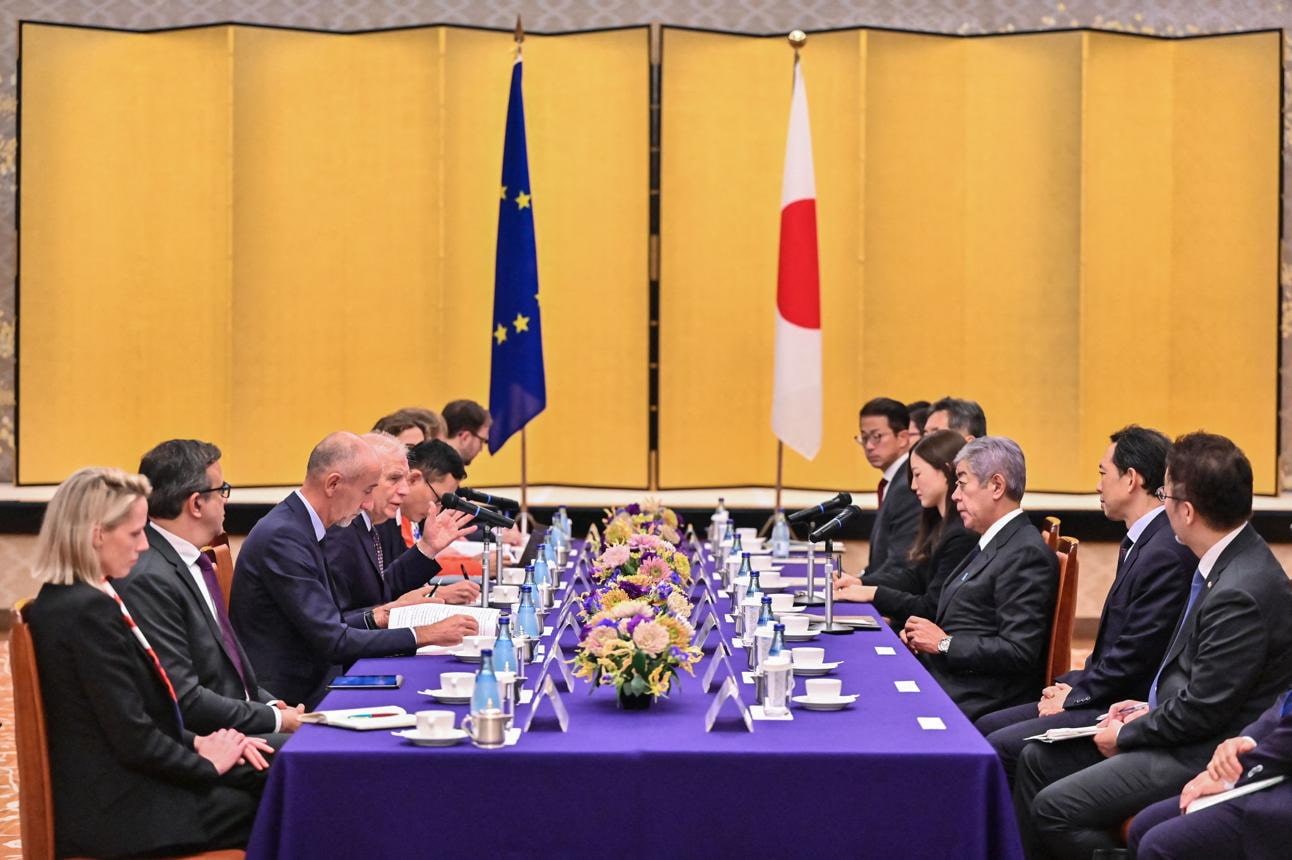
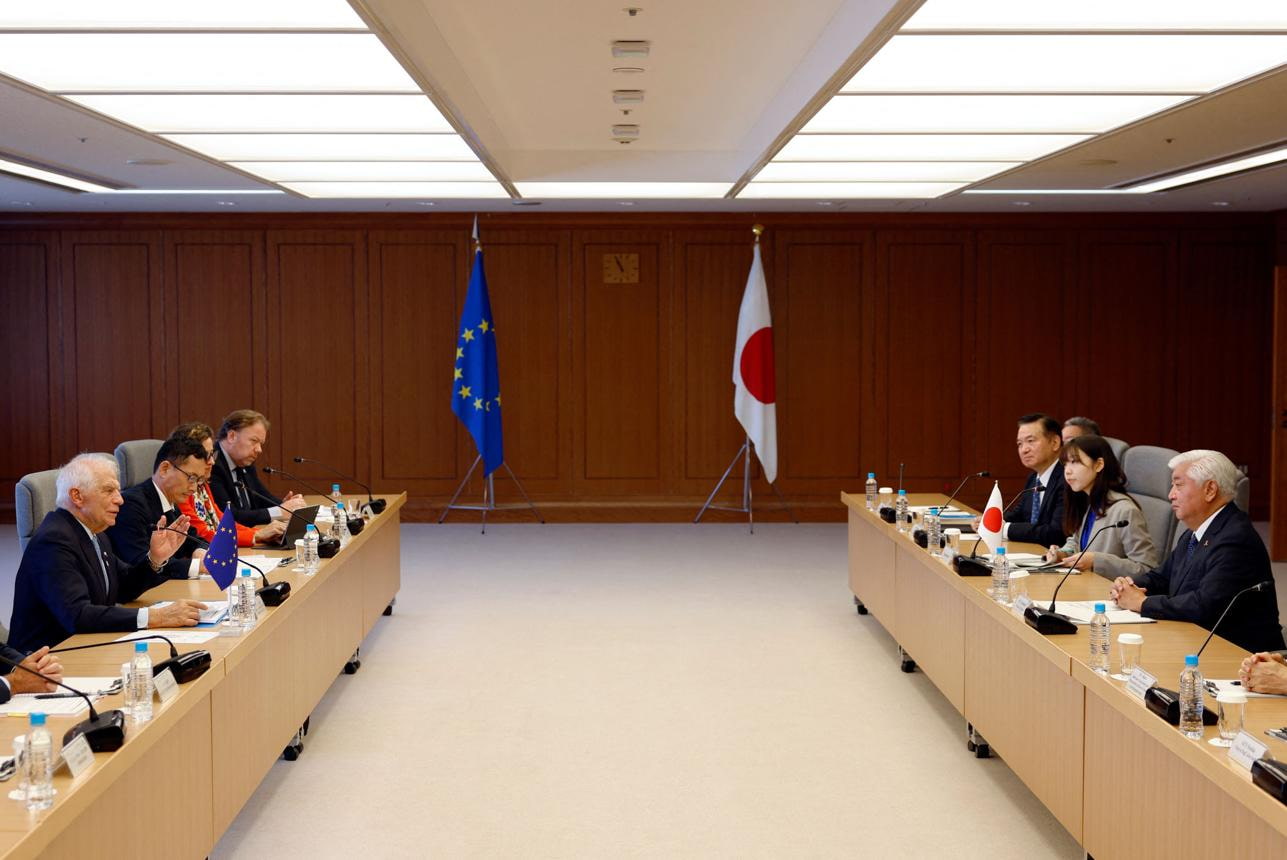
The turning point came on the seventeenth of April, when officials from Brussels and Tokyo held their first Defence Industry Dialogue and issued a joint statement committing to deeper cooperation on defence-industrial and dual-use technology. The meeting sat under the EU-Japan Competitiveness Alliance launched at last July’s summit, and it signalled something the partnership had previously avoided spelling out. The two sides are no longer only coordinating diplomacy. They are exploring how their defence manufacturers might design, build, and supply equipment together.
Domestic politics in Tokyo have accelerated the shift. The government that emerged from Japan’s snap election in February, led by Sanae Takaichi, has staked much of its credibility on faster defence modernisation and a more assertive security posture. That has turned a partnership Europe had treated as a long-term hedge into something Japanese officials now want to move quickly, and it has put pressure on Brussels to prove it can match the pace.
The cyber track shows the breadth of what is already running. In late January the two sides held their seventh Cyber Dialogue in Brussels, building on the previous year’s summit and strategic dialogues, and confirmed an expanding agenda covering critical infrastructure, disinformation, and the resilience of undersea cables that carry the bulk of intercontinental data. These are precisely the grey-zone threats that neither a European nor an Asian power can address alone, and where shared standards matter more than shared borders.
The harder questions are industrial and legal. Japan has historically maintained one of the most restrictive arms-export regimes in the developed world, and any serious co-production with European firms depends on the liberalisation that Tokyo is expected to pursue this year, moving from a case-by-case model toward a more permissive framework for trusted partners under tighter end-use monitoring. On the European side, the bloc’s new defence-financing instruments were written largely with member states in mind, and fitting a non-European partner such as Japan into those funding and procurement structures will require careful legal engineering rather than goodwill alone.
There is also the unavoidable matter of the United States. Both Brussels and Tokyo remain anchored to Washington for hard security, and neither wants its new partnership read as a hedge against an unreliable ally. Yet the subtext is difficult to miss. A Europe worried about American constancy and a Japan worried about Chinese assertiveness have each concluded that a second serious partner is worth cultivating, and that defence industry is where that conviction becomes concrete.
Whether the partnership delivers will be measured not in dialogues but in joint programmes that survive budget cycles and export rules on both ends of Eurasia. For now, the direction is clear. After a decade of treating each other as distant democracies with overlapping values, the European Union and Japan are testing whether they can be something more demanding, which is co-producers of the equipment each believes it will need.