Brussels: The figure attached to Europe’s latest digital ambition is large enough to reframe the entire debate about the continent’s place in the global technology order. When the European Commission presented its Technological Sovereignty Package on 3 June 2026, it paired two legislative proposals, a Chips Act 2.0 and a Cloud and AI Development Act, with an investment arithmetic that is sobering rather than triumphant. By the Commission’s own accounting, closing Europe’s hardware gap implies roughly 120 billion euros for semiconductors, around 200 billion for data centres by 2036, a further 100 billion for cloud and artificial intelligence capacity, and a comparatively modest 2 billion for open-source software over seven years. Stated plainly, sovereignty is being priced, and the price is the story.
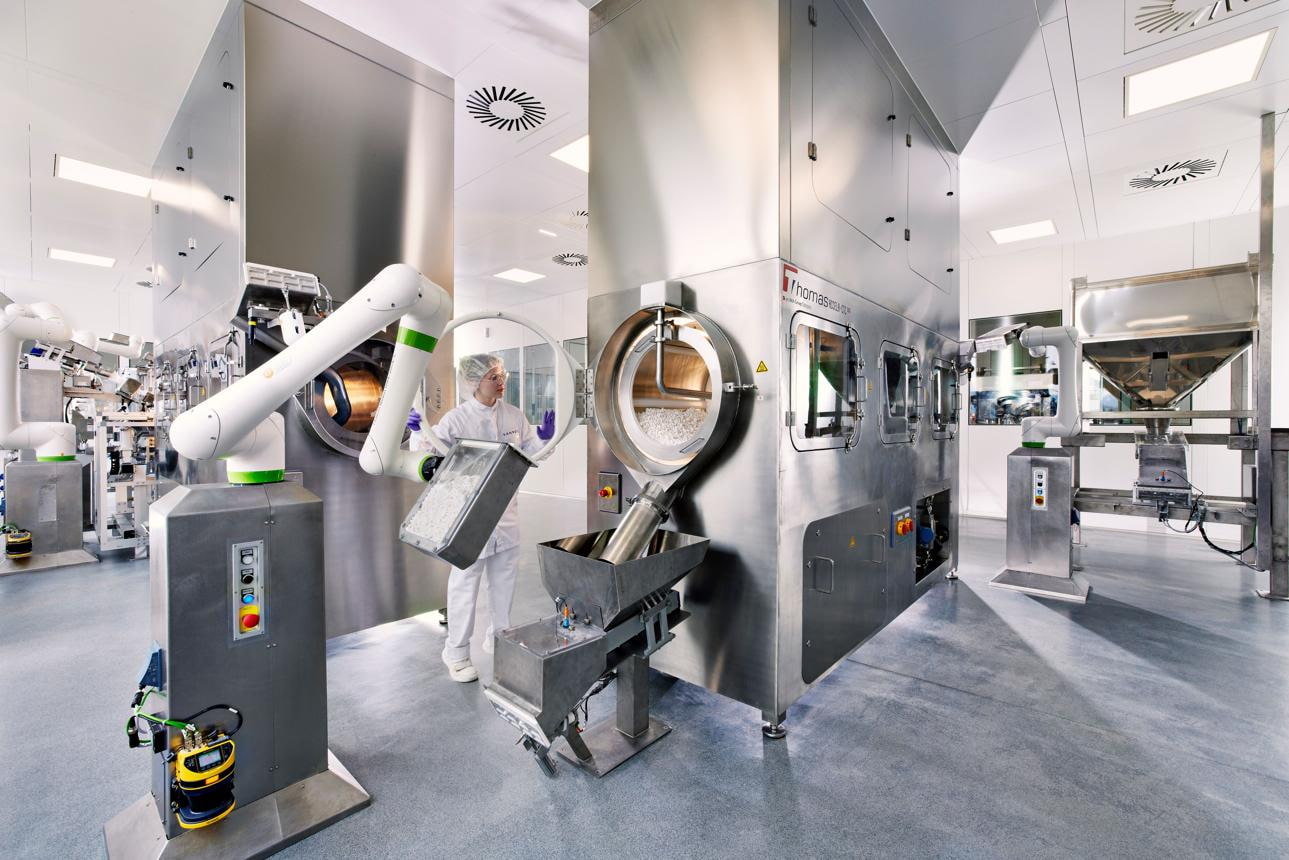
What makes these numbers worth examining is less their size than their structure. The Chips Act 2.0 abandons the singular obsession with leading-edge fabrication that defined its predecessor and adopts what officials call an ecosystem approach, spreading support across both advanced AI-grade silicon and the mature, mainstream chips that quietly run cars, appliances and industrial machinery. A new excellence label for semiconductor regions is meant to concentrate talent and supply chains rather than scatter subsidies thinly across the bloc. The logic is sound. Europe never plausibly competes head-to-head with Taiwanese foundries on the most advanced nodes, but it can defend the broad base of chips on which its automotive and machine-tool industries depend.
The cloud half of the package is where the deeper bet sits. The Cloud and AI Development Act aims to triple Europe’s data-centre capacity within five to seven years and introduces a single, EU-wide framework for assessing the sovereignty of cloud and AI providers. Crucially, the proposal would bar firms that fail those sovereignty criteria from sensitive government contracts. That provision converts an abstract anxiety about dependence on a handful of American hyperscalers into a procurement rule with teeth. The political vocabulary surrounding the launch, with talk of ensuring that nobody holds a kill switch over European infrastructure, signals how far the conversation has moved from cost and efficiency toward control and resilience.
Yet the data invite caution. Tripling data-centre capacity collides directly with Europe’s energy and water constraints, which is why the package is accompanied by a strategic roadmap for digitalisation and AI in the energy sector. A data centre is, in the end, a building that converts electricity into computation and heat, and the 200 billion euro figure assumes that the grids, permits and power contracts will materialise on schedule. Europe’s recent history with large infrastructure timelines suggests that the binding constraint may not be capital at all, but electrons and planning permission.
There is also a sequencing problem buried in the open-source line item. At 2 billion euros, the sum devoted to shared software foundations is a rounding error beside the hardware totals, even though open source is precisely the layer where European developers already hold genuine influence and where a euro tends to travel furthest. A sovereignty strategy that funds factories generously and code sparingly risks owning the machines while renting the logic that runs on them.
The honest reading of the package is that it is an opening bid rather than a settled budget. None of these figures are appropriations. They are estimates of need, and the Commission controls only a fraction of the money, with the rest expected from member states and private investors who have so far been reluctant. The value of putting the numbers on paper is that it ends the comfortable ambiguity in which sovereignty could be invoked without cost. Europe now knows roughly what digital autonomy would require. Whether it is willing to pay is the question the next mandate will have to answer, and the gap between the ambition and the appropriations remains the most telling statistic in the entire document.