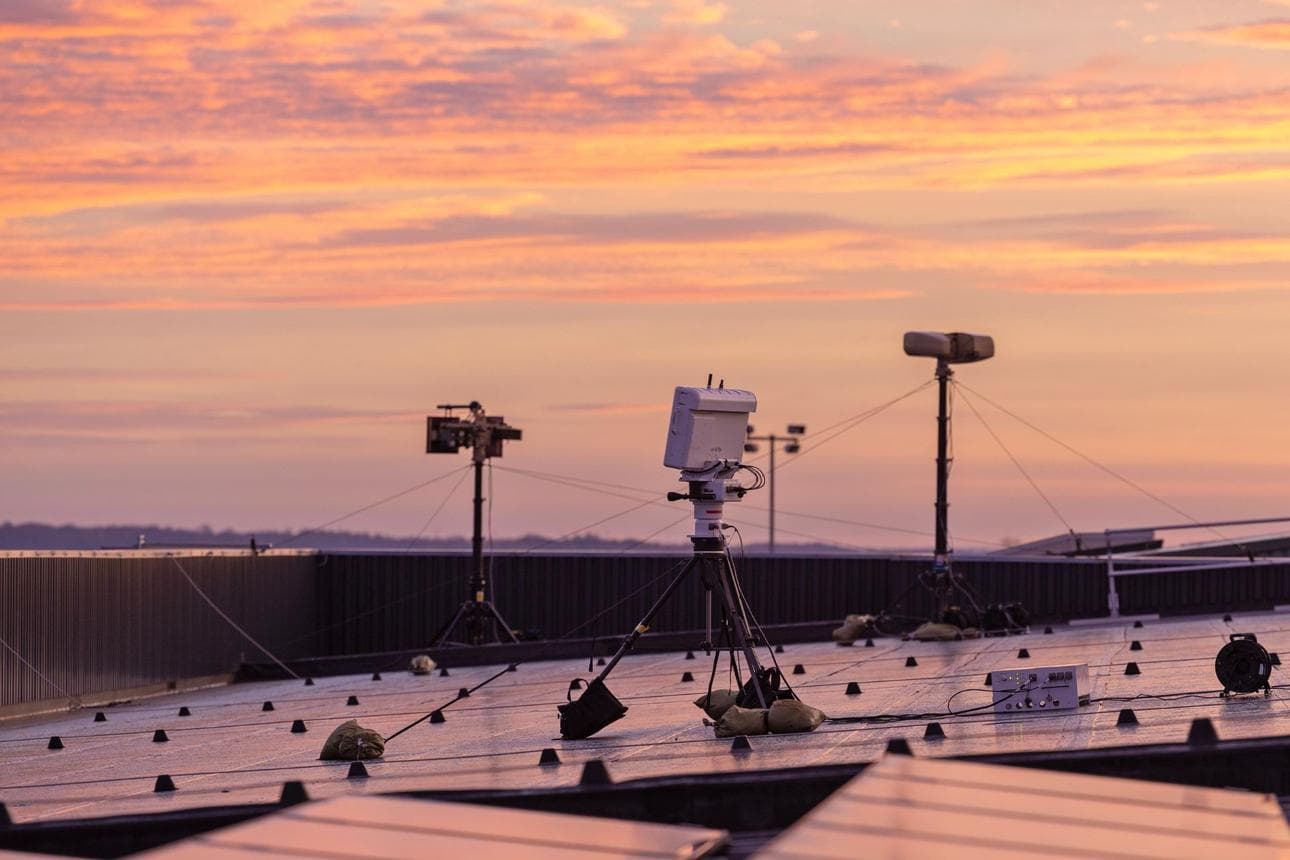
Warsaw: For more than a year the phrase drone wall has done heavy political work while meaning almost nothing concrete. It conjured a tidy image of an electronic barrier humming along the eastern frontier, even though no such thing existed and no one could say who would build it or pay for it. That gap between rhetoric and steel is now beginning to close, and the European Drone Defence Initiative is the instrument doing the closing. Conceived as one of four flagship projects under the Defence Readiness Roadmap 2030, it is meant to turn a catchphrase into an actual layered system that can detect, track and neutralise hostile drones across the Union’s most exposed borders.
The timetable is unusually specific for a project of this scale. The initiative was launched in the first quarter of this year, is expected to reach an initial operating capacity by the end of 2026, and is meant to be fully functional by the close of 2027. Its companion, the Eastern Flank Watch, runs on a slightly longer clock, with implementation beginning this year and full capability promised by the end of 2028. Finland and Poland agreed at a December summit to jointly lead the flank initiative, a signal that the states living closest to the threat intend to shape the architecture rather than wait for it.
What distinguishes this effort from earlier declarations is that money has started to flow against named projects. The Commission has committed 1.07 billion euros to fifty-seven new defence projects feeding the readiness flagships, and the first prefinancing under the bloc’s joint procurement facility was scheduled for the opening quarter of the year. Funding tied to specific capabilities rather than vague ambitions is what separates a programme that ships equipment from one that produces communiques, and on that measure the drone wall has crossed a meaningful threshold.
The strategic logic is grimly empirical. The war on the Union’s doorstep has demonstrated that cheap, mass-produced drones can saturate defences designed for a smaller number of expensive threats, and that the economics of interception are punishing when a missile worth a fortune is fired at a quadcopter worth almost nothing. A credible drone defence therefore has to solve a cost problem as much as a technical one, fielding sensors and effectors cheap enough to be used at scale. The initiative’s emphasis on an interoperable, multi-layered network reflects that arithmetic, since no single national system can cover the geography or absorb the volume alone.
The harder questions are about coherence. Building a wall implies a continuous line, but the reality being assembled is a patchwork of national contributions stitched together by common standards, and the seams are where such systems fail. If member states procure incompatible sensors or guard their own data, the network degrades into a collection of isolated bubbles rather than a shared picture of the sky. The roadmap’s insistence on interoperability is the right instinct, yet interoperability is precisely the thing that European defence projects have historically promised and then quietly abandoned once national industries began competing for the same contracts.
There is also the unavoidable relationship with the alliance next door. The flank initiative is meant to coordinate closely with the established air-policing and sentry operations run through NATO, and the political balance between a Union defence identity and the transatlantic command structure is delicate. Done well, the European effort fills capability gaps that the alliance has struggled to close on its own. Done badly, it duplicates command arrangements and forces eastern capitals to answer to two masters during the very minutes when a drone is inbound and decisions must be instant.
The coming eighteen months will reveal which version Europe is building. An initial operating capacity by year’s end is a falsifiable claim, and unlike a strategy document it cannot be fudged. If the sensors are watching and the effectors are ready when that deadline arrives, the drone wall will have earned its name. If the milestone slips into another round of roadmaps, the phrase will return to doing the only thing it has reliably done so far, which is to describe a defence that exists more firmly in speeches than in the air over the eastern frontier.