August 9, 2026
LATEST
New EU Gas Market Rules Take Effect With Consumer SafeguardsDeforestation Regulation Holds Its December Deadline Despite CutsDigital Omnibus Delays Europe’s High-Risk AI Deadline to 2027Europe’s Schools Confront a Widening Basic Skills GapRule of Law Report Finds Progress but Trust Still LagsIRIS2 Gains 66 Satellites as Brussels Signs the Rollout DealNature Restoration Plans Come Due as Member States Race a DeadlineECB Rates Hold at 2.25 Percent as Frankfurt Waits on the DataEU Budget Talks Turn to Cohesion as Ireland Takes OverWildfire Response Stretches Europe’s Emergency Fleet ThinCan Europe’s Quantum Plan Match Its Big Ambitions?Armenia Edges West as Moscow’s Grip Slips AwayEurope Inherits the World’s Aid Bill It Cannot Fully PayAir Passenger Rights Get Their First Overhaul in Two DecadesErasmus Opens a 5 Billion Euro Round for Skills and MobilityCeuta Crisis Pushes the EU Toward Faster Migrant ReturnsBulky Parcels Face a Packaging Crackdown From August 12Can Europe Build Its Drone Wall Before 2030 Arrives?Indonesia’s Trade Deal With Europe Nears Its Final SignatureEurope Leans on Beijing to Keep Climate Talks Alive Before AntalyaNew EU Gas Market Rules Take Effect With Consumer SafeguardsDeforestation Regulation Holds Its December Deadline Despite CutsDigital Omnibus Delays Europe’s High-Risk AI Deadline to 2027Europe’s Schools Confront a Widening Basic Skills GapRule of Law Report Finds Progress but Trust Still LagsIRIS2 Gains 66 Satellites as Brussels Signs the Rollout DealNature Restoration Plans Come Due as Member States Race a DeadlineECB Rates Hold at 2.25 Percent as Frankfurt Waits on the DataEU Budget Talks Turn to Cohesion as Ireland Takes OverWildfire Response Stretches Europe’s Emergency Fleet ThinCan Europe’s Quantum Plan Match Its Big Ambitions?Armenia Edges West as Moscow’s Grip Slips AwayEurope Inherits the World’s Aid Bill It Cannot Fully PayAir Passenger Rights Get Their First Overhaul in Two DecadesErasmus Opens a 5 Billion Euro Round for Skills and MobilityCeuta Crisis Pushes the EU Toward Faster Migrant ReturnsBulky Parcels Face a Packaging Crackdown From August 12Can Europe Build Its Drone Wall Before 2030 Arrives?Indonesia’s Trade Deal With Europe Nears Its Final SignatureEurope Leans on Beijing to Keep Climate Talks Alive Before Antalya
August 9, 2026
LATEST
New EU Gas Market Rules Take Effect With Consumer SafeguardsDeforestation Regulation Holds Its December Deadline Despite CutsDigital Omnibus Delays Europe’s High-Risk AI Deadline to 2027Europe’s Schools Confront a Widening Basic Skills GapRule of Law Report Finds Progress but Trust Still LagsIRIS2 Gains 66 Satellites as Brussels Signs the Rollout DealNature Restoration Plans Come Due as Member States Race a DeadlineECB Rates Hold at 2.25 Percent as Frankfurt Waits on the DataEU Budget Talks Turn to Cohesion as Ireland Takes OverWildfire Response Stretches Europe’s Emergency Fleet ThinCan Europe’s Quantum Plan Match Its Big Ambitions?Armenia Edges West as Moscow’s Grip Slips AwayEurope Inherits the World’s Aid Bill It Cannot Fully PayAir Passenger Rights Get Their First Overhaul in Two DecadesErasmus Opens a 5 Billion Euro Round for Skills and MobilityCeuta Crisis Pushes the EU Toward Faster Migrant ReturnsBulky Parcels Face a Packaging Crackdown From August 12Can Europe Build Its Drone Wall Before 2030 Arrives?Indonesia’s Trade Deal With Europe Nears Its Final SignatureEurope Leans on Beijing to Keep Climate Talks Alive Before AntalyaNew EU Gas Market Rules Take Effect With Consumer SafeguardsDeforestation Regulation Holds Its December Deadline Despite CutsDigital Omnibus Delays Europe’s High-Risk AI Deadline to 2027Europe’s Schools Confront a Widening Basic Skills GapRule of Law Report Finds Progress but Trust Still LagsIRIS2 Gains 66 Satellites as Brussels Signs the Rollout DealNature Restoration Plans Come Due as Member States Race a DeadlineECB Rates Hold at 2.25 Percent as Frankfurt Waits on the DataEU Budget Talks Turn to Cohesion as Ireland Takes OverWildfire Response Stretches Europe’s Emergency Fleet ThinCan Europe’s Quantum Plan Match Its Big Ambitions?Armenia Edges West as Moscow’s Grip Slips AwayEurope Inherits the World’s Aid Bill It Cannot Fully PayAir Passenger Rights Get Their First Overhaul in Two DecadesErasmus Opens a 5 Billion Euro Round for Skills and MobilityCeuta Crisis Pushes the EU Toward Faster Migrant ReturnsBulky Parcels Face a Packaging Crackdown From August 12Can Europe Build Its Drone Wall Before 2030 Arrives?Indonesia’s Trade Deal With Europe Nears Its Final SignatureEurope Leans on Beijing to Keep Climate Talks Alive Before Antalya

Why Europe Keeps Its US Tariff Retaliation Frozen

Brussels: The European Commission extended its suspension of retaliatory duties on American goods on 31 July, removing the earlier 6 August expiry date and leaving the pause on US tariffs open-ended.

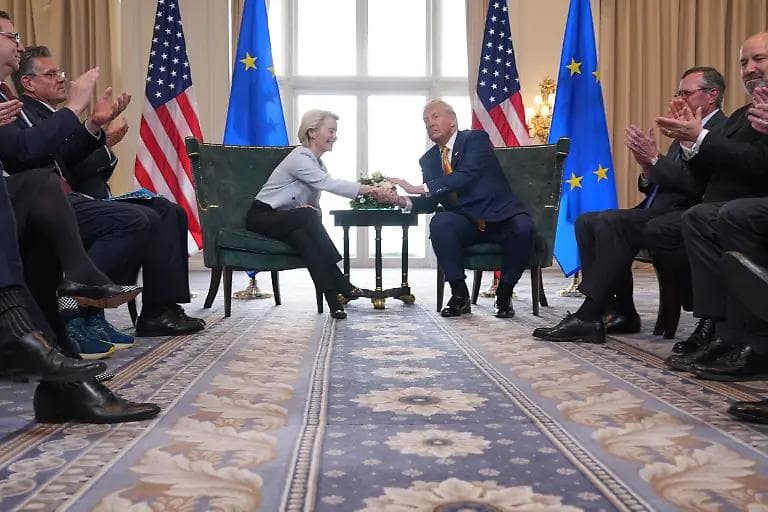
The move keeps a fragile transatlantic truce alive. Brussels had prepared a package of rebalancing measures aimed at American exports, a response to the tariffs Washington threatened during 2025. It never fired those measures. Instead, after Commission President Ursula von der Leyen met US President Donald Trump at Turnberry in July 2025, the two sides struck a political arrangement that capped the damage.

What the truce actually trades

Under that accord, the Union agreed to scrap tariffs on American industrial goods, while Washington agreed to hold its levies on most European exports at 15 percent. Parliament and the Council turned the tariff elements into law in May 2026. The suspension of Europe’s own retaliation formed the other half of the bargain, and the Commission has now renewed it without a fresh deadline.

Dropping the end date matters more than it might appear. Previous extensions ran for fixed windows, which forced periodic votes and kept markets guessing. An open-ended pause signals that Brussels expects the arrangement to hold, and it spares exporters on both sides the recurring uncertainty of a looming cliff edge.

Leverage held in reserve

Yet the Commission kept its weapon loaded. Officials stressed that they will review the suspension continuously and can reactivate the rebalancing duties at any moment if Washington breaks the terms. The threat stays credible precisely because the measures remain legally ready, dormant rather than dead.

That posture reflects a hard lesson from the tariff standoff. A 15 percent US levy still stings European carmakers and steelmakers, and critics at home argue the bloc conceded too much for too little in return. Supporters counter that an all-out tariff war would have hurt Europe more, given how much the continent sells into the American market, and that stability now buys time to diversify trade toward Asia and Latin America.

The extension also lands amid wider transatlantic friction over technology rules, digital taxes and defence spending, any of which could sour the mood. By locking in the tariff pause, Brussels tries to wall off the goods trade from those disputes, betting that predictability serves European industry better than a show of defiance.

Businesses have welcomed the certainty. Industry groups spent much of 2025 warning that stop-start deadlines made investment planning nearly impossible, since a single missed vote could have snapped tariffs back into place overnight. Removing the expiry date answers that complaint, even if it hands the Commission the awkward task of explaining why a 15 percent baseline counts as a win.

The Commission set out its reasoning in the official trade announcement, and the broader framework sits in its EU-US trade deal file. Whether the truce survives depends less on Brussels than on Washington, but for now the Union has chosen calm over confrontation, keeping its retaliation on US tariffs frozen and its options open.