August 9, 2026
LATEST
New EU Gas Market Rules Take Effect With Consumer SafeguardsDeforestation Regulation Holds Its December Deadline Despite CutsDigital Omnibus Delays Europe’s High-Risk AI Deadline to 2027Europe’s Schools Confront a Widening Basic Skills GapRule of Law Report Finds Progress but Trust Still LagsIRIS2 Gains 66 Satellites as Brussels Signs the Rollout DealNature Restoration Plans Come Due as Member States Race a DeadlineECB Rates Hold at 2.25 Percent as Frankfurt Waits on the DataEU Budget Talks Turn to Cohesion as Ireland Takes OverWildfire Response Stretches Europe’s Emergency Fleet ThinCan Europe’s Quantum Plan Match Its Big Ambitions?Armenia Edges West as Moscow’s Grip Slips AwayEurope Inherits the World’s Aid Bill It Cannot Fully PayAir Passenger Rights Get Their First Overhaul in Two DecadesErasmus Opens a 5 Billion Euro Round for Skills and MobilityCeuta Crisis Pushes the EU Toward Faster Migrant ReturnsBulky Parcels Face a Packaging Crackdown From August 12Can Europe Build Its Drone Wall Before 2030 Arrives?Indonesia’s Trade Deal With Europe Nears Its Final SignatureEurope Leans on Beijing to Keep Climate Talks Alive Before AntalyaNew EU Gas Market Rules Take Effect With Consumer SafeguardsDeforestation Regulation Holds Its December Deadline Despite CutsDigital Omnibus Delays Europe’s High-Risk AI Deadline to 2027Europe’s Schools Confront a Widening Basic Skills GapRule of Law Report Finds Progress but Trust Still LagsIRIS2 Gains 66 Satellites as Brussels Signs the Rollout DealNature Restoration Plans Come Due as Member States Race a DeadlineECB Rates Hold at 2.25 Percent as Frankfurt Waits on the DataEU Budget Talks Turn to Cohesion as Ireland Takes OverWildfire Response Stretches Europe’s Emergency Fleet ThinCan Europe’s Quantum Plan Match Its Big Ambitions?Armenia Edges West as Moscow’s Grip Slips AwayEurope Inherits the World’s Aid Bill It Cannot Fully PayAir Passenger Rights Get Their First Overhaul in Two DecadesErasmus Opens a 5 Billion Euro Round for Skills and MobilityCeuta Crisis Pushes the EU Toward Faster Migrant ReturnsBulky Parcels Face a Packaging Crackdown From August 12Can Europe Build Its Drone Wall Before 2030 Arrives?Indonesia’s Trade Deal With Europe Nears Its Final SignatureEurope Leans on Beijing to Keep Climate Talks Alive Before Antalya
August 9, 2026
LATEST
New EU Gas Market Rules Take Effect With Consumer SafeguardsDeforestation Regulation Holds Its December Deadline Despite CutsDigital Omnibus Delays Europe’s High-Risk AI Deadline to 2027Europe’s Schools Confront a Widening Basic Skills GapRule of Law Report Finds Progress but Trust Still LagsIRIS2 Gains 66 Satellites as Brussels Signs the Rollout DealNature Restoration Plans Come Due as Member States Race a DeadlineECB Rates Hold at 2.25 Percent as Frankfurt Waits on the DataEU Budget Talks Turn to Cohesion as Ireland Takes OverWildfire Response Stretches Europe’s Emergency Fleet ThinCan Europe’s Quantum Plan Match Its Big Ambitions?Armenia Edges West as Moscow’s Grip Slips AwayEurope Inherits the World’s Aid Bill It Cannot Fully PayAir Passenger Rights Get Their First Overhaul in Two DecadesErasmus Opens a 5 Billion Euro Round for Skills and MobilityCeuta Crisis Pushes the EU Toward Faster Migrant ReturnsBulky Parcels Face a Packaging Crackdown From August 12Can Europe Build Its Drone Wall Before 2030 Arrives?Indonesia’s Trade Deal With Europe Nears Its Final SignatureEurope Leans on Beijing to Keep Climate Talks Alive Before AntalyaNew EU Gas Market Rules Take Effect With Consumer SafeguardsDeforestation Regulation Holds Its December Deadline Despite CutsDigital Omnibus Delays Europe’s High-Risk AI Deadline to 2027Europe’s Schools Confront a Widening Basic Skills GapRule of Law Report Finds Progress but Trust Still LagsIRIS2 Gains 66 Satellites as Brussels Signs the Rollout DealNature Restoration Plans Come Due as Member States Race a DeadlineECB Rates Hold at 2.25 Percent as Frankfurt Waits on the DataEU Budget Talks Turn to Cohesion as Ireland Takes OverWildfire Response Stretches Europe’s Emergency Fleet ThinCan Europe’s Quantum Plan Match Its Big Ambitions?Armenia Edges West as Moscow’s Grip Slips AwayEurope Inherits the World’s Aid Bill It Cannot Fully PayAir Passenger Rights Get Their First Overhaul in Two DecadesErasmus Opens a 5 Billion Euro Round for Skills and MobilityCeuta Crisis Pushes the EU Toward Faster Migrant ReturnsBulky Parcels Face a Packaging Crackdown From August 12Can Europe Build Its Drone Wall Before 2030 Arrives?Indonesia’s Trade Deal With Europe Nears Its Final SignatureEurope Leans on Beijing to Keep Climate Talks Alive Before Antalya

Europe Bets 800 Billion That Less Red Tape Means More Arms

Strasbourg: The European Parliament and Council have struck a provisional deal on a package of defence-simplification measures, the so-called Omnibus V, designed to speed up permits for military projects, ease the export of equipment between member states and streamline the European Defence Fund. It is the administrative scaffolding for the ReArm Europe plan, which envisages up to 800 billion euros of defence investment over four years. The wager is blunt: that Europe’s problem is not money but the machinery for spending it.

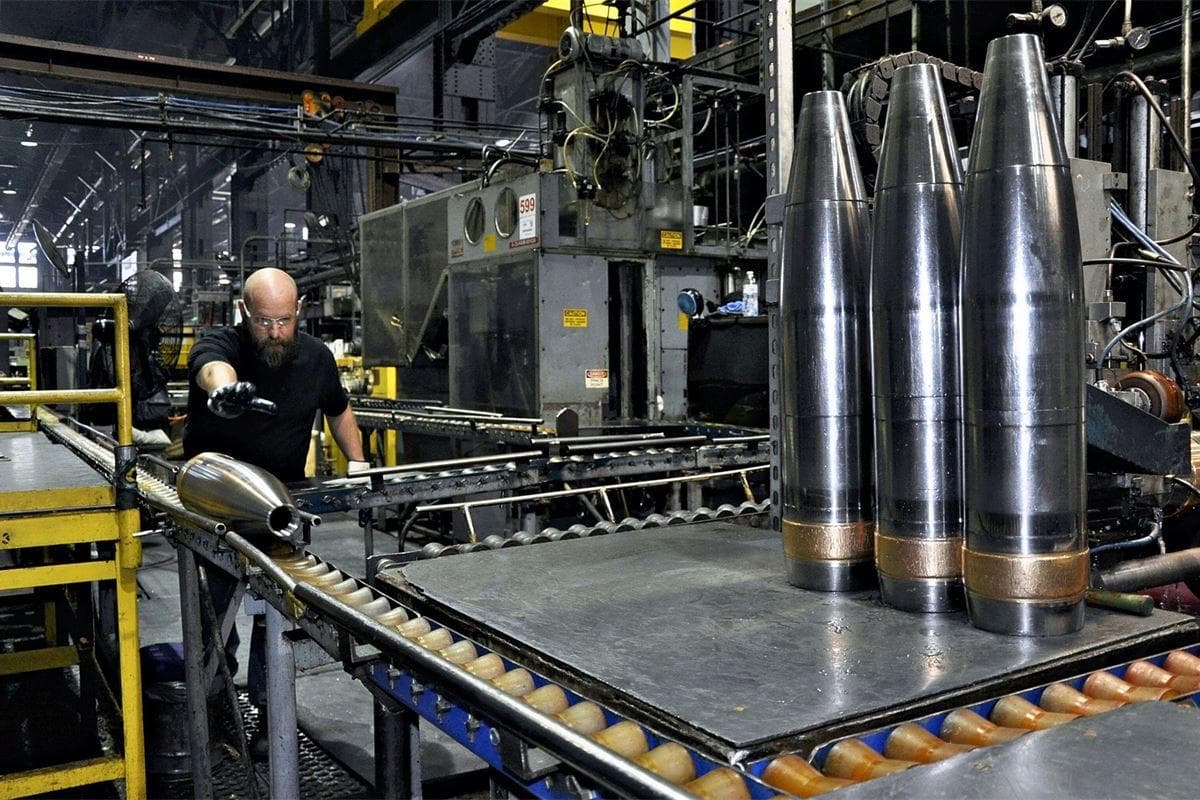
There is real force to that diagnosis. European defence has long been a study in fragmentation, with national procurement rules, divergent chemical and environmental regulations, and duplicated programmes producing armies that cannot easily share equipment or supply chains. Simplifying permitting, aligning REACH-style chemical rules with military needs and smoothing intra-EU transfers attacks genuine bottlenecks. A continent that takes years to authorise an ammunition plant cannot credibly promise readiness by 2030. In that sense, the legislators are treating a structural disease rather than a cash-flow symptom, which is the more sophisticated thing to do.

Yet the framing deserves scrutiny, because cutting red tape is the easiest part of a hard problem. The deeper obstacles to a single European defence market are political, not procedural. Member states protect national champions, insist on domestic work-share and remain reluctant to depend on a neighbour’s factory for a critical component. No omnibus regulation dissolves the instinct of a finance ministry to keep defence euros at home, and the history of European defence cooperation is a graveyard of elegant frameworks defeated by exactly that instinct. The new rules lower the legal friction; they do not change the incentives.

The 800 billion figure invites a similar caution. Most of it is not new common money but a permissive accounting of national spending and borrowing, enabled by loosened fiscal rules. That distinction matters. It means the headline depends on twenty-seven separate budget decisions taken under twenty-seven sets of domestic pressures, at the very moment the European Central Bank has raised rates and made borrowing dearer. The plan’s arithmetic assumes a willingness to spend that higher financing costs and competing social demands may erode. The gap between an authorised ceiling and money actually committed is where ambitious European programmes usually disappear.

There is also a quieter tension between speed and scrutiny. Accelerating permits and procurement inevitably means compressing the environmental, competitive and democratic checks that normally slow such decisions. In a security emergency that trade-off is defensible, and the package’s defenders will say that deliberative leisure is a luxury Europe can no longer afford on its eastern flank. But emergency machinery has a habit of outliving the emergency, and a procurement system built for haste is also a system more exposed to waste and capture. Anti-fraud bodies and auditors will need to watch the European Defence Fund closely precisely because it has been made faster to deploy.

The most persuasive reading is that Omnibus V is necessary but nowhere near sufficient. It removes excuses without supplying resolve. Europe will discover over the next four years whether the binding constraint on its rearmament was ever really the paperwork, or whether the paperwork was a convenient explanation for a deeper unwillingness to pool sovereignty, accept mutual dependence and sustain spending once the immediate alarm fades. The legislation is a test cleverly designed so that its sponsors can claim progress regardless of the outcome. The honest measure of success will not be how quickly permits are granted but whether, in 2030, Europe fields forces that can actually fight together. On that, the red tape was never the real question.